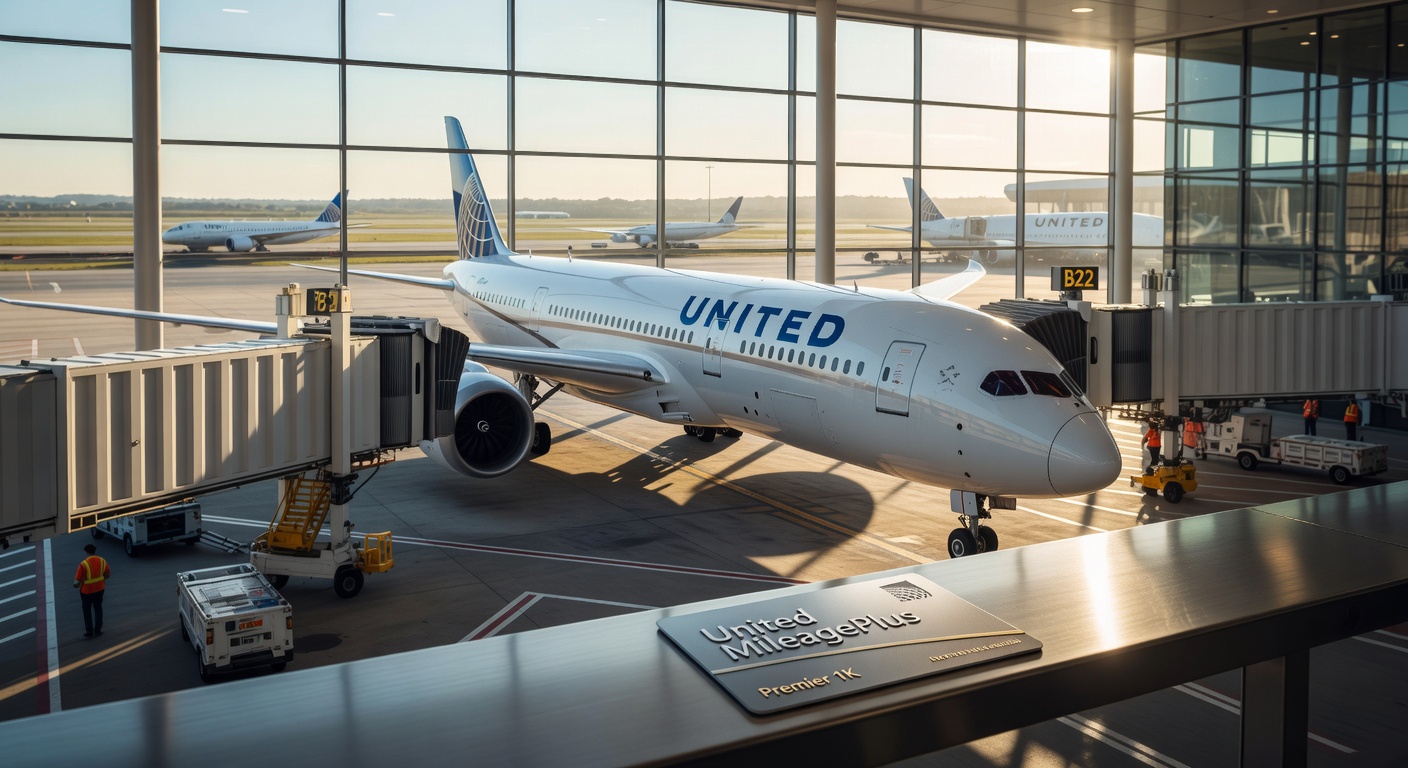
United MileagePlus is the frequent flyer program of United Airlines and one of the most important loyalty currencies in the U.S. market — not because it offers the best redemption rates, but because it sits at the intersection of the largest airline alliance and the most valuable transferable points program in America. Whether MileagePlus belongs in your wallet depends almost entirely on how you plan to earn and what you want to do with the miles.
Program Overview
MileagePlus is free to join and miles do not expire as long as your account remains open and in good standing. United eliminated inactivity-based expiration in 2019, removing a policy that had previously forfeited miles after 18 months without account activity. This is a genuine member-friendly policy that sets the program apart from some competitors.
The program covers United’s mainline and Express network, all 40+ Star Alliance carriers, and a broad set of non-alliance partners including Aer Lingus, All Nippon Airways (ANA), and several regional affiliates. United operates hubs at Newark, Chicago O’Hare, Houston Bush, Denver, Los Angeles, San Francisco, Washington Dulles, and Houston, giving the program strong domestic reach.
Earning Miles: The New Revenue-Based Structure
United overhauled its earning model on April 2, 2026, moving from a distance-based calculation tied to fare class to a spend-based system where miles earned are a multiplier of dollars paid for the ticket. The rates vary by elite status tier and whether you hold a co-branded United credit card.
For standard (non-Basic Economy) fares, the earning tiers are:
| Status | No Card | Any United Card | Explorer Card | Quest Card | Club Card |
|---|---|---|---|---|---|
| General Member | 3x | 6x | 9x | 10x | 11x |
| Premier Silver | 5x | 8x | 11x | 12x | 13x |
| Premier Gold | 6x | 9x | 12x | 13x | 14x |
| Premier Platinum | 7x | 10x | 13x | 14x | 15x |
| Premier 1K | 9x | 12x | 15x | 16x | 17x |
Basic Economy fares carry a significant penalty under the new structure. General members without a United card earn zero miles on Basic Economy tickets. Premier members and cardholders still earn — a Premier Silver member with no card earns 2x on Basic Economy, while a 1K with no card earns 6x — but the message is clear: United is using earn rates as a lever to push members toward co-branded cards.
For Star Alliance partner flights, earning rates are calculated on distance flown rather than dollars spent, varying by partner and fare class. Most partners award between 25% and 150% of miles flown depending on cabin and booking class.
Premier Status: PQF and PQP Requirements
United uses two qualifying metrics for Premier status: Premier Qualifying Points (PQP), which accumulate based on dollars spent on United tickets and co-branded card purchases, and Premier Qualifying Flights (PQF), which count individual flight segments.
Status requirements for the 2025-2026 qualification year:
| Tier | Combined Path | PQP-Only Path |
|---|---|---|
| Premier Silver | 5,000 PQP + 15 PQF | 6,000 PQP |
| Premier Gold | 10,000 PQP + 30 PQF | 12,000 PQP |
| Premier Platinum | 15,000 PQP + 45 PQF | 18,000 PQP |
| Premier 1K | 22,000 PQP + 60 PQF | 28,000 PQP |
The PQP-only path suits road warriors who spend heavily on fewer, longer flights. The combined path rewards members who fly frequently but on lower-priced fares. Co-branded card spending contributes PQP toward status — the Quest card offers the most direct path for non-frequent flyers seeking to bridge a gap at year-end.
Benefits scale meaningfully across tiers. Silver delivers complimentary domestic upgrades (waitlist), priority boarding, and a checked bag waiver. Gold adds Star Alliance Gold status, lounge access on international itineraries, and stronger upgrade priority. Platinum and 1K unlock PlusPoints — a separate upgrade currency for Polaris business class requests — along with dedicated phone lines and near-automatic upgrade clearing on most domestic routes.
Award Pricing: Dynamic and Unpredictable
United eliminated its published award chart in 2019, moving to fully dynamic pricing on both Saver and Everyday awards. There is no floor price, no ceiling, and no guarantee that a given route will cost the same on two different search dates.
Saver Awards represent the lower-priced tier with limited inventory. When Saver space is open, the value is real:
- Domestic economy: from 5,000 miles one-way on short segments; typically 12,500–15,000 miles on transcontinental routes
- Transatlantic economy on United metal: from roughly 30,000 miles one-way
- United Polaris (business class) to Europe: from approximately 80,000 miles one-way
- Star Alliance business class to Europe (Lufthansa, SWISS): approximately 80,000–88,000 miles one-way
Everyday Awards open up any unsold seat but at a steep premium — often two to three times the Saver rate for the same flight. These exist primarily as a fallback when Saver space is exhausted, and the cost-per-mile value is generally poor.
Dynamic pricing creates real friction. Close-in booking now carries a roughly 33% premium over standard award pricing — a close-in surcharge that United reintroduced after briefly eliminating it. The same award search can vary by tens of thousands of miles across a short booking window. Members who remember the pre-2019 era — when a round-trip to Europe in economy cost a flat 60,000 miles — are redeeming into a meaningfully more expensive and less predictable environment.
Co-branded cardholders receive a 10% discount on award flights as of April 2026, with Premier members receiving 15%. This offsets some of the dynamic pricing burden for cardholders.
Star Alliance Partner Awards
MileagePlus provides access to all 40 Star Alliance carriers, including Lufthansa, ANA, Singapore Airlines, Air Canada, SWISS, Turkish Airlines, EVA Air, Avianca, and Copa. Partner awards are booked at Saver rates when carriers release inventory, and United does not add fuel surcharges on its portion of award tickets — a meaningful advantage versus booking the same partners through their own programs, which often charge $400–$600 in carrier-imposed fees.
Current partner award benchmarks:
- Star Alliance business class to Europe (Lufthansa, SWISS, Austrian): approximately 80,000–88,000 miles one-way
- ANA business class transpacific: approximately 100,000 miles one-way
- Lufthansa First Class: pricing has risen sharply, with recent reports of 160,000+ miles one-way from the U.S.
- ANA First Class transpacific: approximately 242,000 miles one-way following a significant 2025 increase
The core challenge is availability. Lufthansa and ANA release limited partner space, particularly in premium cabins, and the best products — ANA “The Room,” Lufthansa’s First Class Terminal — require search flexibility and often months of lead time. Programs like Air Canada Aeroplan or Avianca LifeMiles frequently surface better availability for the same carriers and are worth checking before committing United miles. That said, United’s no-surcharge policy remains a genuine differentiator when fees would otherwise be prohibitive.
The Chase Ultimate Rewards Connection
The single most strategically important fact about MileagePlus: Chase Ultimate Rewards transfers to United at a 1:1 ratio instantly and without fees. Sapphire Preferred, Sapphire Reserve, and Ink Business Preferred cardholders can move points to United in 1,000-point increments.
This positions MileagePlus as the primary airline redemption option within the largest transferable points ecosystem in the U.S. Members who hold a Sapphire card alongside a United co-branded card operate a two-track earning system — accumulating Chase points on everyday spending and United miles directly on flights — with the ability to consolidate when a target Saver award appears.
Chase Ultimate Rewards points are valued at roughly 1.25–2 cents each depending on redemption, and United miles at approximately 1.35 cents each. The transfer makes sense when Saver space is confirmed, not as a default strategy. Transferring speculatively into a program without a confirmed award to book is a common mistake; United miles transferred out of Chase cannot be moved back.
Co-Branded Credit Cards
United and Chase offer four personal cards, refreshed in March 2025:
United Gateway (no annual fee): Earns 2x miles on United purchases, gas, and transit; 1x elsewhere. No free checked bag until $10,000 in annual card spend. Best as an entry card or for members who want MileagePlus earning without a fee commitment.
United Explorer ($150/year after first year): Two free checked bags, two one-time United Club passes annually, priority boarding, $100 United travel credit, $60 rideshare credit, and a 10,000-mile annual award flight discount. The most popular mid-tier option; the credits can offset most of the annual fee for regular United travelers.
United Quest ($350/year): Two free checked bags, $200 United travel credit, 10,000-mile annual award discount, priority boarding, and up to 3,000 PQP per year toward elite status (500 PQP per $12,000 in card spend). Designed for frequent United flyers who want meaningful status acceleration without meeting PQP thresholds through flights alone.
United Club Infinite ($695/year): Full United Club membership (unlimited visits for cardholder plus two guests), free checked bags, priority boarding, and the highest earn rates among the personal lineup. The annual fee is justified only if you access United Club lounges regularly — standalone membership costs a comparable amount and the card adds earning and bag benefits on top.
United Club Access
United Club lounges are accessible through three paths: the Club Infinite card, a purchased annual or day-pass membership ($59 per one-time pass), or earned status. Premier Gold, Platinum, and 1K members receive complimentary lounge access on international departures operated by United or a Star Alliance carrier. Domestic lounge access without a card requires a purchased pass.
Starting August 2025, one-time day passes were restricted to co-branded cardmembers and their guests, eliminating the day-pass option for members who do not hold a United credit card.
Recent Program Changes (2024–2025)
MileagePlus made several negative adjustments through 2025 and into 2026:
- August 2025: The Excursionist Perk was discontinued. This feature had allowed members to add a free one-way segment to round-trip international awards — a widely used tool for building multi-city itineraries at no extra cost.
- August 2025: Instant upgrades at ticketing on full-fare Y, B, and M fare classes were eliminated. Premier members now receive complimentary upgrades only at the standard upgrade window, not at time of booking.
- November 2025: The fixed mileage upgrade award chart was retired. Upgrade pricing is now fully dynamic, meaning the cost in PlusPoints or miles for a domestic upgrade fluctuates by route, demand, and aircraft.
- April 2026: Earning structure shifted to revenue-based rates, reducing base earning for general members and zeroing out Basic Economy earning for members without a co-branded card.
The pattern is consistent across every change: United is concentrating program value in its cardholder base and elite tiers while reducing the proposition for infrequent or fare-class-agnostic members.
Who MileagePlus Is For
MileagePlus makes the most sense for Chase Sapphire cardholders who want a natural transfer destination, frequent United flyers who can realistically reach Premier Gold or higher, and members targeting Saver award space on United’s own metal — particularly for domestic travel and off-peak transatlantic routes where Saver inventory is more available.
It is a harder sell for travelers who primarily book Basic Economy (zero earning without a card under the new structure), members chasing aspirational first-class awards on Lufthansa or ANA (where other programs often offer better availability and similar or lower pricing), or those who value simplicity — dynamic pricing genuinely rewards members who search extensively and book with lead time.
The Chase connection remains the program’s most defensible feature. As long as United is a 1:1 Chase transfer partner, MileagePlus will sit in the earning strategy of millions of Sapphire cardholders regardless of its own program direction. That embedded distribution is the reason to hold miles here even when individual redemptions test patience.
Fact-Check Notes
- PQF/PQP status thresholds (Silver: 5K PQP + 15 PQF or 6K PQP; Gold: 10K + 30 or 12K; Platinum: 15K + 45 or 18K; 1K: 22K + 60 or 28K) sourced from United’s official qualify page and corroborated by The Points Guy and NerdWallet as of the 2025-2026 qualification year.
- Earning rate table (3x–17x by status and card tier) sourced from AwardFares’ analysis of United’s April 2, 2026 revenue-based earn structure.
- No-expiration policy: United eliminated inactivity expiration August 28, 2019. The frontmatter “cons” item stating “miles expire after 18 months of inactivity” reflects the pre-2019 policy and is factually outdated. Current policy: miles are forfeited only on account closure or program rules violation. Recommend updating or removing this frontmatter con.
- Award pricing benchmarks (80K Polaris Europe, 100K ANA transpacific business, 5K–12.5K domestic economy Saver) sourced from UpgradedPoints’ 2025 redemption guide and AwardWallet’s partner award chart tracker.
- ANA First Class pricing increase (121K → 242K miles one-way) and Lufthansa First Class pricing increases confirmed via The Points Guy and Live and Let’s Fly coverage of 2025 partner devaluations.
- 2025 devaluations (Excursionist Perk, instant upgrades, dynamic upgrade pricing) confirmed via One Mile at a Time and The Points Guy news coverage, August and November 2025.
- Chase UR → United 1:1 instant transfer confirmed via Chase’s official transfer documentation and AwardWallet transfer guide.
- United Club day-pass restriction (August 2025, cardmembers only) sourced from The Points Guy lounge access guide.
- Co-branded card annual fees (Explorer $150, Quest $350, Club Infinite $695) and benefit details confirmed via Chase’s March 2025 United card refresh press release and Chase.com card pages.
- Close-in award surcharge (~33% premium) sourced from View from the Wing and Live and Let’s Fly reporting on United’s re-introduction of close-in pricing.
Frequently Asked Questions
Why is the Chase Ultimate Rewards connection important for United MileagePlus? Chase Ultimate Rewards transfers to United MileagePlus at a 1:1 ratio instantly and without fees, positioning MileagePlus as the primary airline redemption option within the largest transferable points ecosystem in the U.S. Sapphire Preferred, Sapphire Reserve, and Ink Business Preferred cardholders can consolidate Chase points into United miles when Saver award space is confirmed. This embedded distribution is the reason millions of Sapphire cardholders hold MileagePlus miles even when the program’s own direction tests patience.
How did United’s earning structure change in April 2026? On April 2, 2026, United shifted from distance-based earning to a revenue-based model where miles are a multiplier of dollars paid. General members without a co-branded card earn 3x miles per dollar on standard fares and zero miles on Basic Economy tickets — a sharp penalty designed to push members toward United credit cards. Premier 1K members holding the Club Infinite card earn 17x miles per dollar at the top of the new structure.
What are the key PQP and PQF requirements for United Premier status? Premier Silver requires 5,000 PQP plus 15 qualifying flights (or 6,000 PQP alone); Premier Gold requires 10,000 PQP plus 30 flights (or 12,000 PQP alone); Premier Platinum requires 15,000 PQP plus 45 flights (or 18,000 PQP alone); and Premier 1K requires 22,000 PQP plus 60 flights (or 28,000 PQP alone). Co-branded card spending contributes PQP toward status, with the Quest card offering up to 3,000 PQP per year through spend.
What is the difference between United Saver and Everyday awards? Saver awards represent the lower-priced tier with limited inventory — domestic economy Saver starts from 5,000 miles one-way on short segments, and United Polaris business class to Europe starts from approximately 80,000 miles one-way. Everyday awards open up any unsold seat but at often two to three times the Saver rate for the same flight, making them a poor-value fallback. United moved to fully dynamic pricing in 2019, so neither Saver nor Everyday awards have published floor prices or ceiling costs.
What negative changes did United MileagePlus make through 2025 and 2026? United eliminated the Excursionist Perk in August 2025, removing the ability to add a free one-way segment to round-trip international awards. Instant upgrade confirmation on full-fare Y, B, and M fare classes was eliminated in August 2025, and the fixed mileage upgrade award chart was retired in November 2025 with fully dynamic upgrade pricing replacing it. The April 2026 earning restructure zeroed out Basic Economy earning for general members without a co-branded card.
Do United MileagePlus miles expire? No — United eliminated inactivity-based expiration in 2019, removing a policy that previously forfeited miles after 18 months without account activity. Miles are now forfeited only on account closure or program rules violations, making MileagePlus one of the more member-friendly programs on the expiration question. This policy, combined with the Chase transfer connection, makes holding a MileagePlus balance low-risk even for infrequent United flyers.
Further Reading from Authoritative Sources
- United MileagePlus — Wikipedia provides documented background on the MileagePlus program structure, Star Alliance network, and the history of key policy changes including the 2019 expiration policy elimination that underpins the program assessment.
- Chase Ultimate Rewards — Wikipedia documents the Chase Ultimate Rewards transfer partner roster and the MileagePlus partnership that the article identifies as the single most strategically important feature of the United program for U.S.