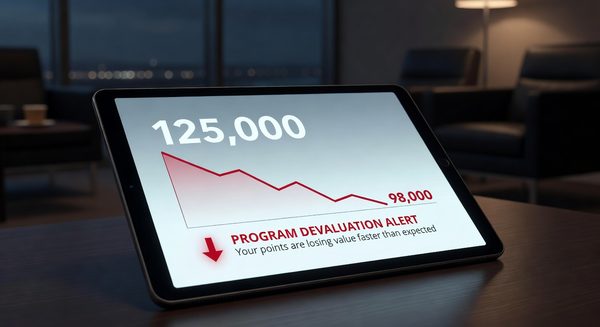
Every Flying Blue devaluation story eventually reduces to one question: did the price go up, or did the product change? On September 8, 2026, Air France-KLM’s Flying Blue program answered “both, depending on what you were buying.” The mileage floor for its cheapest awards did not move. What moved is what that floor buys, and the cost of getting back to the old package.
What actually changed on September 8
Flying Blue now splits award tickets on Air France and KLM-operated flights into three fare families: Light, Standard and Flex. The change applies only to bookings made on or after September 8, 2026. Tickets issued before that date keep their original price and conditions. Partner awards, meaning flights on other airlines booked with Flying Blue miles, are not tiered, and La Premiere is excluded.
Examples from Thrifty Traveler and Live From A Lounge, both drawn from Flying Blue’s published examples for US to Europe, show the structure:
| Route and cabin | Light | Standard | Flex |
|---|---|---|---|
| Paris to New York, business | 60,000 miles | 75,000 miles | 110,000 miles |
| US to Europe, premium economy | 40,000 miles | 50,000 miles | 85,000 miles |
| US to Europe, economy | 25,000 miles | 30,000 miles | 50,000 miles |
The percentage math, calculated from those figures rather than reported by Flying Blue, runs roughly 20% to 25% from Light to Standard: 25,000 to 30,000 is 20%, and 60,000 to 75,000 is 25%. Light to Flex is far steeper, about 83% in the business example, though Flex also carries a lower cash surcharge (about $302 versus roughly $608 on the Paris to New York example).
Why the 20-25% figure needs a caveat
Some outlets have described the change as a 20-25% devaluation of Flying Blue awards. That figure is defensible only as a like-for-like comparison. The Light fare costs the same number of miles as the old saver award. What it removes: Light has no lounge access in business, no changes or refunds, no seat selection, and in economy and premium economy no checked bag. Standard restores most of those, typically with one checked bag and changes or cancellations for a fee, and that is where the 20-25% increase appears.
So the honest summary is: the headline price is unchanged, the old package costs about a fifth to a quarter more, and a traveler who doesn’t need the extras may be no worse off. Live From A Lounge describes it as a devaluation that hides the increase, while other coverage frames it as unbundling. Both descriptions fit the same numbers.
Two other points matter. Flying Blue says the Light-to-Standard difference is fixed, but Flex pricing may move with fuel costs, and dynamic pricing can push award prices above the base rate. And a separate, earlier change should not be conflated with this one: Milesopedia reported in May 2026 that Air France-KLM had raised minimum award mileage on some routes without notice. That is a different event, and the sources do not fully agree on the numbers, so check live award searches.
Who is least affected
Elite members keep their usual benefits on Light fares. Reporting names Platinum and Ultimate members and SkyTeam elites, who keep checked bags, lounge access and fee-free changes; non-elites lose all three. Travelers whose elite status comes through a SkyTeam partner should confirm on the booking itself what is carried over, because the sources we reviewed did not cover partner-elite handling.
Mixed itineraries have their own rule. When an Air France or KLM flight is combined with a partner flight, Standard is the fare applied to the Air France or KLM portion. Fare classes also cannot be mixed across cabins in a single booking: economy Light can pair with business Light but not with business Flex.
How to spend or shift miles now
Because the repricing already took effect, the question is no longer how to beat September 8. It is what to do with the balance you have.
- Decide whether you need Standard. Price the trip both ways. If you carry only a cabin bag and your dates are fixed, Light may be enough. If you check a bag, want lounge access or need flexibility, the Standard price is the real price.
- Look at partner awards. Flights on partner airlines booked with Flying Blue miles are unchanged. Whether that is cheaper depends on the route.
- Watch Promo Rewards. Thrifty Traveler reports that existing low Promo Rewards rates, such as 45,000 miles for business from Minneapolis to Europe, remain until they sell out, and that Promo Rewards will come in all three fare types after the change. Treat those example prices as time-sensitive.
- Transfer only when you have a booking. Flying Blue is a transfer partner for major bank currencies including Chase, Amex and Capital One. Points can sit flexibly in the bank account; once moved, they are Flying Blue miles. A pricing system that now has three tiers is a good reason to confirm the exact fare before transferring.
- Mind the expiry clock. Frequent Miler reports Flying Blue miles expire after 24 months of inactivity, and that a bank transfer or any earning or redemption can extend them.
Before the next change
There is no announced next change in the sources we reviewed, and anyone who says they know the date is guessing. The more useful habit is to book a Flying Blue award as soon as you have a specific trip rather than holding miles on the expectation that prices will hold. The September change shows how an award program can raise real prices without touching the headline number, and the mileage on the search page is no longer the whole price.