The paper punch card was a remarkably honest product. You could see exactly what you were working toward — ten holes and a free sandwich — and the restaurant knew almost nothing about you in return. The transaction was transparent, low-friction, and built for an era when the only data a restaurant needed was whether the customer came back.
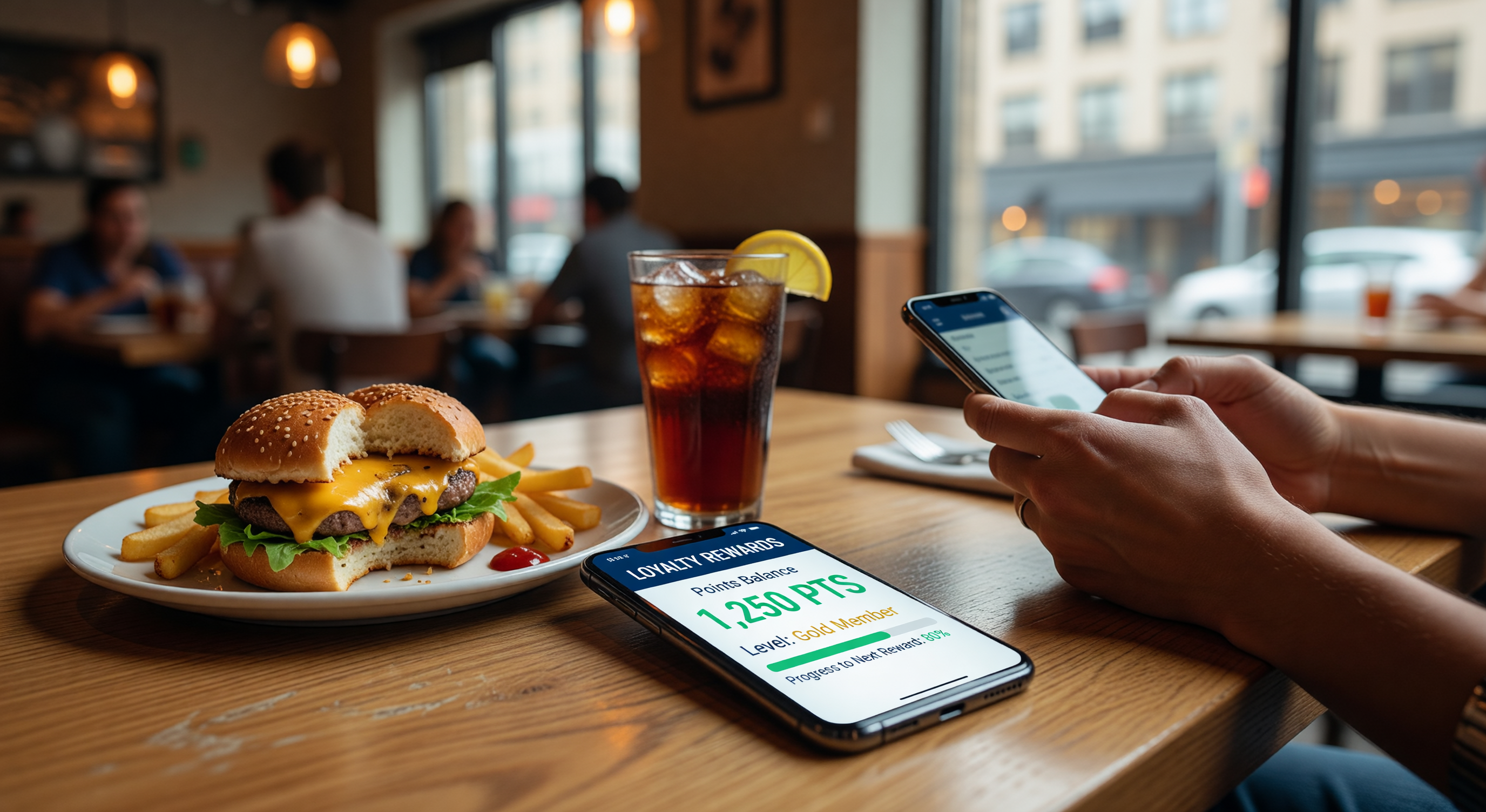
The app changed all of that. What looks like a more convenient punch card is actually a sophisticated behavioral data collection platform, a real-time marketing channel, and a payment network rolled into a single piece of software. The shift didn’t happen gradually — it happened because one chain demonstrated that the model worked so dramatically that every other chain had to respond.
Starbucks and the Benchmark That Changed the Industry
Starbucks didn’t invent the restaurant loyalty program. It created the template that every chain since has either tried to replicate or deliberately departed from.
The Starbucks Rewards program launched in its app-integrated form in 2011, at a moment when smartphone penetration was still climbing and most restaurant loyalty programs were still plastic key fob cards with static barcode membership numbers. The company had two advantages that most restaurant brands lacked: an existing stored-value gift card ecosystem with a large active user base, and a customer visit frequency that made the app worth opening regularly.
That frequency is critical. Starbucks customers — particularly the high-frequency daily visitors who make up a disproportionate share of the brand’s revenue — were visiting often enough that downloading an app and learning a new ordering workflow was a one-time cost quickly amortized across dozens of visits. The same logic doesn’t apply to a casual dining chain that a customer visits three times per year. The app model is structurally better suited to high-frequency brands, and this is a constraint that has tripped up numerous replication attempts.
By the mid-2010s, Starbucks was reporting that loyalty program revenue represented a substantial and growing share of company-operated store sales, and that mobile ordering through the app was compressing transaction times in ways that meaningfully improved throughput. The investment thesis was proven: the app was not a marketing tool bolted onto the restaurant experience, but a fundamental operational layer.
The Replication Problem
Every major chain watched the Starbucks result and drew the obvious conclusion: build a loyalty app. The subsequent wave of restaurant app launches — roughly 2013 through 2018 — produced highly variable outcomes, and the pattern of winners versus losers reveals something important about what actually drives app-based loyalty success.
Chains with high visit frequency — QSR and fast casual brands where customers might visit several times per week — saw meaningful app adoption because the behavioral context was right. Chains with lower natural frequency — casual dining, polished casual, and occasion-driven concepts — built apps and discovered that customers had no natural trigger to open them. A customer who visits Applebee’s once a month has no reason to keep the app on their home screen between visits. The notification that arrives between visits is either ignored or becomes an irritant.
The frequency threshold for app-based loyalty success appears to sit around 2–3 visits per month. Below that, the app has difficulty embedding itself in the customer’s behavioral routine. Above it, the app can function as a habitual touchpoint — something the customer uses often enough to remember and value.
McDonald’s app launch — delayed relative to peers and eventually executed with a heavy discount-first strategy — demonstrated that frequency alone isn’t sufficient. McDonald’s started with deep promotional discounts tied to app downloads (frequently offering free fries for a limited period to drive installations). The download numbers were impressive; the sustained engagement was harder to achieve. Discounts drive installation behavior, but converting an installed app into a habitual loyalty relationship requires a more complete program design.
Mobile Order-Ahead as a Loyalty Driver
The most underestimated element of app-based loyalty programs is not the points — it’s the ordering functionality. Mobile order-ahead, which allows customers to place and pay before arriving, creates a visit structure that the loyalty app entirely mediates.
When a customer orders via mobile ahead of arrival, they’re necessarily using the brand’s app. Every such transaction is automatically enrolled in the loyalty program, generates behavioral data, and creates an opening for personalized follow-up. The restaurant knows not just what was ordered but when, from where (within the mobile ordering flow), and what alternatives were considered or abandoned.
For Starbucks, mobile order-ahead became the dominant transaction type among high-frequency loyalty members within a few years of its introduction. The operational benefit — reduced queue time, improved throughput, fewer manual transaction errors — reinforced adoption. The loyalty benefit — automatic point capture without requiring the customer to show a card or scan a code — removed the friction that prevents casual members from consistently capturing their earnings.
The mobile order-ahead dynamic has reshaped store operations in ways that extend well beyond loyalty. Dedicated pickup areas, altered queue management, and modified staffing models are direct consequences of the shift to app-initiated orders. Loyalty programs that seemed like marketing tools turned out to have significant operational implications — not all of them anticipated or welcome.
Notification Fatigue and Engagement Decay
The push notification is the primary channel through which restaurant apps communicate with their members, and it is profoundly susceptible to misuse. The temptation for restaurant marketers is to treat push notifications as a zero-cost broadcast channel — sending promotional messages at whatever frequency the marketing calendar dictates.
The consumer response to over-notification is swift and permanent. When a customer perceives that an app’s notifications are not providing value — offers they don’t want, timing that’s inconvenient, messages that feel generic despite the supposed personalization — the notification permission gets disabled. Once a customer disables push notifications, the app effectively becomes an inert icon on their phone. The marketer has lost a channel that is significantly harder to reclaim than it was to lose.
Research on notification engagement consistently shows rapidly diminishing response rates as frequency increases. Best-performing programs in the restaurant space tend to restrict push notifications to genuinely high-value moments: approaching a reward threshold, a personalized offer based on recent order history, a time-sensitive promotion with clear relevance. Programs that send daily “come in today!” messages typically see notification permissions revoked at high rates within the first 90 days of membership.
Engagement decay — the pattern where app engagement is highest immediately after download and declines steadily thereafter — is a structural challenge for all app-based loyalty programs. The programs that sustain engagement best tend to have two things: genuine utility (the app is useful even when you’re not thinking about loyalty) and a reward structure that produces frequent small wins rather than infrequent large ones. The psychological research on variable reward schedules is relevant: consumers maintain engagement with systems that provide rewards at irregular but not-too-rare intervals.
The Data Advantage and What Operators Do with It
The paper punch card collected no information about the customer. The loyalty app collects an extraordinary amount of information — order history, visit frequency, time of day, day of week, seasonal patterns, response to specific promotional offers, and often payment behavior and geographic data.
For operators who use this data well, the advantage is substantial. A chain that knows which customers are approaching a lapse in visit frequency — based on a deviation from their established pattern — can send a re-engagement offer precisely when it’s most likely to be effective. A chain that knows a customer always orders a specific item and that item has increased in price recently can proactively communicate value in a way that prevents the customer from quietly substituting to a competitor.
The gap between collecting this data and actually using it effectively is wide. Many restaurant operators have built loyalty programs that generate rich behavioral data and then use that data only for basic email segmentation — a fraction of its potential value. The organizations that have invested in marketing technology infrastructure to actually activate loyalty data (personalized in-app offers, trigger-based communication, segment-specific menu promotions) outperform those that treat the loyalty platform as a point ledger.
Privacy regulation is an evolving constraint on this data advantage. State-level privacy laws in California (CCPA) and elsewhere, along with anticipated federal-level frameworks, impose requirements on how consumer behavioral data is stored, shared, and disclosed. Restaurant brands that have built loyalty programs with minimal privacy architecture are facing increasing compliance exposure. The programs that treat member data as a responsibility rather than an asset have a structural advantage as regulation tightens.
What Comes Next: Embedded Payments, AI Personalization, and the Loyalty Wallet
The next evolution of restaurant loyalty is already visible in early implementations at leading brands. Several developments are likely to define the category over the next three to five years.
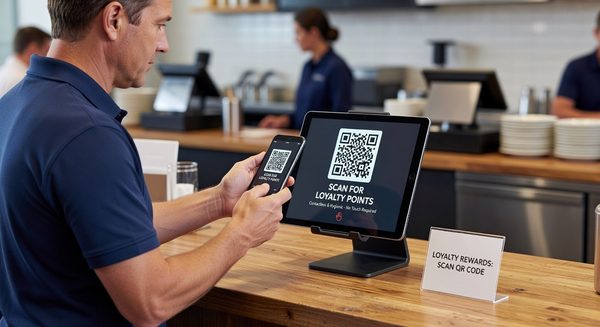
Embedded payment and loyalty convergence. The separation between the payment layer and the loyalty layer is an artificial one, maintained largely by the complexity of POS integrations. As more restaurants move toward cloud-based POS systems with open APIs, the ability to tie loyalty point capture directly to payment — without requiring a separate scan or login — becomes architecturally simpler. The customer pays with a linked credit card and the points appear in their account automatically. This removes the single biggest source of missed earning (customers who forget to scan), which is currently a significant driver of member frustration and program abandonment.
AI-personalized offers. The shift from rule-based offer segmentation (“send this offer to customers who haven’t visited in 30 days”) to machine learning-driven personalization (“determine the optimal offer for this specific customer based on their full behavioral history”) is underway at the largest chains and will cascade to mid-size operators as platforms incorporate these capabilities. The difference in offer relevance and redemption rates between rule-based and ML-driven personalization is significant enough that it will become a competitive baseline rather than a differentiator within a few years.
Loyalty wallet integration. Apple Wallet and Google Pay integration for loyalty programs — moving beyond payment to include point balances, offer display, and redemption triggers — represents a potential reduction in the app maintenance burden for both operators and consumers. A customer who doesn’t want to maintain a dedicated app for every brand they patronize might accept a wallet-based loyalty credential that provides basic functionality without requiring an installed application. Whether this reduces engagement (by removing the rich interface) or expands participation (by lowering enrollment friction) remains an open question.
The punch card collected nothing and gave away a free sandwich. The app collects everything and gives away a free sandwich — plus a continuous data feed, a marketing channel, an ordering platform, and a behavioral loop designed to reinforce habit. The next generation of restaurant loyalty will be even more sophisticated, more personalized, and more integrated into the payment infrastructure that already sits in every customer’s pocket. Whether that’s better for consumers depends heavily on how operators choose to use the tools they’re building.
Frequently Asked Questions
Why did Starbucks become the model that every restaurant loyalty program copied?
Starbucks had two structural advantages that most restaurant brands lack: very high customer visit frequency (many customers visit daily or multiple times per week) and an existing stored-value gift card ecosystem with an active user base. High frequency made the behavioral economics of app adoption work — downloading and learning an app is worth the friction if you’ll use it hundreds of times per year. Brands with lower natural visit frequency have struggled to replicate the model for this reason.
Do restaurant mobile loyalty apps actually improve visit frequency?
Research consistently shows that app-enrolled loyalty members visit more frequently than non-enrolled customers. The more relevant question is causality — frequent customers self-select into programs, which inflates the observed difference. What’s better-supported is the engagement loop within programs: members who actively order through the app and regularly redeem rewards tend to maintain higher visit frequency than passive members who enrolled and forgot. The mobile ordering habit itself, independent of the loyalty points, appears to reinforce visit frequency.
What causes engagement decay in restaurant loyalty apps?
Engagement typically peaks in the first 30–60 days after enrollment (driven by the novelty effect and the pursuit of a sign-up bonus) and declines thereafter. The programs that best resist this decay have genuine utility beyond loyalty (the app is useful for ordering, not just for points), frequent low-value rewards that create regular moments of positive reinforcement, and push notification discipline — reserving notifications for genuinely high-value moments rather than treating the channel as a broadcast tool. Programs that send frequent low-value push notifications accelerate their own decay by driving notification permission revocations.
How do restaurant apps use order history data to personalize offers?
Effective personalization starts with identifying patterns in individual customer behavior: what they order, when they order, how frequently they visit, and what promotions have driven visits in the past. Rule-based systems segment customers into broad groups and apply group-level offers. More sophisticated ML-driven systems generate individual-level offer recommendations based on the full customer history. The practical difference shows up in offer relevance and redemption rates — personalized offers significantly outperform generic ones, and the gap widens as the personalization becomes more precise.
What does the next generation of restaurant loyalty look like?
The most significant near-term developments are embedded payment-loyalty convergence (automatic point capture via linked payment method, no scan required), AI-driven offer personalization at the individual customer level rather than segment level, and possible loyalty wallet integration that reduces the app-per-brand requirement. Longer-term, the convergence of loyalty data with real-time behavioral triggers — offers arriving at the moment the system predicts a customer is considering a visit — represents a further step toward a model where the program feels genuinely responsive to the customer rather than scheduled by a marketing calendar.
Further Reading from Authoritative Sources
- FTC consumer data guidance — FTC guidance on consumer data privacy directly applies to the restaurant loyalty app data practices discussed in this article, including CCPA compliance requirements.
- Harvard Business Review — HBR publishes behavioral economics research including variable reward schedule psychology that underpins the analysis of why infrequent but unpredictable rewards sustain engagement better than predictable ones.