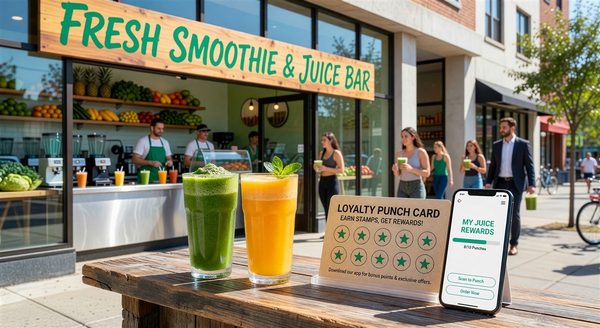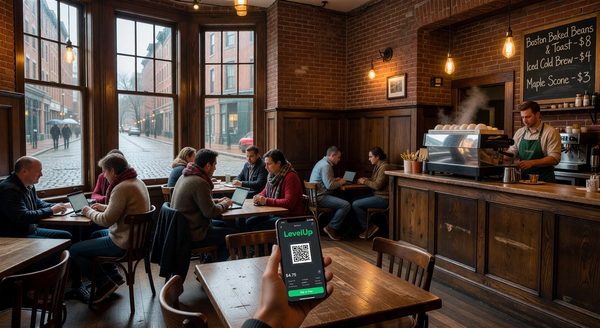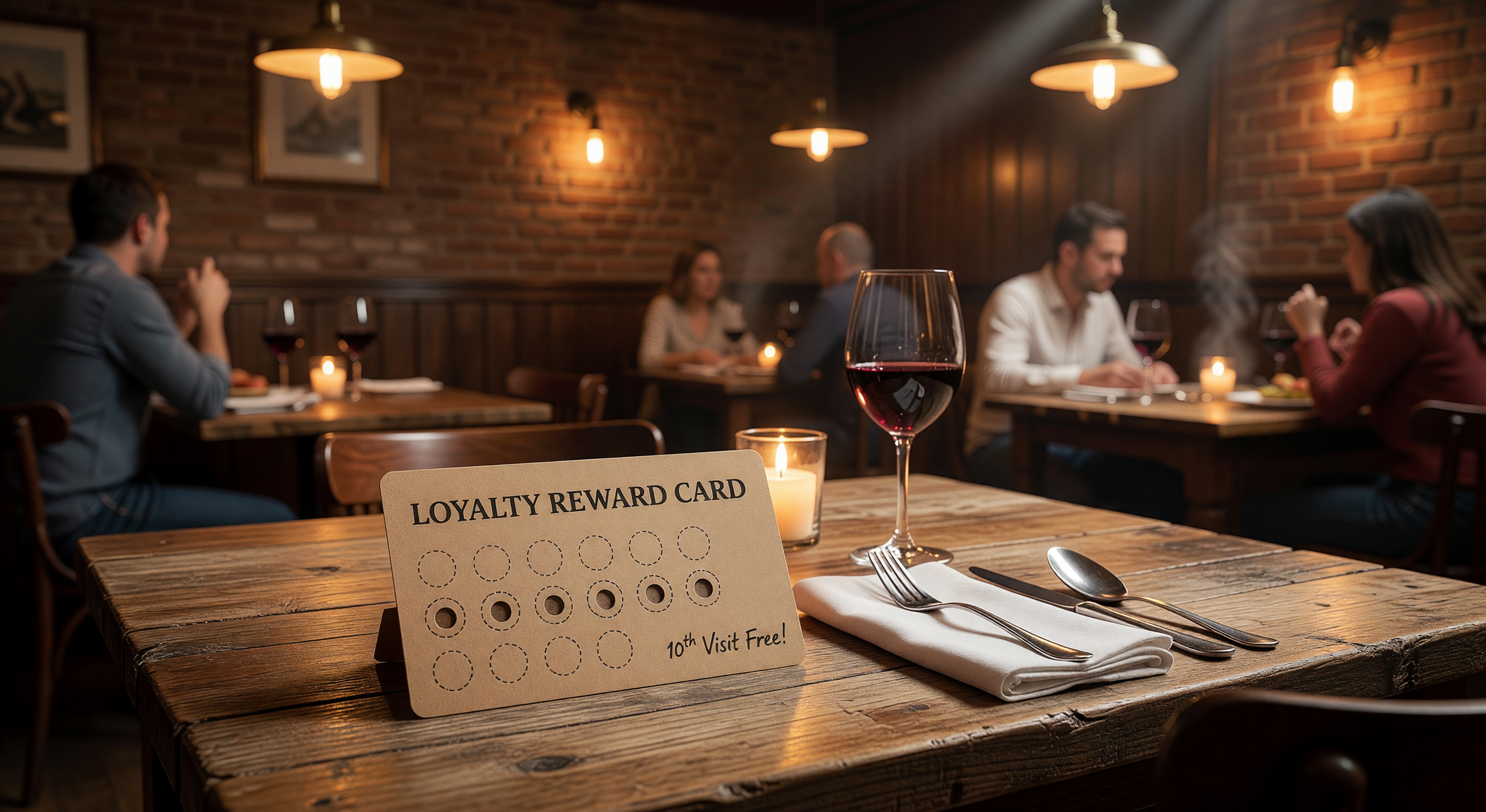
You’ve probably got at least three restaurant loyalty apps on your phone. Maybe you actually use one of them. The rest sit there collecting dust, their unredeemed points slowly expiring while you tell yourself you’ll get around to using them eventually.
That gap — between joining a program and actually getting value from it — is where the economics of restaurant loyalty live. Understanding how these programs are designed, who they’re designed to benefit, and what actually happens to your points is the starting point for evaluating whether any given program is worth your attention.
The Core Mechanics: Points, Stars, and Credits
Most restaurant loyalty programs use one of three accounting units: points, stars, or direct dollar credits. The unit itself doesn’t matter much — what matters is the exchange rate between your spending and your reward.
Points programs assign a point value to each dollar (or sometimes each transaction). Chipotle Rewards, for example, awards 10 points per dollar spent. Rewards start at 250 points for a side or drink and scale up from there. At 10 points per dollar, you need to spend $25 to earn a free side — an effective reward rate of roughly 2-4% depending on what you redeem for.
Stars programs are most famously associated with Starbucks Rewards. The base earn rate is 1 star per dollar spent, rising to 2 stars per dollar when you preload money onto a registered Starbucks Card and pay with that balance. Rewards begin at 25 stars (a free customization add-on) and scale to 400 stars for merchandise. A free handcrafted drink runs 200 stars (raised from 150 in early 2023) — so at the base 1-star-per-dollar rate that’s roughly $200 of spend, or about $100 if you earn at the 2-stars-per-dollar Starbucks Card rate. Whether that’s good value depends entirely on what drink you order.
Dollar credit programs are the most transparent. Panera Bread’s Unlimited Sip Club and its MyPanera+ subscription model have moved in this direction, though Panera’s broader loyalty history is complicated by multiple program overhauls since the original MyPanera launched in 2010.
Tiered vs. Flat Programs
The loyalty industry broadly divides into flat-rate programs (same earn rate for everyone) and tiered programs (earn rates or benefits improve as you spend more).
Flat programs are simpler and often more appealing to casual customers. Chipotle Rewards is flat — every dollar earns 10 points regardless of how often you visit. This simplicity has clear consumer appeal but limits the program’s ability to incentivize its most valuable customers differently.
Tiered programs try to concentrate their value at higher spend levels. Starbucks Rewards operates with a relatively flat structure — the earn rate (1 star per dollar, or 2 when paying from a registered Starbucks Card balance) doesn’t escalate with status — but Starbucks has historically used status mechanics (like “Gold Card” status before the 2019 redesign) to create emotional investment in the program beyond pure economics.
More elaborate tier structures show up in hotel and airline loyalty, but restaurants have been cautious about full multi-tier systems because the average check frequency and dollar amounts make higher tiers harder to attain and less meaningful to most customers.
How Earn Rates Are Calculated (and What They Hide)
When a program advertises “earn 10 points per dollar,” the headline number means almost nothing without knowing the redemption value.
The math that actually matters is: dollars spent to earn a free reward ÷ typical reward value = effective discount rate.
Using Chipotle as an example:
- 10 points per dollar
- Cheapest reward: 250 points (a free side, approximate retail value $2.50)
- Dollars to earn it: $25
- Effective discount: $2.50 / $25 = 10%
That’s actually a decent earn rate. But if you’re redeeming at the 1,250-point tier (approximately $10 off your next order), you’ve spent $125 to get $10 back — an 8% effective rate that still looks reasonable.
The catch is that many programs design their redemption tiers to encourage higher-value redemptions that feel more exciting but deliver worse effective rates. A “free entrée” that requires 1,250 points might be worth $9, but a side dish at 250 points might be worth $3. The entrée feels like more, but the math is identical — or worse, if the entrée value-per-point is actually lower.
Point Expiration: Where Programs Get Quietly Punitive
Expiration policies are where many loyalty programs reclaim value they’ve nominally granted to customers. Policies vary widely:
Activity-based expiration is the most consumer-friendly: your points stay alive as long as you make a qualifying transaction within a rolling window (typically 6 or 12 months). This means occasional customers won’t lose points as long as they visit at least periodically.
Time-based expiration is stricter: points expire on a fixed date regardless of activity, sometimes at the end of a calendar year or 12 months from when they were earned.
No expiration is rare and usually signals either a very new program still building membership or one that has calculated expiration costs carefully. Sweetgreen’s loyalty program has historically emphasized a simpler structure, though programs evolve.
The practical impact of expiration policies is significant. Programs with aggressive expiration schedules effectively recapture a portion of outstanding liability — when points expire unredeemed, the restaurant keeps the revenue without delivering the reward. From a consumer standpoint, a generous earn rate paired with harsh expiration terms can produce a program that’s structurally designed to be hard to actually redeem.
Mobile vs. Card: The Infrastructure of Loyalty
Until roughly 2011, restaurant loyalty was predominantly card-based: punch cards, magnetic stripe cards, key fobs. The friction was physical — you had to remember to carry the card, the cashier had to scan it, and data was often siloed.
The mobile shift changed the economics fundamentally. Starbucks launched its app with mobile ordering in 2011 and by 2015 was processing more than 20% of its US transactions through mobile. That figure has grown since — Starbucks has reported mobile ordering accounting for roughly 30% or more of transactions in recent years.
For operators, the mobile infrastructure unlocks:
- Behavioral data at the individual customer level
- Push notification channels for promotions
- Mobile ordering that can be tied directly to loyalty earning
- Gamification hooks (streaks, challenges, bonus point events)
For consumers, mobile means the program is always accessible, but it also means the program is always present — and designed by teams whose job is to increase engagement and visit frequency.
Card programs still exist — many regional and independent restaurant groups run simple card-based programs through providers like Paytronix or Thanx — but any serious national program now treats the app as primary infrastructure.
Bonus Challenges and Promotional Earn Events
The standard earn rate is rarely the whole story. Most programs layer promotional mechanics on top of the base rate:
Targeted challenges prompt specific behavior (“Earn 2x points on your next 3 visits this month”) and are typically personalized based on purchase history.
Bonus point events offer elevated earn rates for a limited window — often tied to new menu items, seasonal promotions, or slow traffic periods.
Referral bonuses reward members for recruiting new enrollees.
These mechanics serve two purposes: they drive near-term behavior and they create engagement with the program beyond the base transaction. From a data standpoint, they also allow programs to test price sensitivity and promotion response at the individual level.
For consumers, promotional challenges can meaningfully improve effective earn rates — but only if you’re paying attention and the targeted offer aligns with what you were going to do anyway.
What “Free” Actually Means
One of the persistent distortions in loyalty program marketing is the framing of rewards as “free.” Nothing about a loyalty reward is free — it’s a delayed discount on purchases you’ve already made, structured to encourage repeat visits.
The most accurate way to think about loyalty rewards is as a rebate program with behavioral conditions. The rebate rate (effective discount) is what matters, and it varies based on what you redeem for, whether you can actually get to the redemption threshold, and whether the program’s expiration and restriction policies will let you claim the reward at all.
Programs like Panera’s original MyPanera were explicit about this framing — MyPanera was marketed as a personalized rewards program that learned your preferences, not just a points accumulator. Whether that approach built more loyalty than a straightforward points system is genuinely uncertain.
The Starbucks Benchmark (and Why It’s Hard to Replicate)
Starbucks Rewards is the most-studied loyalty program in the restaurant industry, and for good reason: it works at a scale and depth that most programs haven’t approached. As of 2024, Starbucks reports approximately 34 million active US Rewards members, accounting for roughly 58% of US company-operated sales.
The structural reasons Starbucks Rewards succeeded so completely are worth understanding:
High visit frequency. Coffee is a daily habit for millions of customers. A program built on visit frequency works best when customers visit frequently by default.
High customization. The Starbucks menu allows thousands of drink variations, which creates strong personal attachment to specific orders — exactly the kind of personalization that loyalty programs can track and reward.
Strong app utility. Mobile order-ahead functionality reduced friction for a use case (morning coffee run) where speed matters enormously.
Early mover advantage. Starbucks launched its mobile payment and loyalty integration years before most competitors, normalizing the behavior before customers had alternatives.
Most fast casual and QSR chains have launched programs that structurally resemble Starbucks Rewards but lack one or more of these preconditions. A burger chain with lower visit frequency and less menu complexity faces a fundamentally different loyalty challenge than a coffee chain.
Frequently Asked Questions
How do I calculate the actual value of a loyalty program’s points?
Divide the dollar value of the reward by the dollars you need to spend to earn it. If you spend $50 to earn a free item worth $5, your effective earn rate is 10%. Compare this across programs using the rewards you’d actually want to redeem — not the most aspirational tier.
Why do restaurant loyalty programs expire points?
Expiration serves two purposes. Operationally, it limits outstanding liability — unredeemed points represent a future cost, and programs need to forecast that liability. Behaviorally, expiration creates urgency that can drive visit frequency. From a consumer standpoint, expiration terms are worth reading carefully before joining a program.
What’s the difference between a points program and a punch card?
Mechanically, not much — both track purchases toward a reward threshold. The difference is in data, personalization, and channel. Digital points programs capture detailed purchase data, enable personalized offers, and communicate through app notifications and email. A punch card captures none of that.
Are tiered loyalty programs better for consumers or restaurants?
Tiered programs tend to benefit restaurants more than casual customers. Higher-spending customers get better rates, which rewards the behavior restaurants most want to encourage. For consumers who visit infrequently, flat programs often deliver better per-visit value because there’s no penalty for not reaching a tier.
Do loyalty program members actually spend more?
The research generally shows a positive relationship between loyalty program membership and spending, but causality is tricky. Programs disproportionately attract customers who were already inclined to visit frequently. The question for operators is whether the program is incrementally increasing spending from that group, or simply rewarding behavior that would have happened anyway. Most programs produce some lift; the size of that lift relative to program cost is what determines ROI.
Further Reading from Authoritative Sources
- Starbucks Rewards — Wikipedia documents the Starbucks Rewards program structure and scale that the article positions as the industry benchmark — the standard against which all other restaurant loyalty programs are implicitly compared.
- Harvard Business Review — HBR’s consumer behavior research underpins the article’s analysis of loyalty program economics, including the causality challenge of separating program-induced lift from self-selection bias in member enrollment.