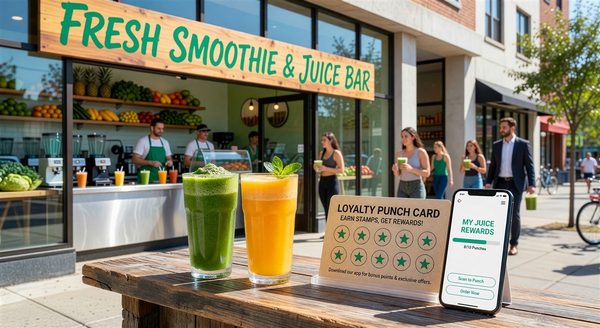
Most restaurant loyalty programs are not worth joining. That’s a strong opening, and it’s meant to be. The restaurant industry has deployed billions of dollars in loyalty infrastructure on the premise that earning a free burrito after twelve visits is an irresistible proposition. For some programs, it is. For many others, the free burrito costs you more in data, attention, and friction than it’s worth.
The question “is this loyalty program worth joining?” has a real answer — one that comes from math, not feelings about a brand. This is the framework.
Start with the Cents-Per-Dollar Calculation
Before you do anything else, figure out the effective return rate of the program. This single number tells you more than any marketing language ever will.
The formula has two steps. First, identify the minimum meaningful reward: what’s the cheapest reward you can get, and how many points does it require? Second, divide the dollar value of that reward by the points required, then multiply by the earn rate (points per dollar spent). The result is your effective return in cents per dollar.
Worked example — Chipotle Rewards: You earn 10 points per dollar. A free entrée costs 1,625 points. That entrée is worth roughly $10–11 at current menu prices. So: (10.50 ÷ 1,625) × 10 = $0.065, or about 6.5 cents per dollar. That’s a 6.5% effective return on your Chipotle spending, which is genuinely competitive relative to most retail loyalty programs.
Worked example — a hypothetical casual dining program: You earn 1 point per dollar. A $10 reward requires 500 points, meaning you’d need to spend $500 to earn $10 back. That’s a 2% return — below what most entry-level cash back credit cards pay, and with far more restrictions.
When the math produces a number below 2%, be skeptical. At that level, you’re providing the restaurant with significant behavioral data for a discount that doesn’t meaningfully offset even one percent of your spending. That’s not a value exchange — it’s primarily a data collection program wearing a rewards costume.
Redemption Restrictions: Where Programs Quietly Destroy Value
The earn rate is what’s advertised. The redemption restrictions are what’s buried in the terms. Before enrolling in any program, evaluate these specific restriction categories.
Minimum redemption thresholds are the first filter. Some programs won’t let you redeem anything until you’ve accumulated enough currency for a specific reward tier. A program that requires 1,000 points before any redemption is available — at an earn rate of 1 point per dollar — asks you to spend $1,000 before you see a single benefit. For anyone not visiting multiple times per week, that’s months of accumulation with zero feedback loop along the way.
Item restrictions on free rewards matter more than they appear. A “free item” reward that only applies to items priced at $8 or less is a different proposition than one that applies to any menu item. If the targeted free item is a fountain drink that costs the restaurant 40 cents, the nominal $2 value on the menu doesn’t reflect the actual economic exchange. Always ask: can I use this reward on the item I actually want?
Blackout periods and channel restrictions are common in larger programs. Some programs don’t allow reward redemption through third-party delivery apps — meaning you can earn points when ordering delivery but can’t use rewards for it. Others restrict rewards to specific dayparts, preventing peak-hour use. These restrictions aren’t necessarily dealbreakers, but they should be factored into your expected value.
Stacking restrictions govern whether you can combine a loyalty reward with a promotional discount or a coupon. Many programs explicitly prohibit combining rewards with other offers. If you’re a customer who regularly uses promotional codes, the net value of the loyalty reward may be lower than you’d expect because it replaces discounts rather than stacking on top of them.
The Sign-Up Bonus: Where the Math Gets Interesting
Most major programs offer a sign-up bonus — a points boost or a free item awarded simply for enrolling. This bonus can be the single most valuable thing you get from the program, particularly if your visit frequency is low.
The correct analysis of a sign-up bonus is straightforward: what is the dollar value of the bonus, and what is the dollar value of your ongoing participation over a one-year period? If the sign-up bonus exceeds the ongoing annual value of the program at your expected visit frequency, and if there are no requirements tying you to continued engagement, then enrolling for the bonus and treating the ongoing program as secondary is a perfectly rational strategy.
Some programs have caught on to this behavior and added mechanisms to prevent it — requiring a second or third visit before the sign-up bonus is awarded, or tying bonus delivery to a minimum spend in the first 30 days. These requirements are not unreasonable, but they should be visible before you decide to enroll.
The sign-up bonus also functions as a trial of the program experience. If the process of claiming your bonus reward is confusing, slow, or requires more steps than advertised, that’s a signal about how the rest of the program will function.
Data Privacy: The Cost That Doesn’t Show on the Receipt
When you join a loyalty program, you are providing an ongoing behavioral data feed to a restaurant company. Every order is logged, timestamped, and associated with your profile. That information has value — it’s why the restaurant is offering you discounts in the first place.
The question is what happens to that data. The range of practices across restaurant loyalty programs is wide. Some programs’ data stays within the brand’s systems, used only to personalize offers and inform marketing strategy. Others share or sell aggregated behavioral data to third-party advertising partners. Some programs use loyalty data to feed geo-targeted advertising that follows you across other digital properties.
Reading a privacy policy is not enjoyable. But the relevant section for most loyalty programs is short: look for language about “sharing with third parties,” “marketing partners,” or “affiliated entities.” If data sharing with third parties is opt-out rather than opt-in — meaning it’s default behavior unless you take action — that’s a relevant input to your enrollment decision. Under CCPA, California residents have the right to opt out of data sharing and must be given a clear mechanism to do so. Several other states (Virginia, Colorado) have enacted similar frameworks. If you’re in a state with active privacy law, programs have legal obligations around disclosure — use that leverage.
This is not an argument against joining loyalty programs. It’s an argument for knowing what you’re agreeing to before you click “join.” The data tradeoff is real, and for some consumers in some contexts, it matters.
Programs That Deliver Genuine Value vs. Data Collection Vehicles
Not all programs are created equal. Based on the earn-and-redeem math and structural design, some programs occupy clearly distinct positions.
Programs that deliver genuine value tend to share these characteristics: low earn thresholds that produce rewards within a realistic visit window, transparent redemption value, broad reward applicability (not restricted to low-cost items), and honest privacy terms that default to minimal sharing. Chipotle Rewards delivers a competitive effective return rate near 6.5%, with rewards that apply to full entrées rather than marginal items. Starbucks Rewards was long cited as the benchmark, but its 2026 overhaul introduced a tiered structure (Green, Gold, Reserve) that complicates the math. Base-level Green members now earn 1 Star per dollar, while Gold members (earned after 500 Stars in a 12-month period) earn 1.2 Stars per dollar and Reserve members (2,500 Stars) earn 1.7 Stars per dollar. A free handcrafted drink costs 200 Stars, meaning a Green-level member needs to spend $200 to earn a free latte — still reasonable for a daily coffee habit, but a meaningful devaluation from earlier program structures. The tiered design effectively rewards high-frequency customers while providing less value to casual visitors than the old flat-rate program did.
Programs that primarily function as data collection tend to show: very low effective return rates (below 2%), complex earn structures that obscure the actual math, high minimum redemption thresholds, and earn rates that decline over time after sign-up bonuses expire. Programs that require you to reach a spending threshold before any loyalty status unlocks — without awarding you anything in the interim — are particularly suspect. If the restaurant isn’t giving you anything until you’ve spent $200, the relationship is working mostly in one direction.
Subscription-adjacent hybrid programs represent a newer category worth evaluating separately. Panera Bread’s Unlimited Sip Club, which charges $14.99 per month (plus tax) for unlimited beverages — drip coffee, iced coffee, hot tea, fountain soda, and select bubbler drinks — is a loyalty mechanism built on a subscription model. The math here requires estimating actual usage: a single daily coffee at Panera runs roughly $3–4, so the break-even point is about four to five visits per month. For heavy Panera frequenters, the value is substantial. For occasional visitors, it’s a poor deal dressed as a perk. The annual plan ($119.99) offers a modest discount over monthly, but locks in the commitment — only worthwhile if your Panera habits are genuinely habitual rather than aspirational.
The Checklist
Before enrolling in any restaurant loyalty program, run through these questions:
- What is the effective return rate in cents per dollar? Calculate it, don’t estimate it.
- What is the minimum redemption threshold, and at my expected visit frequency, how long does it take to reach it?
- Can the reward be applied to menu items I actually order, or only to specific low-value items?
- Does the program have a blackout window, channel restriction, or stacking restriction that would prevent me from using rewards when I want to?
- What is the expiration policy? Is it based on account inactivity or calendar date?
- What does the privacy policy say about data sharing with third parties, and is it opt-in or opt-out?
- What is the sign-up bonus, and does my enrollment decision change if I subtract the sign-up bonus from the expected annual value?
Programs that pass this checklist are worth joining. Programs that fail multiple questions are asking you to subsidize their marketing intelligence in exchange for a discount that barely covers the friction cost of participation. Know the difference.
Frequently Asked Questions
How do I quickly evaluate whether a restaurant loyalty program is worth my time?
Calculate the effective return rate: divide the dollar value of the minimum meaningful reward by the points required to earn it, then multiply by the earn rate per dollar spent. If the result is below 2 cents per dollar (a 2% return), the program offers less value than a basic cash-back credit card with no restrictions. Anything above 5% represents a genuinely competitive return worth taking seriously.
What redemption restrictions should I watch for before joining a program?
The most value-destroying restrictions are minimum redemption thresholds (you can’t use anything until you’ve accumulated a large balance), item restrictions (rewards only apply to low-priced menu items), channel restrictions (rewards can’t be used for delivery orders), and stacking prohibitions (you can’t combine loyalty rewards with promotional discounts). Check for all four before enrolling.
Should I join a loyalty program even if I only visit occasionally?
If the sign-up bonus has meaningful standalone value and you’re willing to complete any minimum spend requirement to claim it, joining for the bonus alone can be rational. For ongoing value, the math gets harder for infrequent visitors — especially if expiration policies will clock out your accumulated balance before you reach any redemption threshold. Calculate when you’d realistically earn your first reward at your expected visit frequency before committing.
Are restaurant loyalty programs collecting and selling my data?
It depends on the program. Restaurant loyalty programs collect order history, timing, location, and payment behavior by design. What varies is what happens to that data downstream. Some programs use it only internally for personalization and marketing. Others share aggregated or anonymized data with third-party partners. The privacy policy is the only authoritative source — specifically, look for how “sharing with third parties” is handled and whether it’s opt-in or opt-out.
Which restaurant loyalty programs offer the best effective return rates?
Based on current public program structures, Chipotle Rewards ranks among the strongest — approximately 6.5% effective return at the standard earn rate with free entrée redemption. Starbucks Rewards is structurally competitive for high-frequency visitors who can reach Gold or Reserve status, but the 2026 tiered overhaul means base-level Green members get a lower effective return than the program’s previous flat-rate structure provided. Programs that offer rewards for every dollar spent (rather than requiring large accumulated thresholds) and allow redemption on full-priced items rather than marginal add-ons tend to outperform across this metric. Avoid programs where the math produces returns below 2–3% absent a significant sign-up bonus.
Further Reading from Authoritative Sources
- FTC data privacy and consumer choice — FTC guidance on consumer data privacy and opt-out mechanisms is directly cited in the context of loyalty program data collection practices.
- National Retail Federation — NRF publishes consumer research on loyalty program participation and value that supports the framework for evaluating program worth presented in this article.