Every loyalty operator has a working theory of what their members want. That theory is sometimes correct and frequently — once the actual consumer research is laid alongside it — partly wrong. The gap between what operators believe and what members say is one of the more useful pieces of evidence in the loyalty literature, and it has widened in some predictable ways in 2025.
This piece synthesizes what consumer research is telling us about how people feel about loyalty programs in 2025, where satisfaction comes from, where it falls apart, and what the implications are for program redesign.
Participation Is High; Engagement Is Lower
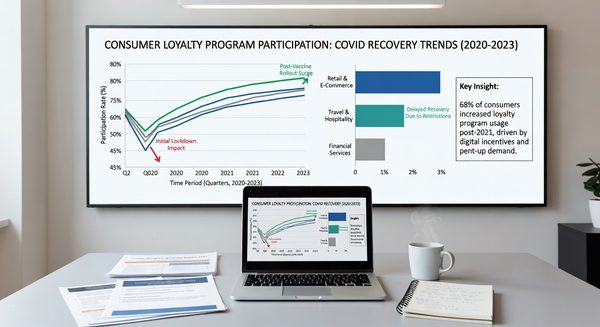
The consistent picture from consumer research is that participation in loyalty programs is broad — most consumers are members of multiple programs across the categories they shop in regularly. Active engagement, however, is concentrated in a smaller set of programs per consumer. Members are signed up for many programs and engaged with few.
This has an important implication: the competitive question is not whether to enroll customers. It is whether to be one of the small handful of programs the customer actually pays attention to. Operators framing the program battle around enrollment are competing in the wrong arena.
What Members Say They Value Most
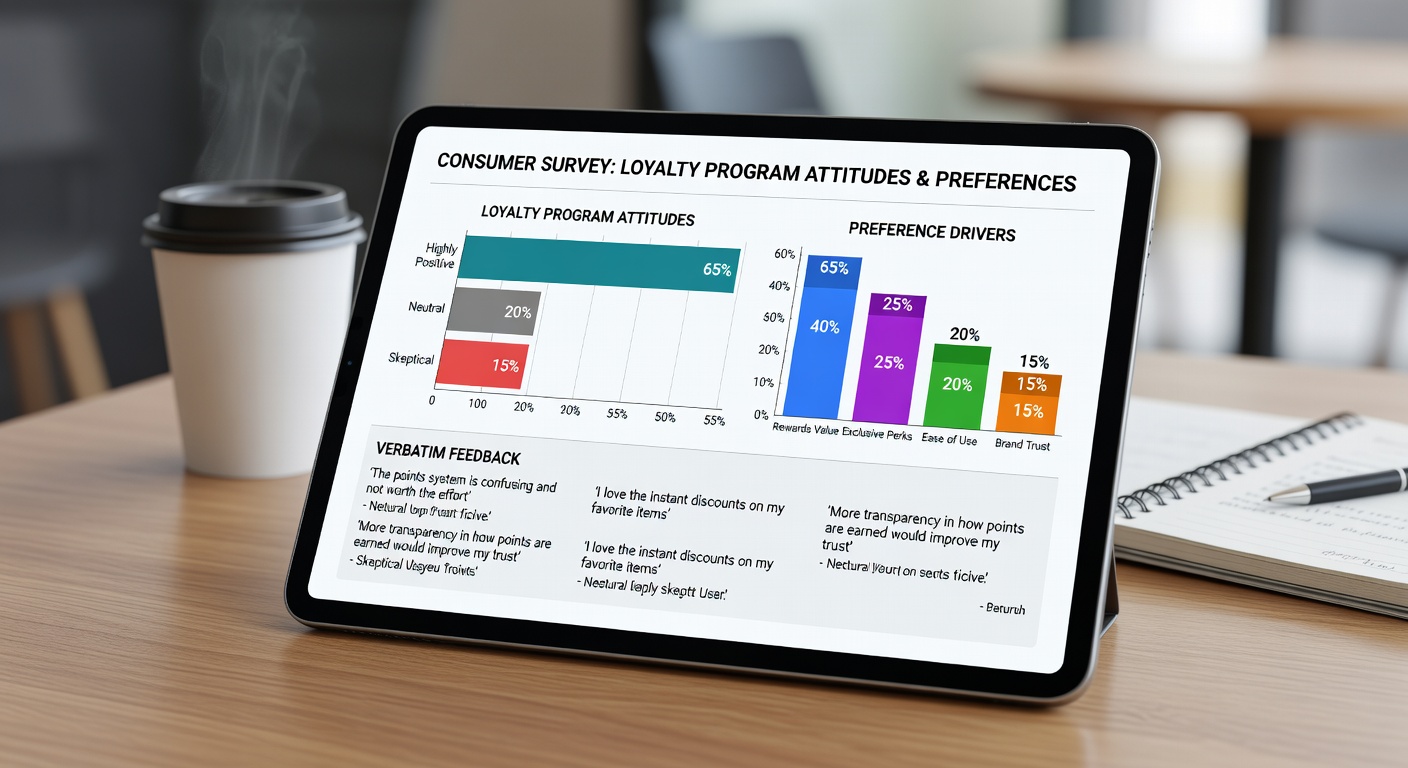
Across studies in 2025, the satisfaction drivers that consumers consistently rank highly are:
Tangible, everyday value. Members value programs that deliver real benefits on the things they would have bought anyway. The fantasy reward — the trip, the bonus item, the experience — appeals to a subset of members but is not the central satisfaction driver for most.
Simplicity. Members value programs they don’t have to study to use. Programs that require members to remember tier thresholds, multipliers, expiration windows, and category bonuses are eroding satisfaction even when they appear feature-rich on paper.
Recognition. Members value being treated as a member — not as anonymous traffic that happens to have an account number. This shows up in everything from staff recognition at point of sale to communications that reference past behavior rather than blasting generic offers.
Trust. Members value programs where the rules don’t quietly change against them. Devaluations, narrowed redemption options, and unilateral tier-threshold increases all damage satisfaction durably.
Communication restraint. Members value programs that communicate when they have something useful to say, not on a fixed cadence. Over-communication is a leading satisfaction killer in 2025 consumer research.
The Value-Privacy Tradeoff
The single biggest tension in the 2025 consumer relationship with loyalty is the data tradeoff. Consumers are simultaneously asking for more personalization and growing more skeptical of how their data is used to deliver it.
The research consistently shows that the consumer position is not anti-data. It is anti-surprise. Members are willing to share data that they understand will improve their experience and that they trust the brand not to abuse. They are not willing to share data that they suspect will be sold, used to target them with manipulative offers, or retained without purpose.
The implication for operators is that the privacy frame matters as much as the privacy practice. A program that uses data well but explains itself poorly will lose more trust than a program that uses data conservatively but explains itself clearly.
Category Differences in Satisfaction
Loyalty satisfaction varies meaningfully by category.
Restaurant loyalty satisfaction is generally high when the program delivers a clear, fast, repeatable benefit. The biggest dissatisfiers are app friction, unredeemable rewards, and stacked complexity (multiple offers that interact in confusing ways).
Airline loyalty satisfaction is dominated by elite-tier credibility and award-availability honesty. Members tolerate complex earning structures if the redemption side is fair. They lose patience quickly when seats are unavailable, redemption pricing fluctuates unpredictably, or status thresholds shift in ways that feel arbitrary.
Retail loyalty satisfaction is shaped by relevance. Members want offers that match what they actually buy. Generic mass-discount programs satisfy fewer members in 2025 than they did five years ago.
Hotel loyalty satisfaction rests heavily on recognition and consistency across properties. Inconsistent execution — elite treatment that varies wildly between properties of the same chain — is the most-cited frustration in this category.
Recommend vs. Quietly Leave
A useful framing in 2025 research is the question: would you recommend this loyalty program to a friend? The answers cluster into three distinct groups.
Active recommenders. Members who not only use the program but tell others to join. This group is small but disproportionately economically valuable.
Passive participants. Members who use the program but wouldn’t go out of their way to recommend it. The bulk of most program rosters falls here.
Quiet leavers. Members who have stopped engaging but haven’t formally unsubscribed. They are technically still on the roster, but their relationship with the program is over. They will not recommend it. They will not necessarily complain. They will simply not be there when it matters.
Programs that aggressively measure NPS-style recommendation behavior tend to spot deteriorating relationships earlier than programs that only watch enrollment and transaction metrics.
The Operator-Member Perception Gap
Some of the most useful findings in 2025 research come from comparing what operators believe their members want against what members actually report wanting.
Operators tend to overestimate the importance of program richness — more tiers, more multipliers, more partner earning options. Members tend to value simplicity over richness.
Operators tend to overestimate the importance of aspirational rewards. Members tend to value everyday utility.
Operators tend to underestimate the cost of small friction points — the broken QR scan, the app login that times out, the staff member who doesn’t know how to apply the offer. Members weight these friction points heavily in their overall satisfaction.
Operators tend to underestimate the importance of communications restraint. Members weight over-communication as a dissatisfier disproportionately.
Implications for Program Redesign
The redesign implications from 2025 consumer research are consistent:
Simplify the structure. Most programs are more complex than members can usefully understand. Trim where you can.
Lead with everyday value. Aspirational rewards are fine as a tier, but they should not be the main story.
Get the data narrative right. Explain plainly what you collect, why, and what the member gets in return.
Pace your communications to events, not calendars. Send when there is a reason; rest when there isn’t.
Invest in the friction points. The QR scan, the app login, the in-store recognition. These are not minor — they are the texture of the relationship.
FAQ
Are members more loyal in 2025 than five years ago, or less? Mixed. Members are more dependent on the everyday-value programs that help with budget pressure, and more skeptical of programs that feel transactional. The total picture is less about more or less loyalty and more about loyalty redistributing toward the programs that earn it.
Is generation a meaningful variable in loyalty satisfaction? Yes, but in narrower ways than commonly claimed. Younger members value mobile-first experiences more strongly and have less patience for friction. Older members value clarity and trust more strongly. The values are more overlapping than the marketing-segment shorthand suggests.
How important is the mobile app to satisfaction? Very important in any category where the app is the primary loyalty interface. A bad app damages program satisfaction directly, regardless of how good the program economics are.
Is paid loyalty membership eroding the satisfaction of free members? In well-designed paid tiers, no. In poorly designed ones, yes — when free members feel that the program they joined has been quietly degraded behind a paywall, satisfaction drops.
The Operator’s Takeaway
The most useful posture in 2025 is humility about what your members actually value. The richness, the cleverness, the partner deals, the tier multipliers — these are operator favorites. Members want the program to be useful, simple, trustworthy, and respectful of their attention. Programs that lead with that consistently outperform programs that lead with feature complexity. The strategic move for most operators in 2025 is not to add more — it is to take a careful look at what to remove.
Further Reading from Authoritative Sources
- Harvard Business Review — HBR publishes the consumer behavior and behavioral economics research that underpins the satisfaction driver analysis and the operator-member perception gap findings synthesized in this article.
- Association of National Advertisers — ANA research on loyalty program effectiveness and consumer attitudes provides the industry benchmarks for active-to-enrolled ratios, communication frequency, and satisfaction measurement that the article’s synthesis draws from.