Paid loyalty programs have moved from a Costco-and-Amazon curiosity to a mainstream retail strategy. Beauty retailers, apparel brands, specialty grocers, and mass retailers are all running subscription loyalty offerings — some as standalone programs, more often as a paid tier above a free loyalty layer. The shift is not a fad. The economics of subscription loyalty, when the model is designed correctly, are significantly stronger than the economics of free loyalty programs. For retailers evaluating whether to add a paid layer, the question is not whether the model can work — it can — but whether it can work for their specific business and customer base.
How Subscription Loyalty Works
The mechanics are straightforward. The member pays a fee, annually or monthly, in exchange for a defined bundle of benefits. The benefits typically include some combination of free shipping, exclusive access, member pricing, expedited services, partner perks, and category-specific value. The member’s ongoing engagement is encouraged by the commitment they have already made through the fee, rather than by accumulating points toward a future reward.
The structural difference from free loyalty is fundamental. Free loyalty rewards behavior the member has already shown. Subscription loyalty creates the commitment up front and then encourages the behavior the commitment implies. The two models produce different engagement patterns, different member economics, and different operational requirements.
The Case Studies Across Categories
Beauty retail has embraced the model in several forms. Some brands run paid VIP tiers that layer experiential and service benefits on top of the free program. Others have explored standalone paid memberships that bundle samples, gifts, and exclusive launches.
Apparel and DTC brands have used subscription loyalty to lock in the most engaged customers. Programs include early-access purchasing windows, exclusive products, complimentary alterations or returns, and members-only pricing on capsule collections.
Specialty grocers and category-leader retailers offer paid memberships that combine delivery, member pricing, and exclusive access to specific category benefits. The grocery space has been an active area of paid loyalty development as retailers compete on convenience.
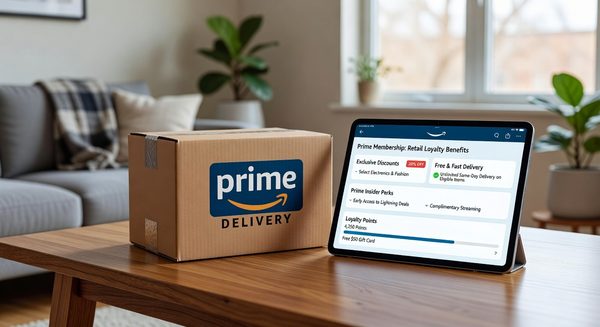
Mass retail has the highest-profile examples — Amazon Prime, Walmart+, Target Circle 360 — each adapting the Costco-style membership construct to their broader scale and category mix.
Across these categories, the programs that succeed share recognizable design traits. The benefits are genuinely valuable. The fee is calibrated against the realized value the average engaged member would receive. The bundle feels coherent rather than promotional.
The Economics
The economics of subscription loyalty have three meaningful components that differ from free loyalty.
The first is the fee revenue itself. For a program at meaningful scale, the membership fee revenue becomes a significant business contribution. Costco’s membership fee revenue is the most visible example, but the same dynamic operates at smaller scales for any paid program.
The second is the behavior change of paid members. Across categories where the data is available, paid members tend to shop more frequently, spend more per transaction, consolidate spending across categories at the host retailer, and demonstrate higher lifetime value than comparable free-program members. The fee is not just revenue — it is a selection mechanism for the customers who will become the highest-value relationships.
The third is the retention effect. Members who have paid for the program have a higher cost to leave. Renewal rates in well-run paid loyalty programs are high relative to free program reactivation rates. The annual renewal decision becomes a natural moment to re-emphasize the value the member has received.
Conversion From Free to Paid
For retailers running a free loyalty layer with a paid tier above it, the conversion path from free to paid is one of the highest-leverage areas of program design.
The members most likely to convert are the most engaged free members — those who already shop frequently and would benefit most from the paid bundle. Targeted communication of the paid offering to this segment generates much higher conversion than broad marketing to the full free base.
Free trial periods are widely used and generally effective when the trial is long enough for the member to experience the meaningful benefits. A two-week free trial of a program where the main benefit is free shipping on monthly purchases will not produce conversion data the member can act on. A two-month trial, or a fee-credited trial structure, tends to work better.
The price point of the paid tier matters significantly. A fee that is materially less than the realized annual benefit value to an average engaged member will convert well. A fee that approaches or exceeds the realized benefit value will struggle, regardless of how the program is marketed.
Which Retail Categories Are Suited
Subscription loyalty does not work equally well across all retail categories. Several factors determine fit.
Purchase frequency matters. Categories where the engaged customer makes purchases monthly or more often can support a paid loyalty model — the member sees the fee-vs-benefit math regularly. Categories where the engaged customer makes purchases only a few times a year struggle with paid loyalty because the renewal decision is too removed from the value delivery.
Benefit deliverability matters. The retailer has to be able to deliver benefits that members actually value, at a cost that supports the fee. Free shipping works in categories where shipping is genuinely valuable to the customer. Exclusive access works in categories where the inventory or content is differentiated enough to matter. Service benefits work where the service capability genuinely exists.
Competitive context matters. In a category where multiple retailers offer free shipping without a membership fee, charging for the same benefit is a difficult sell. In a category where the paid benefit is genuinely scarce in the competitive landscape, the value proposition is much stronger.
Customer base affluence and engagement matter. Paid loyalty selects for customers who can afford the fee and who shop frequently enough to justify it. Retailers whose core customer base does not match this profile will struggle to scale a paid program.
Design Principles for a Paid Loyalty Offering
The well-designed paid loyalty programs share several design principles.
The benefit bundle should feel like a coherent value proposition rather than a list of unrelated perks. Members should be able to describe in one sentence what the program is for.
The flagship benefit should be the one that justifies the fee on its own. If the math works on the flagship benefit alone, the rest of the bundle is upside. If the math requires the member to use the entire bundle to break even, the program is too expensive for most members.
The fee should be set at a level where the average engaged member realizes significantly more value than they pay. Aiming for fee-to-benefit ratios that are visibly favorable to the member is the right discipline.
The renewal moment should be designed deliberately. Members approaching renewal should be reminded of the benefits they received over the year, not just the fee they are about to pay. This is the moment where well-designed programs reinforce the value perception.
The communication should be honest about what the program is and is not. Overpromising creates churn at renewal that is difficult to recover from.
When Free Loyalty Is the Right Answer
Despite the rise of paid loyalty, free loyalty is the right answer for many retailers. Categories with low purchase frequency, limited benefit deliverability, or customer bases not suited to paid membership are better served by well-designed free programs. The mistake to avoid is treating paid loyalty as a destination every program should be moving toward. It is one option in the toolkit, not a universal answer.
Free loyalty also remains the right answer for the enrollment base of programs that will eventually layer a paid tier. The free program is the data acquisition and base engagement vehicle. The paid tier sits above it for the most engaged segment. Most successful paid programs are accompanied by a strong free program — the two work together.
FAQ
Should every retailer add a paid loyalty tier? No. Paid loyalty works in specific category and customer-base conditions. Retailers without the conditions should not force the model — they should run a strong free program instead.
How much should the membership fee be? The fee should be set such that the average engaged member receives significantly more value than they pay. Specific levels vary widely by category. The discipline is to start from the realized value to the member and work backward to the fee, not the other way around.
What happens to free loyalty members when a paid tier is launched? The best practice is to preserve the free program in roughly its existing form, position the paid tier as an upgrade for the most engaged members, and avoid devaluing the free experience to make the paid one look better. Members notice the latter and react poorly.
How does subscription loyalty work with the broader subscription economy? The line between a loyalty membership and a product subscription is increasingly blurred. The common thread is the recurring relationship between the customer and the brand. Programs that fit naturally into the broader subscription habits their customers already have tend to work better than ones that feel like an outlier.
Closing Thought
Subscription loyalty is one of the more important developments in retail loyalty over the past several years. The model works when the underlying business can deliver a benefit bundle the member values more than the fee they pay. It does not work when retailers try to bolt a fee onto an existing free program without changing the value proposition. For retailers evaluating the model in 2025, the right starting question is not “should we charge a fee?” — it is “what would we offer that our best customers would happily pay for?” The answer to that question, when it exists, is what makes a paid program worth running.
Further Reading from Authoritative Sources
- Harvard Business Review — HBR’s research on subscription business models, customer commitment psychology, and retail loyalty economics provides the analytical framework for the article’s core argument that subscription loyalty creates fundamentally different engagement patterns than free points programs — including the commitment-mechanism research, paid member behavior data, and category-fit criteria that define when the subscription model is worth adopting.
- National Retail Federation — NRF publishes retail loyalty and subscription program market research that contextualizes the subscription loyalty strategy across the retail categories the article analyzes — providing the industry benchmarks for paid member behavior lift, conversion from free to paid, and the category characteristics (purchase frequency, benefit deliverability, competitive context) that determine subscription loyalty fit.