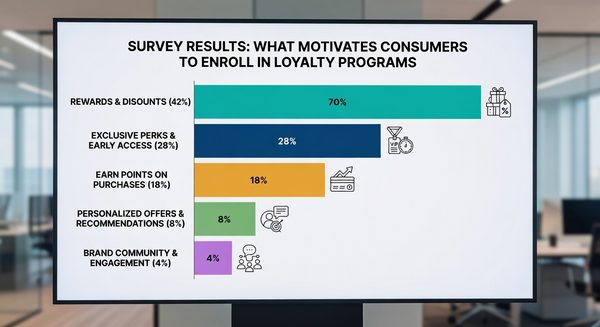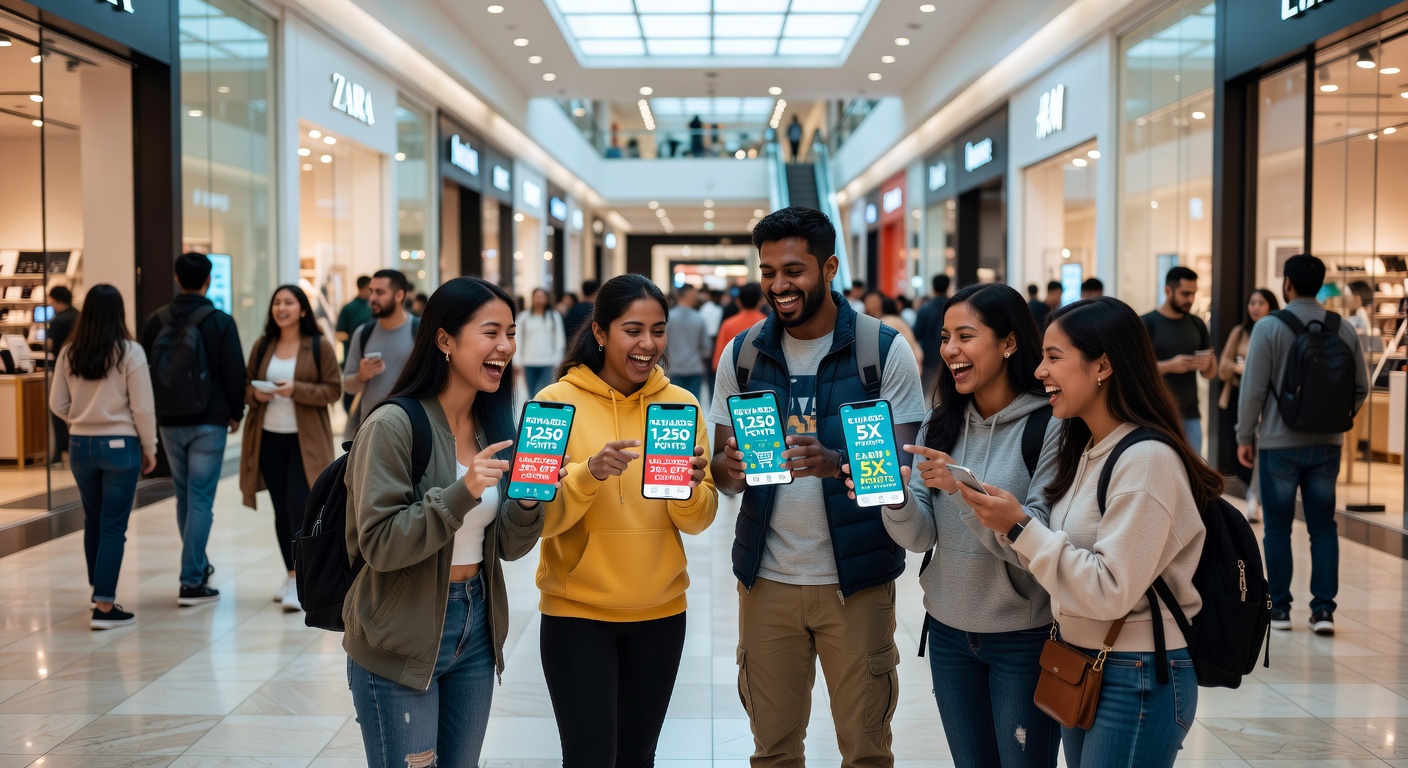
The retail loyalty programs that defined the last two decades were designed around shopper behaviors that no longer match the people becoming the core customer base. Gen Z and younger Millennials engage with loyalty differently than the generations that built the programs they have inherited. The differences are not just preference — they are structural, and they have implications for how retailers design programs going forward. For loyalty professionals planning the next generation of their own program, understanding what these shoppers actually want is more useful than another debate about points versus tiers.
What Research Shows About Generational Loyalty Behavior
The published research on generational loyalty patterns is consistent on several points, even when the specific numbers vary across studies.
Younger consumers enroll in loyalty programs at high rates — often higher than older generations — but the enrollment does not translate into the same depth of engagement that older programs once produced. The casual member who joined but barely participates is a much larger share of the younger cohort’s loyalty footprint than it was a decade ago.
Younger consumers are more likely to be enrolled in multiple competing programs in the same category, and to switch between them based on the offer of the moment. The “lifetime loyalty” to a single retailer that older programs assumed is less common.
Mobile is the assumed channel for the loyalty experience. Younger shoppers expect the program to live in the app, not in an email or a wallet card. Programs that have not built a strong mobile experience are at a structural disadvantage with this cohort.
Younger consumers respond more strongly to instant value than to deferred rewards. The classic “earn points now, redeem for a future reward” mechanic competes against immediate-gratification offers that other retailers and digital platforms have trained shoppers to expect.
The Mobile-First Expectation
For Gen Z and younger Millennials, “the program” and “the app” are often the same thing in their minds. The card, the email, and the printed receipt are peripheral. If the app is bad, the program is bad — regardless of how rich the underlying reward economics are.
This has practical implications for program design. The app needs to be the primary surface for enrollment, status, points balance, available rewards, redemption, and personalized offers. It needs to perform well, update quickly, and integrate cleanly with in-store experiences like mobile order, mobile pay, and digital receipts. Retailers who treat the app as a secondary channel to a primarily card-based program are working against the way their younger members actually behave.
The retailers who have leaned most heavily into the mobile-first design — Starbucks, Sephora, Target, the leading apparel programs — have outperformed in younger demographics partly for this reason.
Instant Value Versus Deferred Rewards
The points-and-redeem model assumes that members will accumulate value over time and find the eventual redemption satisfying enough to drive their engagement. For older shoppers, that model still works. For younger shoppers, the patience required is competing against a daily diet of instant offers from digital platforms and DTC brands.
The programs that work better with younger shoppers tend to layer instant-value mechanics on top of the underlying points structure. Daily or weekly offers that can be redeemed immediately. Surprise-and-delight gifts that arrive without warning. Real-time discounts that activate at checkout. App-based games that pay out small rewards quickly. These mechanics do not replace the points economy — they supplement it with the instant gratification the cohort expects.
The programs that have not adapted are the ones that still feel like they are asking members to wait six months to earn a discount that the retailer is offering everyone else as a coupon anyway.
Values Alignment
Younger consumers consistently report that values matter in their purchase decisions and program engagement. Sustainability, ethical sourcing, social cause alignment, and corporate behavior all factor in to whether a shopper feels comfortable being a “member” of a brand’s program.
This shows up in loyalty design in several ways. Programs that incorporate giving — donating points to causes, rounding up at checkout for a partner organization, member voting on community grants — resonate more strongly with younger members. Programs that surface sustainability information in the member experience — recycled product flags, transparency on sourcing, eco-friendly redemption options — perform better in engagement studies with this cohort.
The risk is that values alignment can feel performative if it is bolted on without genuine company commitment behind it. Younger consumers are particularly attuned to authenticity, and a sustainability badge on a loyalty program from a company with a poor underlying record will not earn the goodwill the program is hoping for.
Social and Sharing Dimensions
Loyalty has historically been a private transaction between the member and the retailer. Younger shoppers expect more of a social dimension. They share program experiences, reward unlocks, and member moments on social platforms in ways that older generations did not.
Programs that have leaned into this — shareable status moments, referral mechanics, social challenges, member content — get a marketing benefit beyond the immediate engagement. The member becomes a small distribution channel for the program, and the social proof reinforces the brand for adjacent shoppers.
The flip side is that program problems also spread faster. A perceived devaluation, a service failure, or an inconsistent benefit delivery can become a viral complaint in a way it would not have a decade ago. Programs operating in the social environment need to be designed with the awareness that member sentiment is now public.
How Top Retailers Are Adapting
A pattern is visible across the retail loyalty programs that are performing well with younger demographics.
Mobile-first experiences are non-negotiable, and the leaders are continuing to invest in the app as the primary member interface.
Instant-value mechanics are layered on top of the points structure to give the cohort the daily-engagement payoff they expect.
Tier structures are being preserved but increasingly unlocked through engagement and non-purchase activity rather than spend alone. This matches the reality that younger consumers may not yet have the disposable income to climb purely transactional tiers, but they want the recognition.
Values and community elements are being integrated thoughtfully into the program structure, with genuine company commitment behind them.
Social and referral mechanics are being designed in rather than added later.
The Mistake of Over-Indexing on Points
The temptation when redesigning a program for younger demographics is to make the points richer — to raise the earn rate, lower the redemption threshold, or expand the reward catalog. This usually does not work as well as expected.
The reason is that points are not the limiting factor in the engagement of younger members. The limiting factors are the app experience, the instant-value layer, the values alignment, and the social dimension. Pouring more points into a program that has not solved those problems is a relatively expensive way to fail to move the metric.
The retailers who have successfully redesigned for younger members generally held the points economics roughly stable and invested heavily in the experience layer around the points. The engagement lift came from the experience, not from a richer reward economy.
FAQ
Are Gen Z shoppers really less loyal than older generations? They are less loyal to specific brands in the traditional sense, but they are not less loyal in absolute terms. They are loyal to brands that earn it through experience, values, and value delivery — and they are willing to leave a brand that stops delivering. The standard is higher, not lower.
Do younger consumers actually use loyalty apps, or do they just download them and forget? Both. Enrollment is high and casual usage is widespread, but deep engagement clusters in members where the app experience is genuinely useful. Programs with strong app experiences see meaningful engagement; programs with weak ones see download-and-forget patterns.
Is the values alignment trend real or marketing hype? The trend is real but the implementation determines whether it works. Members can tell the difference between a values-aligned program with genuine corporate commitment and a program that has added a sustainability badge to the redemption catalog. The latter performs no better than a program without one.
Should every program redesign for Gen Z immediately? The redesign should be planned around the time horizon over which Gen Z becomes the core customer for the retailer’s business. For retailers serving a younger demographic now, immediate redesign is appropriate. For retailers whose core customer is still older, the redesign should be paced to match the customer base transition.
Closing Thought
The next generation of loyalty programs will not look dramatically different in their underlying mechanics. There will still be points and tiers and rewards. What will be different is the experience layer around the mechanics — the app, the instant-value moments, the values alignment, the social dimension — that determines whether the program actually generates engagement with the customers it is trying to keep. For retailers planning the next iteration of their program, the harder work is in that experience layer, not in adjusting the points-per-dollar rate. The harder work is also where the differentiation lives.
Further Reading from Authoritative Sources
- National Retail Federation — NRF publishes consumer research on loyalty program participation by generation, including the enrollment vs.
- Harvard Business Review — HBR research on reward timing psychology and generational consumer behavior supports the article’s analysis of why younger shoppers respond more strongly to instant-value mechanics than to deferred points accumulation.