Personalization is one of the most overused words in retail loyalty marketing. Most programs claim to do it. Most programs actually do something that looks more like segmentation, and a meaningful share of programs are still operating closer to batch-and-blast than they would care to admit. For loyalty professionals trying to advance their program’s personalization capability, the useful starting point is honest: what level of personalization are we actually doing today, what would it take to move up a level, and what is the right level for our business?
The Personalization Spectrum
Personalization in retail loyalty exists on a spectrum, and the labels along the spectrum matter more than the marketing language.
Batch-and-blast is the same message to every member. Some programs still operate primarily at this level, particularly smaller retailers without the technology stack to do more.
Basic segmentation divides members into a handful of buckets — by tier, by frequency, by recency — and serves a message tailored to each bucket. Most programs have reached this level.
Behavioral segmentation incorporates purchase patterns, category affinity, and engagement history. Members who buy in the home category get home-category campaigns, members who buy in apparel get apparel campaigns, and lapsing members get reactivation campaigns. This is where most “good” loyalty programs operate.
Predictive segmentation uses modeling to identify members likely to do something — churn, upgrade, respond to a specific offer — and treats them accordingly. The campaign logic is built around predicted future behavior, not just historical behavior.
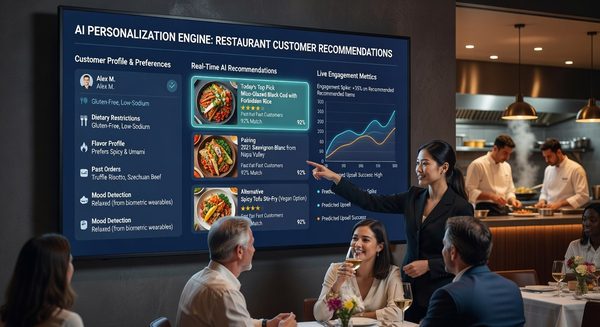
Individual personalization — what most programs mean when they say “1:1” — surfaces recommendations and offers tailored to the specific member rather than the segment. The campaign of one. In practice, true 1:1 is rare and most “1:1” programs are running sophisticated segmentation with individual-level recommendation overlays.
Data Requirements at Each Level
The infrastructure required scales with the level of personalization.
Basic segmentation requires a clean member identity, a unified purchase history across channels, and a campaign tool that can filter by basic attributes. This is achievable for most retailers with modern loyalty platforms.
Behavioral segmentation requires more granular purchase data — SKU-level, category-level, daypart, channel — and the ability to construct rules that combine multiple attributes. This level requires either a capable loyalty platform with built-in segmentation or a customer data platform layered on top.
Predictive segmentation requires modeling capability, whether built in-house or provided by the loyalty platform. The data inputs need to be rich enough to support the models — typically two to three years of granular behavior, supporting attributes, and ground-truth outcomes to train against.
Individual personalization requires the predictive layer plus a real-time decisioning capability that can serve the right content or offer to the right member at the right moment, across channels. This is the most demanding level operationally, and it is where most retailers’ practical limits show up.
Segmentation Approaches That Work in Retail Loyalty
Several segmentation frameworks have stood up well across retail categories.
RFM segmentation — recency, frequency, monetary value — is the workhorse. It is simple, interpretable, and effective for identifying the most and least engaged members. Most retail loyalty programs should be doing RFM segmentation as a baseline.
Category affinity segmentation groups members by what they buy. A member who shops home goods has different needs than one who shops apparel, even if their RFM profile is similar. Category affinity is one of the highest-leverage segmentation dimensions in multi-category retail.
Lifecycle stage segmentation treats new members, established members, lapsing members, and reactivated members differently. The same offer that works for a new member often falls flat with a long-tenured one, and vice versa.
Channel preference segmentation distinguishes members who shop primarily online, primarily in store, or both. The campaign content and offer structure should reflect the channel reality of each segment.
Layering these segmentation dimensions — RFM by category by lifecycle stage — is how most “personalized” campaigns are actually constructed under the hood.
What “Personalized Offers” Means Operationally
When a loyalty program says it serves personalized offers, the operational reality is usually one of three things.
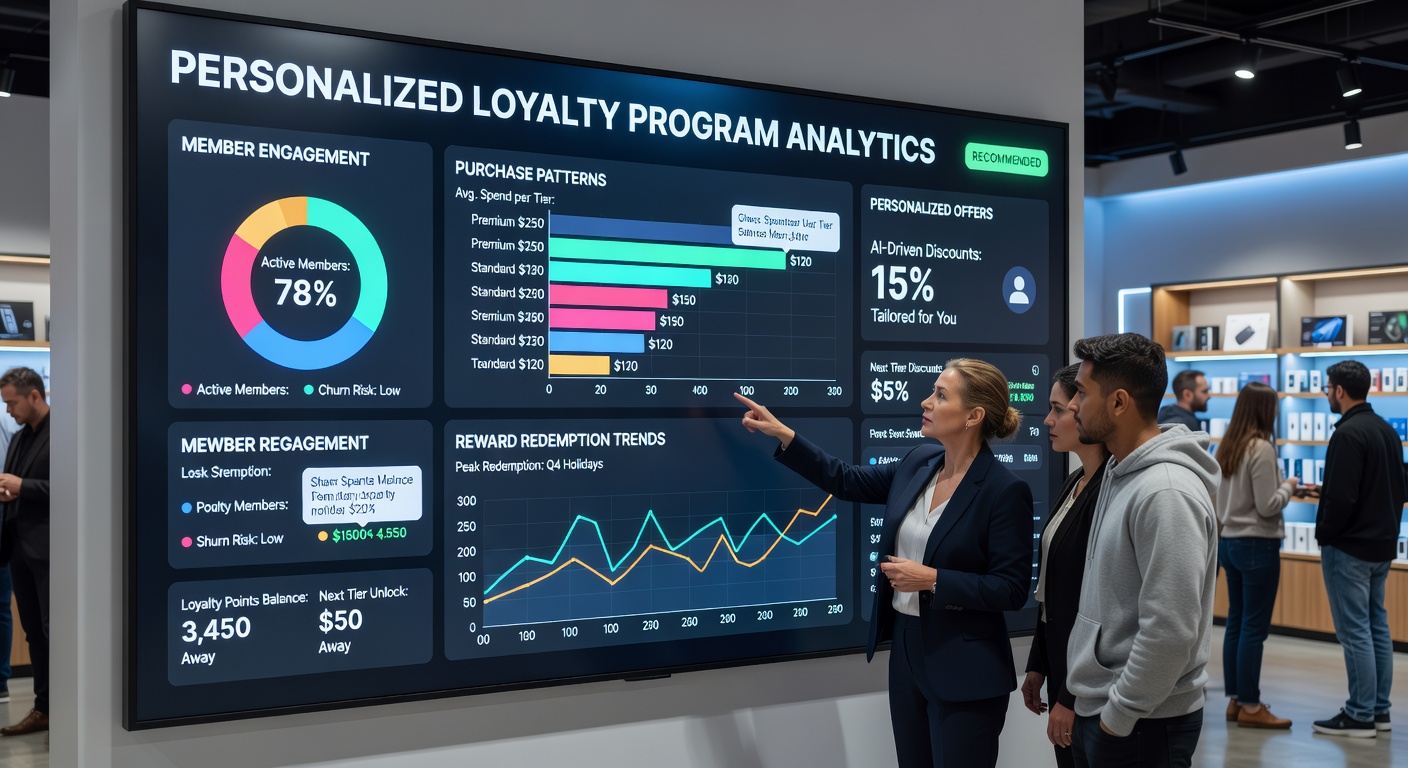
The first is rule-based offer matching. The platform has a library of offers, each with eligibility rules, and the system serves members the offers they qualify for. This is the most common implementation.
The second is recommendation-driven offers. The system uses purchase history and similar-member behavior to surface offers on items the member is predicted to be interested in. This requires a recommendation engine and a structured offer catalog.
The third is dynamic offer generation. The system constructs an offer in real time based on the member’s profile and current context. This is rare and requires significant infrastructure investment.
Most “personalized offer” programs operate in the first or second category, and that is fine — both can drive meaningful behavior change. The marketing language often overpromises the third category, and member expectations sometimes follow.
Technology Enablers and Their Cost
The technology stack for personalization has been getting more capable and more accessible over the past few years. Loyalty platforms with built-in segmentation and basic personalization are widely available at the mid-market level. Customer data platforms have made the unified member view more achievable than it was a decade ago. Recommendation engines are increasingly available as standalone services or built into commerce platforms.
The cost and complexity scale with the level of capability. A basic loyalty platform with segmentation runs in the low-to-mid five figures annually for many mid-size retailers. Adding a customer data platform and recommendation layer typically moves the total stack into six figures. True real-time decisioning at scale is enterprise-grade and budgeted accordingly.
The right starting point for most mid-size retailers is not at the top of this stack. It is to fully exploit the segmentation and personalization capabilities of the loyalty platform they already have, before investing in additional layers.
A Practical Starting Point
For a retailer running an existing loyalty program who wants to advance their personalization, a sensible sequence is to start with a clean assessment of current state, then layer capability deliberately.
First, audit the current campaign portfolio. How many distinct member segments actually receive different content? How often are campaigns tailored to behavior versus broadcast?
Second, identify the two or three segmentation dimensions that would matter most for the business. Usually one of these is category affinity, one is lifecycle stage, and one is RFM or its equivalent.
Third, build a campaign calendar that uses those segmentation dimensions consistently. The discipline of running fewer, better-targeted campaigns is more valuable than rushing to “1:1.”
Fourth, instrument measurement carefully. Personalization is only valuable if you can demonstrate incremental lift. Hold-out groups, control cells, and clean attribution are non-negotiable.
Fifth, layer in predictive and individual personalization where the data and infrastructure support it, on a use-case basis. Churn prediction and reactivation are the highest-value starting points for most programs.
Measuring Whether Personalization Is Working
The measurement challenge is real. Personalization sounds good in theory, but the incremental lift over a competent generic campaign is sometimes smaller than expected, and the cost of the personalization infrastructure is real.
The right measurement approach uses hold-out groups — members who would have received the personalized treatment but instead receive the generic version, or no treatment at all. The difference in behavior between the treated and hold-out groups is the actual personalization effect.
Several other measurements matter. Engagement metrics — open rates, click rates, app engagement — should improve. Conversion rates on personalized offers should be higher than on generic offers to comparable members. And the long-term metrics — retention, lifetime value, share of category — should move for the personalized cohort.
If those measurements are not moving, the personalization is not paying for itself, and the program should rethink the approach rather than adding more infrastructure.
FAQ
Do mid-size retailers really need personalization, or is segmentation enough? For most mid-size retailers, well-executed segmentation captures the majority of the value. Moving beyond segmentation into predictive and individual personalization is worthwhile when the business has the scale and data infrastructure to support it, and when basic segmentation has already been pushed to its useful limits.
What’s the biggest personalization mistake retailers make? Investing in technology before fully exploiting the segmentation capability they already have. The platforms most retailers already use can do more than they are currently being asked to do.
How do you avoid personalization that feels creepy? Stay close to behavior the member would expect the retailer to know about. Use personalization to make the experience faster and more useful, not to surface inferences the member did not consent to share. The line between helpful and unsettling is narrower than retailers sometimes assume.
Is AI changing what’s possible in loyalty personalization? Yes, particularly in the prediction and recommendation layers. The improvements are real but more incremental than vendor marketing suggests. AI raises the ceiling of what is possible, but it does not lower the foundation requirements for clean data and disciplined measurement.
Closing Thought
Personalization in retail loyalty is a destination most programs are still moving toward, and that is fine. The programs that advance most successfully are the ones that build capability deliberately, measure honestly, and resist the temptation to declare victory before the lift shows up in the numbers. The goal is not to claim 1:1 personalization in marketing materials. The goal is to make the member experience materially more relevant and the program meaningfully more profitable. Those outcomes do not require the most advanced infrastructure. They require the most thoughtful execution of whatever infrastructure the program already has.
Further Reading from Authoritative Sources
- Harvard Business Review — HBR’s marketing analytics and customer segmentation research provides the methodological foundation for the article’s five-level personalization spectrum, the RFM and category affinity segmentation frameworks, and the hold-out group measurement approach that the article identifies as the only reliable way to demonstrate whether personalization investment is producing genuine incremental lift.
- Interactive Advertising Bureau — IAB establishes the first-party data and marketing technology standards that define the infrastructure requirements at each level of the personalization spectrum — particularly the unified member identity requirements for behavioral segmentation, the CDP layer needed for multi-attribute segmentation, and the real-time decisioning architecture required for true individual-level personalization at scale.