The most important conversation in loyalty strategy is not about points, tiers, or platforms. It is about the difference between transactional loyalty and emotional loyalty — and the uncomfortable fact that many programs that have been marketed as building one are actually only building the other.
This distinction sounds academic. It is not. The companies that get it right own categories. The companies that conflate the two end up with expensive programs that produce predictable behavior while the underlying preference for the brand quietly erodes.
The Definitions
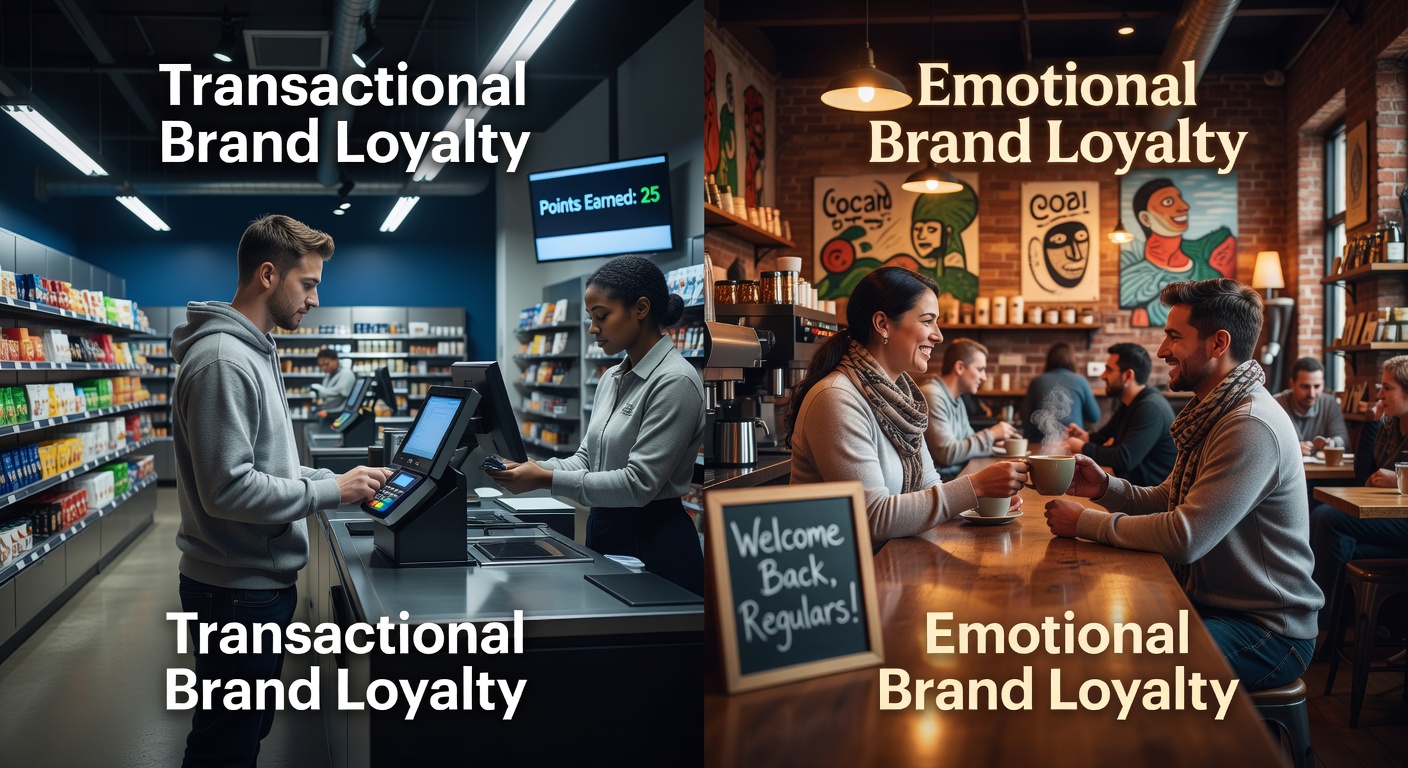
Transactional loyalty is behavior that depends on the reward. The customer comes back because the program is making it worth their while. When the reward goes away — points expire, status is lost, a competitor offers a better deal — the behavior changes. The customer was not loyal to the brand. They were loyal to the rewards.
Emotional loyalty is preference that exists independently of the reward. The customer chooses the brand because they actually prefer it — because they trust it, because it feels like a part of their life, because the alternative feels wrong. The points and benefits are a nice addition to a relationship that would exist without them.
These are not opposites. They coexist, and they reinforce each other when designed thoughtfully. But they are different psychological phenomena, and they respond to different design choices.
Why Emotional Loyalty Is the Goal
The reason emotional loyalty is the goal is straightforward: it is durable, it is defensible, and it is profitable in ways that transactional loyalty isn’t.
Emotional loyalty survives competitive pressure. When a competitor launches a richer program, the emotionally loyal customer doesn’t switch. The transactionally loyal customer evaluates the math.
Emotional loyalty supports premium pricing. Customers who emotionally prefer a brand are less price-sensitive. Customers who participate in a brand only because of the rewards are anchored to the value of those rewards.
Emotional loyalty generates word-of-mouth. Emotionally loyal customers recommend the brand to others without being asked. Transactionally loyal customers refer when there’s a referral bonus.
Emotional loyalty is cheaper to maintain. The brand does not have to keep increasing the reward to retain the customer. Transactional loyalty produces an escalation problem — once the customer is anchored to a discount level, it is hard to take it away.
Why Transactional Loyalty Is the Tool
If emotional loyalty is the goal, transactional loyalty is the tool that builds the relationship long enough for the emotional connection to form. Most customers do not start out emotionally loyal. They start out indifferent or mildly preferring the brand, and the program creates a reason for them to keep coming back long enough that the preference deepens into something more.
This is the structurally honest framing of what a loyalty program does. The points and rewards buy time. What happens during that time — the quality of the experience, the personal recognition, the texture of the relationship — determines whether the transactional relationship becomes emotional, or whether it stays transactional and ends when the reward escalation hits its limit.
The Evidence That Most Programs Build Only One
A clarifying way to look at any loyalty program is to ask: if the points went away tomorrow, what would happen to member behavior? In most programs, the honest answer is that behavior would change substantially. Members would shop around. Frequency would drop. The brand would become one of several reasonable options rather than the default.
This is not necessarily bad. A program that drives transactional loyalty has economic value. But it is incomplete. A program that only drives transactional loyalty is paying for behavior in perpetuity. A program that uses transactional mechanics to build emotional loyalty produces compounding returns over time — the cost of retention drops, the durability of behavior rises, and the brand becomes harder to dislodge.
The honest evidence in most loyalty research is that the majority of programs are predominantly transactional. The minority that have built genuine emotional connection have done it through deliberate design choices that go beyond the rewards.
What Brands That Generate Emotional Loyalty Do Differently
The brands that build genuine emotional loyalty — the ones whose customers describe them in personal, attached language — tend to share a small set of practices:
They invest in recognition over reward escalation. Members are recognized at the point of sale by name and status. Communications are personal. The experience tells the member they are known, not just that they have an account number.
They build community around the brand. Member events, exclusive content, behind-the-scenes access. The brand becomes something the customer participates in rather than something they buy from.
They tell a coherent story. What the brand stands for, why it exists, what it cares about. Programs attached to brands with strong identity produce emotional loyalty far more reliably than programs attached to brands without one.
They handle service moments well. When something goes wrong — and something always eventually goes wrong — the brand resolves it in a way that strengthens the relationship. A bad service moment handled well is one of the strongest emotional loyalty builders available.
They are restrained with communications. Emotionally loyal customers are not heavily emailed. They are communicated with when there is something worth saying. The restraint signals respect.
How to Use Rewards to Build Connection
The practical question is how to use a transactional program to build emotional connection over time. Several design choices help:
Mix reward types. A program that delivers only transactional rewards (discounts, free items) builds primarily transactional loyalty. Programs that mix in experiential rewards, recognition rewards, and surprise gestures build more emotional connection.
Invest in the unboxing moments. Member milestones — first reward, tier upgrade, anniversary — are emotional moments if the program treats them as such. A first reward delivered with a personal note and a small extra gesture builds more attachment than the same reward delivered as a transactional notification.
Make tier benefits feel like recognition, not just discount. Status that produces a meaningful experience differential — better service, faster lines, real access — builds emotional loyalty. Status that produces only a slightly larger discount does not.
Connect the program to the brand’s story. A program that feels like a separate marketing program disconnected from the brand’s identity is transactional by default. A program that feels like an expression of what the brand stands for can build emotional connection.
Measurement
Measuring emotional loyalty requires looking beyond transaction metrics. Three approaches that hold up:
NPS and recommendation behavior. Whether members would recommend the brand to a friend is a reasonable proxy for emotional connection.
Brand preference surveys. Asking members which brands in the category they prefer, with the program’s brand included alongside competitors, reveals where the brand sits in the consideration set.
Behavior post-program changes. When the program changes — a devaluation, a feature removal, a price increase — emotionally loyal members react less. Watching the behavioral response to changes is a useful test of where on the emotional-to-transactional spectrum the member base actually sits.
FAQ
Can a program be entirely emotional without rewards? In some categories, yes — brands with very strong identity and community can sustain loyalty without traditional rewards. In most categories, some form of transactional structure is required to break inertia and build the initial habit.
Is emotional loyalty available to every category? Most categories can build at least some. The difference between categories is the ceiling — luxury, lifestyle, and identity-aligned brands can reach higher levels of emotional loyalty than commodity categories.
Are points and tiers transactional or emotional? Both, depending on design. A points balance is transactional. The recognition that comes with a high tier can be emotional. Programs that lean into the recognition side build more emotional connection than programs that lean into the math.
How do you know if your members are emotionally loyal? Ask. Survey them about brand preference. Watch how they respond to changes. Look at unprompted social mentions. The signals are available; many programs simply don’t look for them.
The Strategic Takeaway
The most important question to ask about any loyalty program is not “are people coming back?” — it is “would they come back if the rewards stopped?” The honest answer determines whether the program is building durable competitive advantage or paying for behavior in perpetuity. The programs that do this work well use transactional mechanics deliberately, in service of an emotional relationship that compounds over years. The programs that don’t will eventually run out of room to keep escalating the rewards, and discover what they actually built.
Further Reading from Authoritative Sources
- Harvard Business Review — HBR publishes foundational research on emotional loyalty, brand attachment, and the long-term ROI difference between transactional and emotionally loyal customer bases that underpins this strategic analysis.
- Association of National Advertisers — ANA research on brand loyalty measurement and customer lifetime value supports the strategic framing of emotional loyalty as a more durable and profitable long-term objective than transactional reward-dependency.