Starbucks Rewards is one of the most studied loyalty programs in retail, and 2023 gave the loyalty industry a lot to study. The company restructured the reward tier costs in a way that materially raised the number of Stars needed to redeem for free drinks and food items. Members noticed. Loyalty trade press noticed. The episode became a case study in what happens when a beloved program changes the perceived value of its currency. It is worth examining what the program is, what changed, and why the reaction was as strong as it was.
How the Program Works
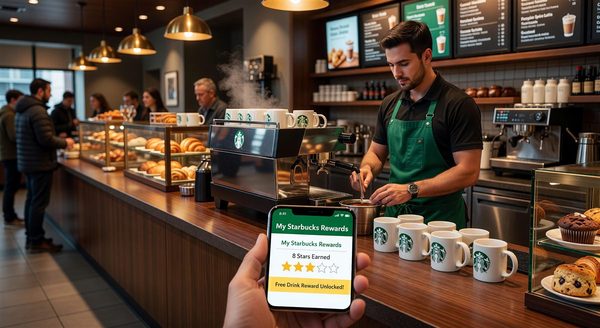
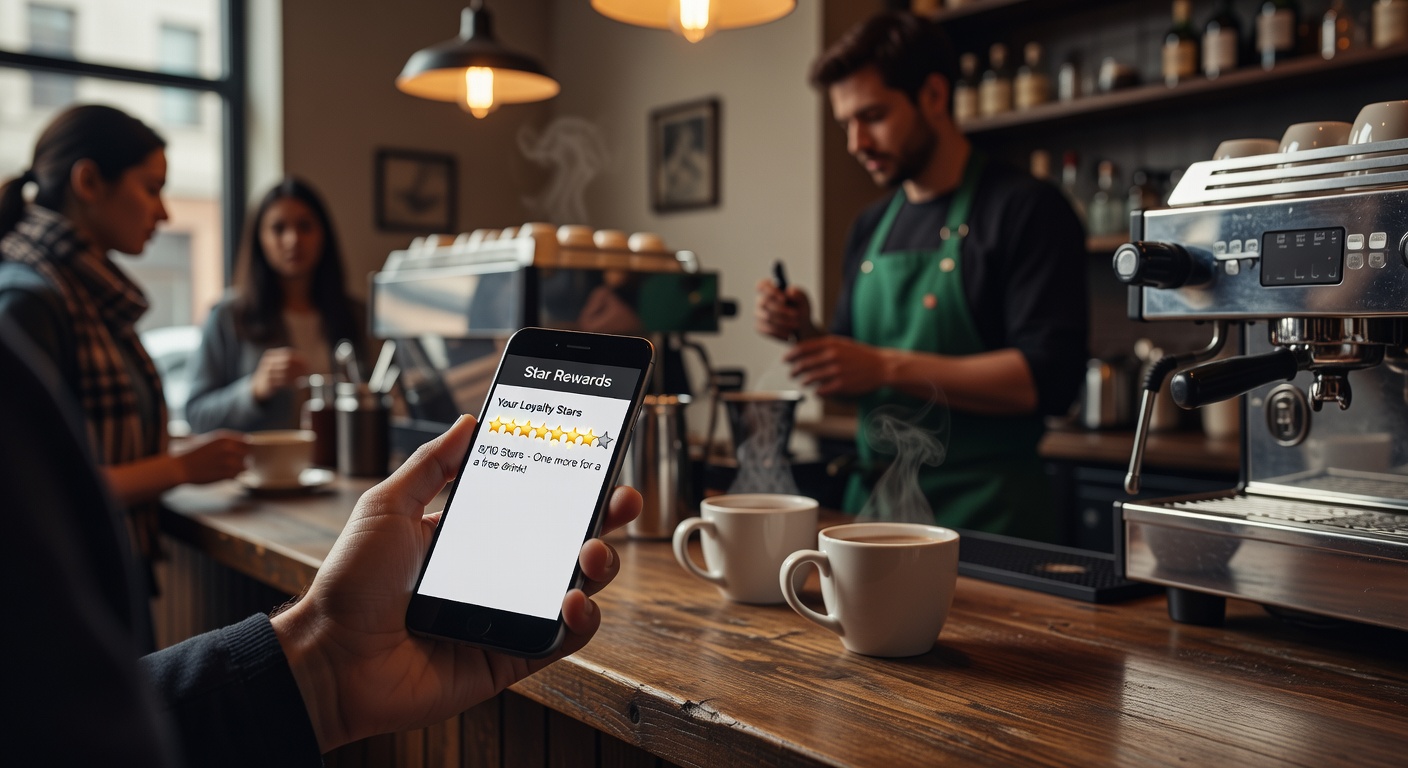
Starbucks Rewards is built around a Star currency earned on purchases. Members earn Stars at a per-dollar rate that varies based on the payment method — paying with a preloaded Starbucks Card in the app earns at the highest rate, with other payment methods earning at lower rates. Stars are redeemed against a tiered menu of rewards, ranging from condiment add-ons and bakery items at the lowest tiers up to handcrafted drinks and food combinations at higher tiers.
The program is layered with mobile ordering, personalized challenges that offer bonus Stars for specific qualifying purchases, and a Star birthday reward. The whole experience lives inside the Starbucks app, which is the most-downloaded retail app in the company’s category and one of the most-used loyalty apps in retail.
What Makes the Program Exceptional
Several elements separate Starbucks Rewards from typical QSR loyalty programs.
The mobile ordering integration is the most consequential. Mobile order and pay through the Starbucks app accounts for a meaningful share of Starbucks transactions, and the loyalty program is the front door to that experience. Members are not just earning rewards — they are using the app every visit, which deepens the engagement loop in a way email-based loyalty cannot match.
The personalized challenges are also distinctive. The program serves bonus-Star offers tailored to the member’s purchase patterns — buy a specific drink three times this week, try a new menu item, or visit at a particular daypart. These challenges have measurable effects on behavior. Members make incremental visits and try adjacent products that they would not have purchased without the prompt.
The gamification feels lighter and more pleasant than many retail loyalty programs. The Stars accumulate visibly in the app, challenges complete with celebratory animations, and the redemption experience is fast and satisfying. The user experience of the program is itself part of why members engage.
The data flywheel is the strategic core. Starbucks operates as a coffee company with a deeply embedded data and personalization capability. The loyalty program is the data acquisition engine for that capability, and the company’s investment in machine learning and personalization is supported by what the program reveals about members.
The 2023 Reward Restructuring
In early 2023, Starbucks announced changes to the Star costs of several reward tiers. Most prominently, the Stars needed to redeem for a handcrafted drink increased from a lower threshold to a higher one. Other reward tier costs also moved.
The economic logic was straightforward. The cost of goods, labor, and operations had risen, and the previous reward economics — set years earlier — had become more expensive for the company to support. The restructuring brought the reward costs back into a sustainable range relative to the underlying business economics.
The member reaction was strong. Social media, loyalty industry coverage, and consumer forums lit up with complaints that the program had been “devalued.” Members who had been close to a free drink redemption found themselves suddenly further away. Members who had been satisfied with the redemption math now did the math again and found a less favorable answer.
Why the Backlash Was So Loud
Several dynamics amplified the reaction.
The Star currency had become a familiar mental anchor for members. People knew how many Stars they needed for their usual reward, and that number was part of their relationship with the program. Changing the number changed the relationship.
The program had not communicated a long lead time on the changes, which made the adjustment feel sudden. Loyalty research generally shows that members tolerate reward economics changes better when they are given clear advance notice and a rationale.
The broader inflationary moment made any price-equivalent change feel more loaded than it would have in a different economic environment. Members were already absorbing price increases elsewhere in their lives, and a reward devaluation read as another version of the same pressure.
The program’s previous reward economics had been generous, which gave members a strong reference point for what “fair” looked like. Programs that have always been modest in their reward generosity do not generate the same backlash when they adjust, because the reference point is less favorable to begin with.
What the Episode Teaches About Reward Economics Changes
Every long-running loyalty program eventually has to adjust its reward economics. Costs change, business conditions shift, and the math that worked five years earlier may not work today. The Starbucks episode is not an argument against making adjustments — it is a lesson in how to make them.
A few principles are worth carrying forward.
Communicate changes well in advance, with a clear rationale. Members tolerate adjustment better when they are not surprised.
Consider grandfathering or transition mechanics that protect members who are close to a redemption under the old rules. A small operational complexity here buys significant goodwill.
Frame the change against the underlying business economics honestly. Members are sophisticated enough to understand that costs change. They are not sophisticated enough to forgive the appearance of a hidden devaluation.
Adjust on smaller, less symbolic tiers first when possible. Changes to the marquee reward — the free drink in Starbucks’s case — generate the loudest reaction. If a program can adjust elsewhere first, it can preserve the perceived value of the most visible reward.
The Bigger Picture
Despite the 2023 episode, Starbucks Rewards remains one of the most successful loyalty programs in retail by measurable engagement metrics. The mobile ordering integration is sticky, the data and personalization capability is industry-leading, and the program’s role in driving Starbucks’s broader business has not been diminished by the controversy.
What the episode did was remind the loyalty industry that reward economics are not a back-office decision. They are part of the brand promise. Members feel the math, and they respond to changes in the math, even when the company’s logic for the change is sound.
FAQ
Did Starbucks really devalue the rewards in 2023? Yes, in the sense that Stars needed for several rewards increased. The company framed it as a normalization to current economics rather than a devaluation, but the practical effect for members was a less generous reward economy.
Did the changes affect program engagement long-term? The immediate reaction was vocal, but membership and engagement metrics appear to have largely held up over the longer term. The episode bruised goodwill but did not break the program.
What does Starbucks do better than other QSR loyalty programs? The mobile order integration, the personalized challenges, the data and personalization capability, and the user experience of the app. These elements work together in a way few competitors match.
Should other loyalty programs delay reward economics changes to avoid backlash? Delay alone does not solve the problem. Programs should make economics changes when business conditions warrant them, but they should communicate clearly, give advance notice, and consider transition mechanics to protect close-to-redemption members.
Closing Thought
The Starbucks Rewards story in 2023 is a reminder that even the best-designed loyalty programs operate under expectations they have built with their members over years. The math is part of the brand. Changing the math changes the relationship. For loyalty professionals running programs that may face similar adjustments in the years ahead, the lesson is to invest as much care in the communication of a reward economics change as in the financial logic behind it. Members can do the math. They can also remember the change for a long time.
Further Reading from Authoritative Sources
- Starbucks Rewards — Wikipedia provides documented background on the Starbucks Rewards program history and the 2023 reward restructuring that is the central event analyzed in this review — confirming the specifics of the handcrafted drink tier increase and member reaction.
- Harvard Business Review — HBR’s research on reference point theory and consumer trust in loyalty programs directly underpins the article’s analysis of why the Star currency increase generated disproportionate backlash and what communication approaches reduce member resistance to necessary program adjustments.