Every restaurant loyalty program ultimately rests on one connection: the link between the point-of-sale and the loyalty platform. The marketing campaigns, the app design, the reward calibration, the segmentation — none of it matters if the POS cannot reliably tell the loyalty engine what a guest just bought and the loyalty engine cannot reliably tell the POS what to discount. Operators who underinvest in this connection spend months untangling problems that integration testing would have caught in a week.
Why the POS-Loyalty Connection Is Load-Bearing
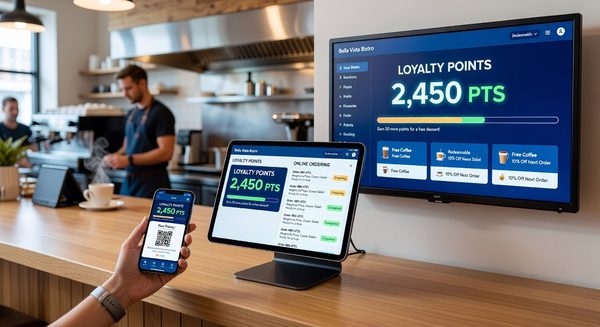
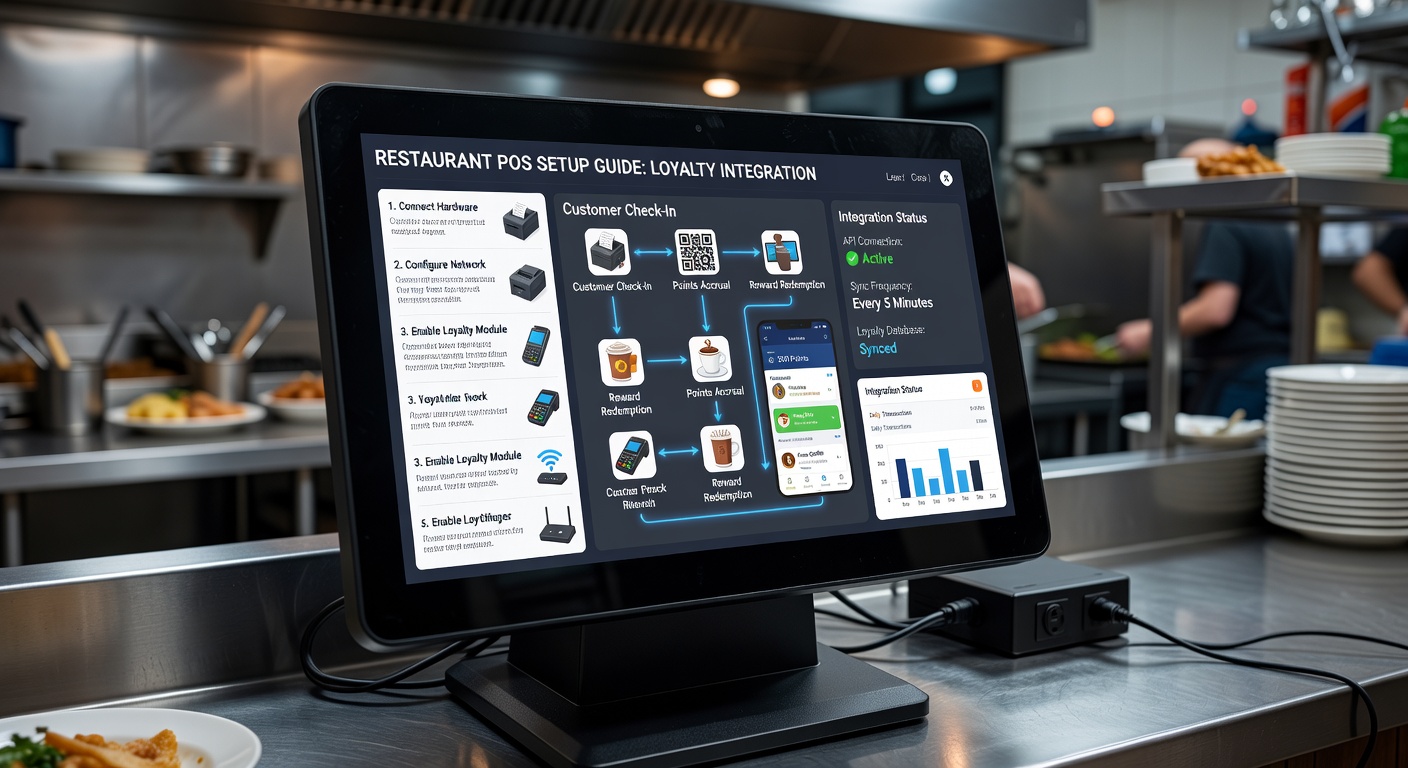
Loyalty programs need two flows of information. The POS has to send transaction data outbound — what was ordered, what was paid, who the guest was, what was applied — so the loyalty engine can credit points and record behavior. The loyalty engine has to send eligibility data inbound — which member, what offers, what discounts, what reward redemptions — so the POS can apply them at the moment of sale.
If either flow is broken, the entire program degrades. Points that should be credited go missing, generating member complaints. Offers that should redeem fail at the register, generating both member complaints and front-line staff frustration. The damage is rarely catastrophic in any single transaction, but it accumulates rapidly across thousands of daily checks.
Integration Types
Three architectures dominate the category:
Native integration. The loyalty platform is built into the POS, or the POS vendor offers a loyalty module as a first-party product. Toast Loyalty, Square Loyalty, and similar offerings sit in this category. Native integration delivers the tightest experience — no middleware, no synchronization lag, full transaction context — at the cost of being tied to the POS vendor’s loyalty roadmap.
Direct API integration. A separate loyalty platform connects to the POS via the POS vendor’s documented integration interface. The depth and quality of these interfaces varies dramatically by POS vendor. Some expose full transaction-level events; others provide only basic check totals.
Middleware-based integration. A third-party integration layer sits between the POS and the loyalty platform, normalizing data across multiple POS systems. This pattern is common in multi-concept or multi-POS operators and in regional and franchise environments where POS choice varies by location.
Major POS Platforms and Their Loyalty Integration Depth
The integration story differs meaningfully by POS:
Toast. Native loyalty module plus an open API for third-party loyalty platforms. The platform is well-instrumented and integration partners report reliable event delivery. Strong fit for independent and small-to-mid chain operators.
Olo. Functions as an ordering and integration layer more than a traditional POS, but plays a similar role in many chain stacks. Its loyalty integration capabilities through Olo Engage and partner connections are deep and well-documented.
Square. Native loyalty product plus API access. Strong for very small operators; integration partners report a clean development experience but fewer enterprise hooks.
Lightspeed. Solid API access. Loyalty integration through several partner platforms is well-established for the casual and quick-service segments Lightspeed serves.
NCR / Aloha. Long-standing platform in larger chains. Loyalty integration is mature but typically requires more configuration work than newer cloud-native POS systems. Middleware is common in this environment.
PAR Brink. API-rich platform popular in larger QSR and fast casual chains. Integration depth is strong; engineering effort to wire it up is non-trivial but produces a robust end result.
The general rule: newer cloud-native POS platforms tend to offer cleaner integration interfaces; established enterprise POS systems tend to offer more configurability at the cost of more setup work.
What Data Flows in Each Direction
A complete integration typically passes the following events from POS to loyalty:
- Member identification (loyalty ID, phone, email, scan code)
- Check open, modify, and close events
- Item-level detail with modifiers and prices
- Discounts and comps applied
- Tender method and amount
- Voids and refunds
- Time, location, and channel context
In the reverse direction:
- Member lookup and authentication
- Available offers for the identified member
- Reward redemption authorizations
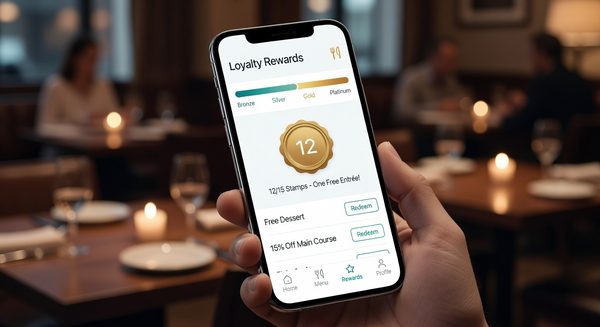
- Points balance and tier status (often for display)
The most common gap is at the item level. Some integrations pass only check totals, which works for basic per-dollar points but breaks down quickly for item-specific offers, category-based promotions, or any campaign that needs to know what the guest actually ordered.
Common Integration Failure Points
Operators with mature loyalty programs have learned to test specifically for the following scenarios, because they fail more often than they should:
Split checks. When a check is split across multiple tenders or guests, point allocation and offer application become ambiguous. Different integrations handle this differently, and the right answer depends on the program design.
Voided transactions. A check that was voided should not credit points. Surprisingly often, the void event does not propagate cleanly and members end up with phantom points from sales that never happened.
Comped items. Items removed via manager comp should not earn points and should not count toward reward thresholds. Integration handling of comps varies widely.
Refunds. A refund issued days after the original transaction should reverse the points credit. Many integrations handle this incompletely or not at all.
Multi-channel attribution. When the same member orders through the app, the in-store POS, and a third-party delivery channel, the integration needs to consolidate behavior under a single identity. Channel fragmentation is one of the leading causes of broken loyalty data.
Offer collision. Multiple eligible offers on the same check require deterministic resolution. Without it, the front-line outcome is non-deterministic, which is the worst possible result.
Testing Requirements Before Go-Live
A serious integration test plan covers every scenario above plus the program’s specific offer and reward types. The test environment should mirror production POS configuration, including modifiers, comp reasons, and tender types. Tests should be run by people who do not know the loyalty platform’s expected behavior — fresh eyes catch what builders miss.
Soft launch with a single location is almost always the right choice. The issues that emerge in real-world use are not the ones the test plan anticipated.
Maintenance Considerations Post-Launch
Integrations are not finished when they go live. POS vendors release updates that can break field mappings, change event schemas, or alter timing assumptions. Loyalty platforms release updates that can do the same in the other direction. A quarterly review of integration health, with active monitoring of event flow and error rates, is worth the small investment.
FAQs
How long does a POS-loyalty integration typically take to implement? The range is wide — from a few weeks for a clean cloud POS with a pre-built connector to several months for a complex enterprise POS in a multi-location environment.
Can I run loyalty without a POS integration? You can run a primitive program (scan-a-receipt apps and similar workarounds), but every serious modern restaurant loyalty program requires real POS integration. Workarounds carry friction that suppresses enrollment and redemption.
What’s the most common single integration mistake? Insufficient testing of edge cases — split checks, voids, comps, refunds — before launch. The happy path almost always works; the edges are where programs break in production.
Should I choose my POS based on loyalty integration? For most operators, no — POS choice should be driven primarily by operational fit. But loyalty integration depth is a real evaluation criterion and should not be ignored, especially for operators planning ambitious loyalty programs.
Closing
POS-loyalty integration is unglamorous work that determines whether the rest of a loyalty program functions as intended. Operators who treat it as a serious engineering effort — with test plans, monitoring, and post-launch maintenance — get loyalty programs that work as designed. Operators who treat it as a checkbox in the implementation timeline spend the next year explaining to members why their points balance is wrong.
Further Reading from Authoritative Sources
- National Retail Federation — NRF publishes restaurant technology and loyalty integration standards that provide the industry context for evaluating the three integration architecture types, the POS platform integration depth profiles, and the testing and maintenance practices that define a production-ready POS-loyalty connection across restaurant operator segments.
- Interactive Advertising Bureau — IAB’s digital marketing technology standards provide the API and data architecture context for the restaurant POS-loyalty integration technical guide — particularly the data flow requirements for member identification, transaction event handling, and offer eligibility that distinguish complete integrations from those that pass only check totals and limit program capability.