Costco is one of the most successful retailers in modern history, and it operates without a traditional loyalty program. There are no points to earn, no tier badges, no birthday rewards, and no quarterly bonus categories. There is only a membership card, an annual fee, and a remarkable amount of resulting customer loyalty. For loyalty professionals, Costco is the most important counterexample in the category — a reminder that the points-and-tiers conversation is not the only way to build a deeply loyal customer base.
The Membership Fee Is the Loyalty Program
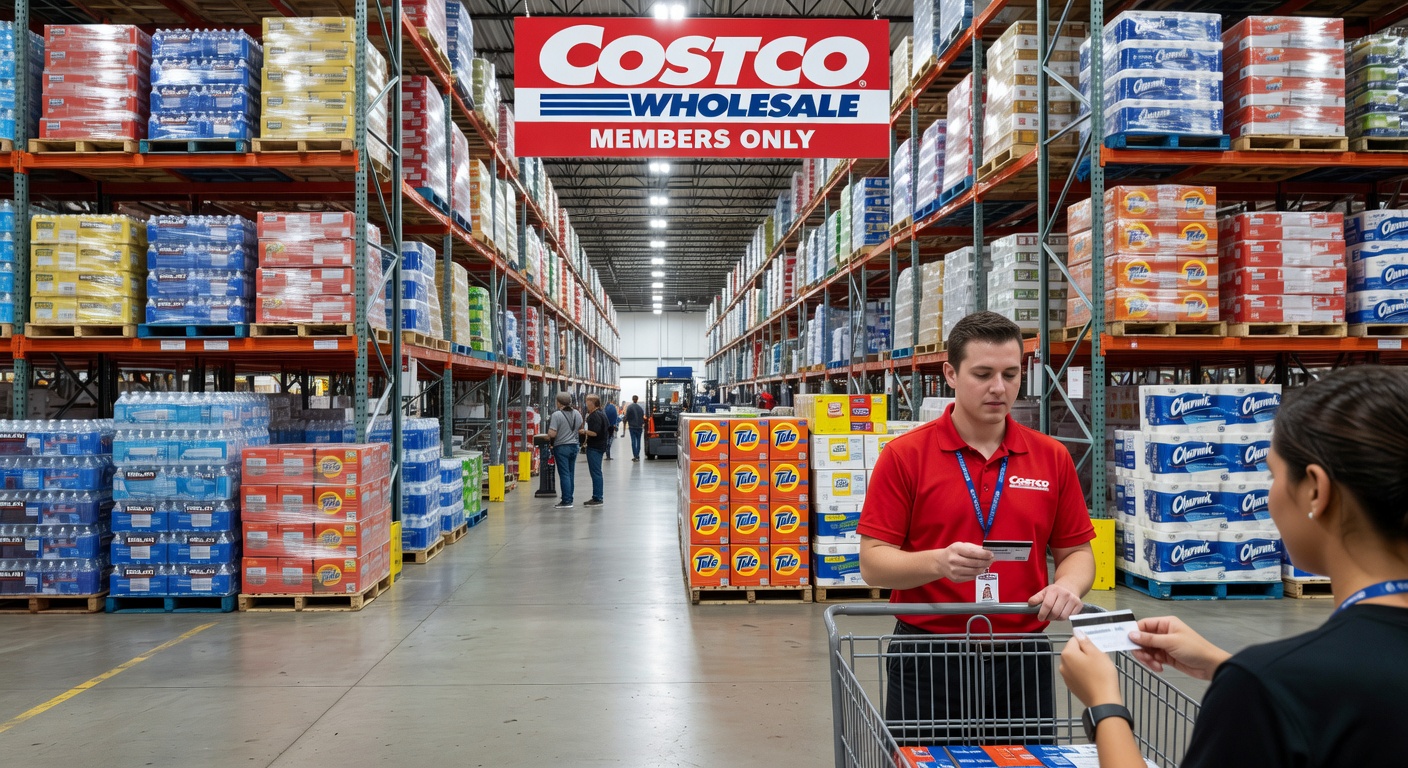
The core insight of the Costco model is that the membership fee itself functions as the loyalty mechanism. By charging an annual fee for the right to shop the warehouse, Costco creates a commitment from the member before any transaction occurs. The member has signaled, in dollars, that they intend to make Costco part of their routine.
What follows from that commitment is the entire behavioral loop that loyalty programs in other categories work hard to engineer. The member shops Costco more often because they have paid for access. They consolidate purchases across categories at Costco rather than splitting trips. They develop habits — the Saturday run, the rotisserie chicken on the way out, the bulk paper goods restock cycle — that the warehouse experience encourages.
This is loyalty, by every measurable definition. It just does not need a points balance to function.
Why the Economics Work
The financial structure of Costco is well understood: the membership fee revenue is a meaningful component of the company’s profitability, and the merchandise margins are kept deliberately thin. This structure is not just a quirk — it is the strategy. Costco trades merchandise margin for membership revenue, and the discipline of holding margins low is what makes the membership feel valuable enough to renew.
The renewal rate is the most-watched metric in the business. Long-term Costco renewal rates have stayed remarkably high through different economic conditions and competitive environments. That metric is a more honest measure of customer loyalty than the engagement scores that traditional loyalty programs report, because it represents an annual decision to pay for the relationship to continue.
The Member Psychology
Several psychological forces reinforce the Costco loyalty effect.
The sunk cost dynamic is the most often cited. Once the member has paid the annual fee, the rational behavior is to ignore it in future shopping decisions — it has already been spent. But humans do not behave that way. The member naturally wants to “get their money’s worth,” which translates into more frequent visits, larger baskets, and category expansion within the warehouse.
The in-group identity is more subtle but equally powerful. Costco members talk about Costco. They share product discoveries, deal stories, and warehouse experiences in a way that creates a kind of community membership. The card itself is treated as a marker — somewhere between a club affiliation and a practical credential.
The treasure hunt behavior is a third element. Costco’s deliberately limited and rotating assortment encourages members to visit not just for their planned items but to see what is on the warehouse floor that week. This creates a visit pattern that does not depend on a specific shopping need, which is the holy grail of retail traffic generation.
Executive Membership as a Proto-Tier
The Executive Member tier is the closest thing Costco has to a traditional loyalty mechanic. Executive Members pay a higher annual fee and receive a percentage cashback reward on their qualifying annual purchases, up to a cap. The structure is functionally a tiered membership — the higher fee unlocks a richer benefit.
This is interesting because it shows that even Costco found a use for tier mechanics, just embedded inside the membership structure rather than layered on top of it. The Executive Member benefits also serve as a retention tool — members who upgrade tend to renew at higher rates, in part because they are more financially invested in the relationship.
What Other Retailers Can — and Cannot — Learn
The Costco model is studied widely and copied poorly. The challenge in replicating it is that the model requires the underlying value proposition to support the membership fee. Costco can charge for membership because the warehouse experience genuinely saves the average household money over a year of normal shopping. The value is real, measurable, and renewable.
Retailers who try to charge for loyalty memberships without that underlying value proposition fail quickly. Members can do the math. If the membership fee exceeds the realized savings or service value over the year, the renewal happens once and then stops.
The transferable principles are more modest than they look at first.
A paid membership construct can drive deeper loyalty than free points programs, but only when the retailer can deliver enough genuine value to justify the fee. The construct cannot manufacture value that is not in the underlying business.
Treating member retention as the core loyalty metric, rather than enrollment or points balances, is a useful discipline. Renewal rate is what actually matters.
Operational design choices that reinforce the member experience — limited assortment, member-only services, identity-marker card practices — can build community effects that traditional loyalty programs rarely capture.
Where Other Retailers Have Tried This
Warehouse club competitors — Sam’s Club, BJ’s — operate the same model with their own variations. Outside the warehouse category, Prime is the most prominent paid membership program, and it has demonstrated that the model can scale outside the warehouse format. Walmart+ and other recent paid membership offerings are attempts to bring the construct to mass retail. The early returns are mixed — the benefit bundles are getting better, but none have yet achieved Costco’s renewal rates or community effect.
The retailers struggling most with paid membership are the ones who tried to bolt a fee onto an existing free loyalty program without changing the underlying value proposition. The fee felt arbitrary, the benefits felt promotional, and renewal rates have not held up.
The Loyalty Lesson Without the Points
The deeper lesson of Costco for the loyalty industry is that loyalty is fundamentally about commitment and value, not about points. The points layer is a mechanism that can support commitment in categories where the underlying experience is not enough to drive it on its own. In categories where the experience is strong enough, the points layer is not necessary — and sometimes is a distraction from what really matters.
This is not an argument against points programs. Most retail categories cannot deliver a Costco-class value proposition, and a well-designed points program can extract real loyalty behavior from a competent retail offering. But it is worth remembering that the most loyal customer base in retail belongs to a company that has never given out a single point.
FAQ
Is the Costco membership fee really a loyalty mechanism? By function, yes. It creates commitment, drives repeat purchase, and selects for higher-engagement customers. The mechanics are different from a points program, but the loyalty outcomes are stronger by most measures.
Why don’t more retailers copy the Costco model? Because most retailers cannot deliver the underlying value proposition that justifies a membership fee. Without the savings or service value, members do not renew, and the model collapses.
Is the Executive Member tier worth it? For households spending above a threshold annually at Costco, the cashback typically exceeds the fee differential. Below that threshold, the basic membership is the better deal. The Costco app and member account both make it easy to check.
Could Costco run a points program in addition to the membership? It could, but the company has consistently chosen not to. A points layer would add operational complexity and potentially dilute the simplicity of the membership value proposition. The current model works, and there is no strong commercial reason to change it.
Closing Thought
Costco’s loyalty program is the membership. Everything else — the rotisserie chicken pricing, the limited assortment, the Kirkland Signature private label, the treasure hunt format — exists to make the membership feel renewable. For loyalty professionals working on programs in other retail categories, the question worth carrying away from Costco is not “should we add a fee?” but “would our members actually pay for what we offer?” That is a harder question than the points-versus-cashback debate, and it is the right one.
Further Reading from Authoritative Sources
- Costco — Wikipedia documents Costco’s business model including the membership fee economics, renewal rate history, and competitive context that make the loyalty analysis in this article factually grounded.
- Harvard Business Review — HBR behavioral economics research on commitment, sunk cost rationalization, and habit formation directly explains the consumer psychology mechanisms that make the Costco membership model produce loyalty outcomes without points.