Klaviyo built its business in ecommerce, but restaurant marketers have increasingly adopted it as the email and SMS layer of their MarTech stack. The fit is real, but it is not automatic. Klaviyo is not a restaurant loyalty platform, and operators who try to use it as one usually leave value on the table. Understood for what it is — a marketing automation engine that consumes customer data and produces targeted, behavior-triggered communication — it can do work that purpose-built restaurant tools struggle to match.
Where Klaviyo Fits in the Restaurant Stack
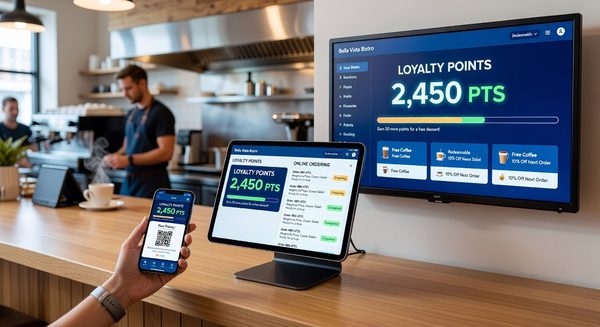
A restaurant MarTech stack typically has three core layers: a loyalty engine that owns member identity, points, and offers; an ordering layer (often the POS plus a digital ordering platform); and a marketing layer that talks to the customer between visits. Klaviyo sits in the third layer. It is not the system of record for loyalty status or transaction history — it consumes that data from upstream systems via integration.
This distinction matters because Klaviyo’s value depends on the data it can see. A Klaviyo instance fed only with email addresses from a signup form is barely better than a basic email tool. A Klaviyo instance integrated with the loyalty platform — receiving visit events, points balances, tier status, last-visit dates, and category preferences — becomes a serious automation engine.
Connecting Klaviyo to a Loyalty Platform
Most modern restaurant loyalty platforms expose an API that can push events to Klaviyo, either directly or through a middleware layer. The events worth wiring in are visit-completed, points-earned, reward-redeemed, tier-changed, last-visit-stale, and birthday. Each of these is a trigger that can launch a relevant flow.
The integration work is usually less glamorous than the marketing it enables. Field mapping, custom property setup, profile merging across email and SMS identifiers, and identity resolution all need attention before flows can be trusted to fire correctly. Operators who skip this step end up with flows that target the wrong segments and erode list health.
Flows That Work Well for Restaurants
A handful of automation flows produce most of the value:
Welcome series. A multi-touch sequence triggered by enrollment that introduces the brand, sets expectations for the program, and includes a low-friction first-visit incentive. The first 30 days post-enrollment is the highest-leverage window in any loyalty program; a thoughtful welcome series spends it well.
Birthday flow. A pre-birthday message announcing a benefit, a day-of reminder, and a short follow-up if unredeemed. Birthday flows consistently outperform standard promotional sends because the trigger is personal and the benefit timing is meaningful.
Win-back. Triggered when a member’s last visit crosses a category-appropriate threshold (different for QSR vs. casual dining), the flow combines a re-engagement message with an offer calibrated to bring back without retraining the entire base to expect discounts.
Post-visit follow-up. A short message after a visit thanking the guest, surfacing their points balance, and pointing toward the next earning opportunity. Done lightly, it reinforces the loyalty relationship; done heavily, it becomes noise.
Reward-earned and reward-expiring. Members who do not know they have a reward do not redeem it. Members who redeem rewards visit more. The math is simple; the automation is straightforward.
Segmentation Beyond the Basics
Klaviyo’s strength is its segmentation engine. Restaurant operators tend to start with simple segments (members vs. non-members, lapsed vs. active) and then leave them static for a year. The platform is capable of much more granular work — RFM-style segments combining recency, frequency, and monetary value, channel preference cohorts (digital orderers vs. dine-in regulars), and product category affinity.
The segments that matter most are usually the ones that allow channel and message differentiation. A high-frequency digital orderer should not receive the same message as a quarterly dine-in guest. The base data to make that distinction is in the loyalty platform, but the activation happens in Klaviyo.
Metrics to Track
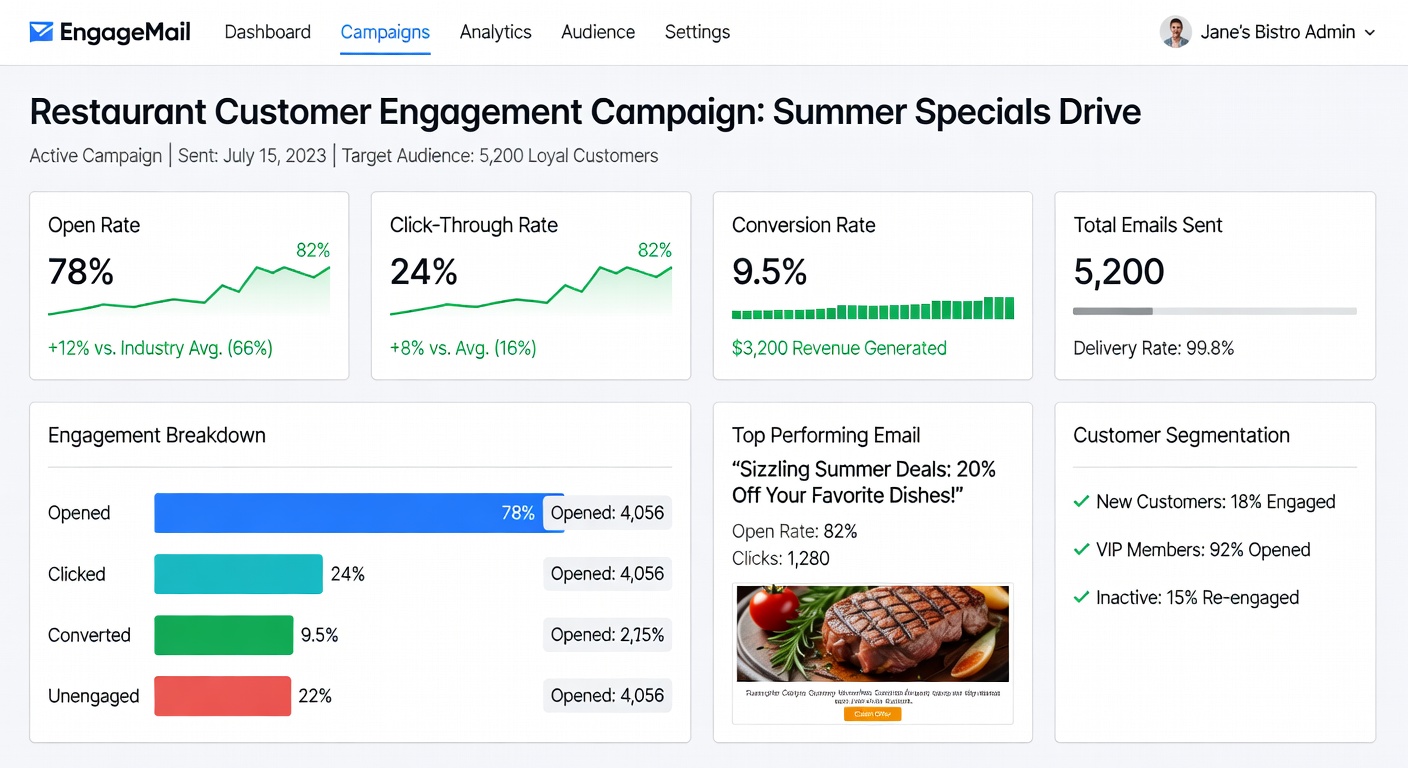
Open and click rates are necessary but not sufficient. The metrics that matter for restaurant marketing in Klaviyo are revenue per recipient, attributed visits per send, redemption rates on offer-bearing messages, list health (unsubscribe and complaint rates), and flow contribution to total program revenue.
Tying Klaviyo activity to actual visits requires the same loyalty integration that powered the flows. Without it, attribution is a black box and the program will struggle to defend its budget.
Limitations in a Restaurant Context
Klaviyo is ecommerce-first, and a few of its conventions show that heritage. It thinks in orders, not visits — a useful approximation for online businesses but a sometimes-awkward fit for dine-in transactions. Product catalog features assume an SKU model that does not always translate cleanly to menu items. And the integration ecosystem, while growing, is denser on the ecommerce side than on the restaurant side.
These are not blocking limitations — operators run successful Klaviyo programs at scale — but they argue for clear-eyed expectations. Klaviyo will not replace a loyalty platform. It will not own the member relationship. What it will do is execute the communication layer of that relationship at a level of automation and personalization that most purpose-built restaurant marketing tools cannot match.
Comparison to Purpose-Built Restaurant Marketing Tools
Some restaurant loyalty platforms include their own email and SMS modules. These have the advantage of native integration with loyalty data — no middleware, no field mapping. The trade-off is that they are usually weaker as automation engines, with less flexible segmentation and a shallower template and analytics environment.
The choice is not absolute. Smaller operators with simpler needs often find the loyalty platform’s built-in messaging fully adequate. Larger operators with complex segmentation requirements and a marketing team that wants to do real work tend to land on a separate platform like Klaviyo, integrated with the loyalty engine.
FAQs
Can Klaviyo be used without a loyalty platform integration? It can, but most of its value in a restaurant context comes from loyalty data. A standalone Klaviyo running on form-collected emails is a basic ESP, not a marketing engine.
Is Klaviyo SMS-capable? Yes, and SMS in restaurant marketing has produced strong response rates when used sparingly. Klaviyo’s unified email-plus-SMS flow design is one of its strengths.
What about deliverability? Klaviyo’s deliverability infrastructure is generally strong, but it depends on list health and sending practices. Restaurant operators who send only when they have something useful to say maintain better inbox placement than those who send weekly regardless.
How does pricing scale? Pricing is based on active profile and message volume, which can become significant at enterprise scale. Operators should model cost against expected list size before committing.
Closing
Klaviyo is a tool, not a strategy. In a restaurant stack, its value comes from how it is fed and how it is used — not from any inherent magic. Operators who treat it as the communication layer of a well-integrated loyalty ecosystem tend to find it pays for itself many times over. Those who treat it as a standalone marketing platform tend to find it expensive and underwhelming. The difference, almost always, is the data integration that sits behind it.
Further Reading from Authoritative Sources
- Interactive Advertising Bureau — IAB establishes email marketing standards and audience data practices that underpin deliverability and compliance for restaurant marketing automation programs like Klaviyo deployments.
- FTC consumer data guidance — FTC guidance on marketing communications and consumer consent requirements applies directly to the SMS and email automation flows restaurants run through Klaviyo, including CAN-SPAM and TCPA obligations.