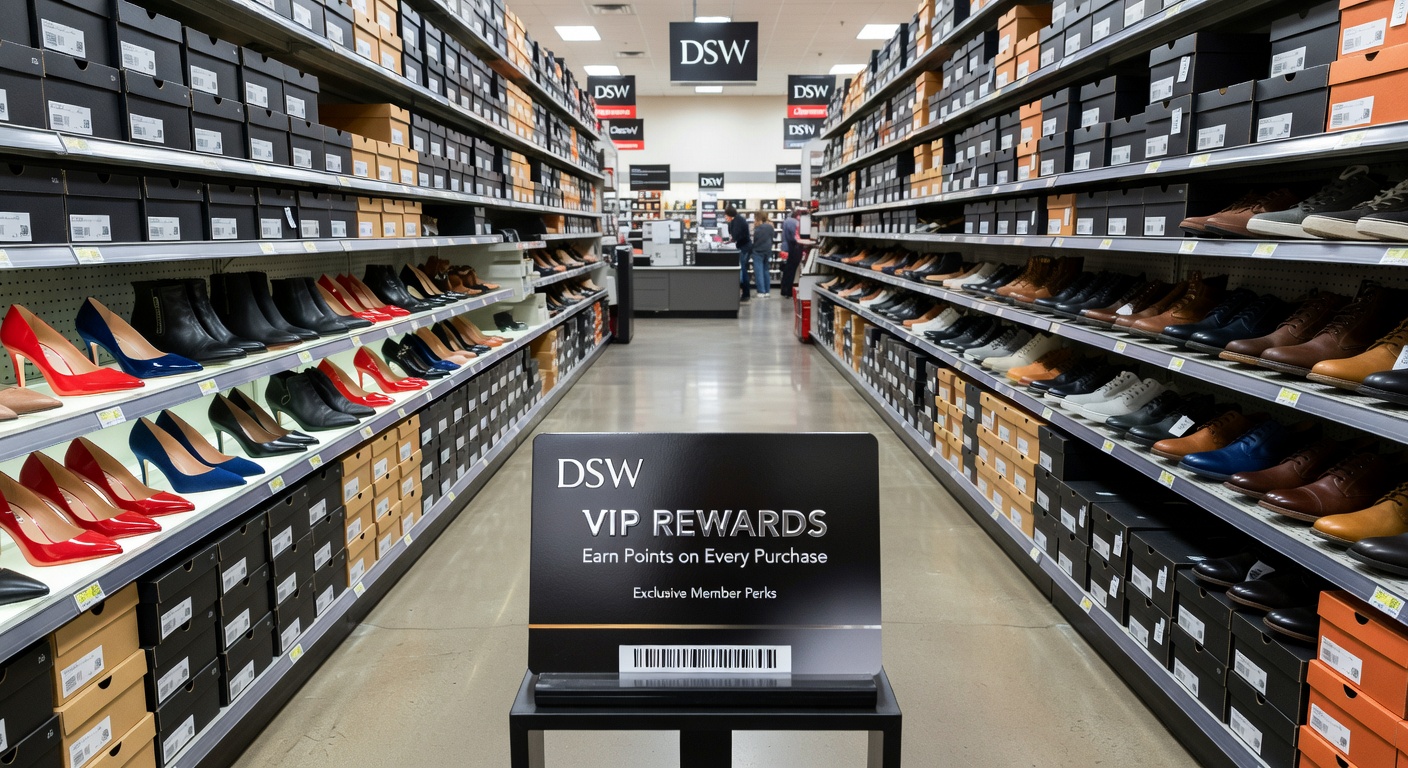
Footwear retail presents a particular challenge for loyalty design. Most consumers do not buy shoes often enough to generate the steady transaction stream that points programs in grocery or beauty rely on. The category is also seasonally driven, with buying clustered around back-to-school, holiday, and weather transitions. DSW’s VIP Rewards program is one of the more carefully designed responses to that challenge — a tier loyalty program that has to do real work to keep shoppers engaged between purchase cycles.
The Tier Structure
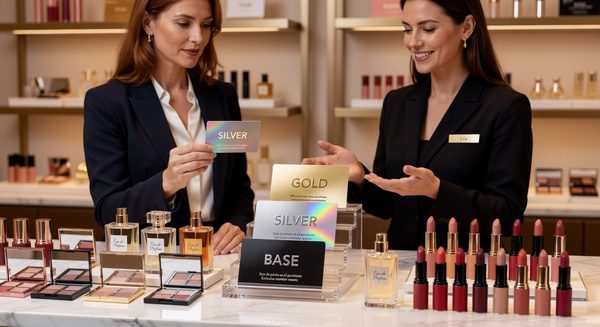
VIP Rewards is organized into three tiers: Club, Gold, and Elite. The entry-level Club tier is free and unlocks the basic earn rate plus a birthday discount. Gold and Elite are reached through spend thresholds and unlock progressively richer benefits — free shipping at a lower threshold, an annual bonus reward, and other extras.
The tier design is reasonable for the category. The thresholds are reachable by a moderately engaged DSW shopper, especially a household where multiple family members buy shoes through the same account. The escalation from Club to Gold offers tangible value (notably the shipping benefit), and Elite adds a meaningful bonus to top spenders. The structure is not as elaborate as Sephora’s Beauty Insider or Nordstrom’s Nordy Club, which fits the category — footwear shoppers are not looking for an identity layer the way beauty shoppers are.
Points Economics in a Low-Frequency Category
The points mechanic in VIP Rewards has to deal with a fundamental category problem. A shoe purchase is large enough that one transaction generates meaningful points. But the next transaction may be months away. This means the redemption cadence is slower than in higher-frequency categories, and the engagement opportunities between purchases are limited.
DSW addresses this in several ways. Points are earned not only on purchases but on certain non-purchase activities like account engagement and qualifying actions in the app. The program runs frequent point-multiplier events that give shoppers a reason to return outside their natural purchase cycle. And the personalized offers layer — driven by purchase history — surfaces relevant categories the shopper might not otherwise consider.
The Free Shipping Anchor
In footwear retail, free shipping is doing more work in loyalty programs than in many other categories. Returns are common — shoppers buy multiple sizes intending to keep one — and shipping costs scale with the frequency of those returns. A VIP benefit that includes free shipping at a lower threshold meaningfully changes the math for the engaged shopper.
This is one of the reasons the Gold tier of VIP Rewards has real pull. The free shipping benefit kicks in at a point where it becomes the practical difference between two competing footwear retailers. For shoppers who buy online and try sizes at home, the shipping benefit can be more valuable than the headline points earn rate.
Bridging In-Store and Online
DSW has historically been a both-channel retailer, with a significant physical store footprint alongside the digital business. VIP Rewards is designed to make the channel choice transparent to the member — points and tier progress earned in store accumulate in the same account as online activity, and rewards can be redeemed across channels.
This sounds basic, but it is harder to execute than many retailers acknowledge. The integration of point-of-sale systems, the digital member account, and the e-commerce platform requires real infrastructure work. DSW’s program is a useful reference for omnichannel retailers thinking about whether their own loyalty mechanic actually delivers a single member experience across stores and the website.
Gamification and Engagement Between Purchases
The challenge of keeping a footwear shopper engaged between major purchases shows up clearly in how VIP Rewards has evolved. The program uses limited-time point bonuses, app-driven challenges, and category-specific promotions to manufacture engagement events outside the natural buying calendar. Some of these mechanics work better than others, but the design intent is clear — the program cannot rely on transaction cadence alone to keep members active.
This is a useful pattern for any low-frequency retail category. The loyalty program has to create reasons to engage that do not depend on the shopper being in market for the main product at the moment.
Comparison to Other Specialty Footwear Programs
Competing footwear programs from athletic retailers, department store shoe departments, and online-native footwear sellers approach loyalty from different angles. Athletic retailers like Nike and adidas lean heavily on the brand community and app experience as the loyalty mechanic, with the points layer secondary. Department stores treat footwear as one category within a broader program. Online-native footwear retailers tend to lean on free shipping and returns as the loyalty currency rather than points.
DSW’s VIP Rewards sits in the middle. It is a traditional points-and-tiers program with a strong shipping benefit and an effort to bridge the channels. The design is not as differentiated as the more interesting specialty programs in other categories, but it fits the DSW business model — broad assortment, value positioning, both channels — better than a more elaborate scheme would.
What Other Specialty Retailers Can Adapt
The most transferable lesson from VIP Rewards is the recognition that in a low-frequency, mid-ticket category, the loyalty mechanic has to compensate for the gap between purchases. Free shipping benefits, point-multiplier events, app-based engagement, and personalized offers are not optional features in this kind of category — they are the program’s primary engagement tools. The points layer alone will not carry the program.
The other lesson is the value of channel parity. A specialty retailer with both stores and an online business has to make the loyalty experience seamless across them, or members will simply default to whichever channel is more convenient and ignore the program in the other.
FAQ
Is the Gold tier of VIP Rewards worth working toward? For shoppers who buy online and use returns, the free shipping benefit alone can justify the Gold threshold. Heavier in-store shoppers will value the tier less, since the shipping benefit is less relevant to their behavior.
Does VIP Rewards work for shoppers who only buy shoes occasionally? The free Club tier offers modest value — a birthday discount, basic points earn, and access to member-only offers. For an occasional shopper, the program is not a strong differentiator, but the enrollment friction is low enough that there is no real downside.
How does DSW use member data? Like most modern retail loyalty programs, the data supports personalized offers, category planning, and email targeting. The personalization layer is the most visible output to members.
Can DSW points be combined with promotional discounts? The interaction between points redemptions and promotional offers varies by promotion. In general, points redemptions stack with most promotional discounts, but members should check the specific terms on a given offer.
Closing Thought
VIP Rewards is a workmanlike loyalty program in a category where workmanlike may be the right answer. Specialty footwear does not need an experiential reward economy or a status-identity tier structure to engage its shoppers. It needs a program that handles the shipping and returns reality, bridges stores and the website cleanly, and creates engagement events between the natural purchase cycles. DSW’s program does those things competently, which in this category is harder to pull off than it sounds.
Further Reading from Authoritative Sources
- DSW Inc. — Wikipedia provides documented background on DSW’s broad-assortment, value-positioning footwear retail model and its both-channel presence that contextualizes the loyalty program design choices analyzed in this review.
- National Retail Federation — NRF publishes industry research on specialty retail loyalty program design and effectiveness that provides the benchmark context for evaluating how DSW VIP Rewards addresses the low-frequency footwear category challenge.