Thanx entered the restaurant loyalty market with a different architectural premise than most of its competitors. Rather than building around app-based check-in or phone-number lookup, Thanx built around credit card linking — the idea that the friction of identifying a customer at every transaction was the biggest barrier to loyalty participation, and that removing it would change the program’s economics.
A decade after the company’s founding, that bet has produced a platform with a distinct identity in the category. This review looks at how the credit-card linking model actually works in practice, what tradeoffs it creates, and where Thanx fits in the competitive landscape.
How Automatic Earning Works
The core Thanx mechanic is straightforward. A customer enrolls in the loyalty program by providing a credit or debit card (typically through a web flow or in-app linking). Thanx connects to the card networks’ transaction data, and any future purchase at a participating restaurant on that card is automatically associated with the customer’s loyalty profile. The customer does not need to identify at the counter, present a card, give a phone number, scan a QR code, or open an app. The purchase happens, the points accrue, and the customer can check their balance later if they want to.
This removes one of the most consistent points of friction in loyalty participation. Studies of in-store loyalty attendance — how often eligible customers actually identify at the moment of transaction — show meaningful gaps even in well-run programs, and most of the gap is friction-driven rather than motivation-driven. Automatic earning closes that gap structurally.
The mechanic also extends to digital ordering when the same card is used, providing unified earning across channels. For operators with both significant in-store and digital order volume, this is a real advantage over models that depend on channel-specific identification methods.
Friction-Removal Benefits
The benefits of removing identification friction show up in several places.
Higher transaction attribution. A larger share of eligible transactions get credited to loyalty profiles, which produces a more complete view of customer behavior. Operators commonly report higher attribution rates with automatic earning than with traditional identification methods.
Lower staff burden. Staff do not need to ask for phone numbers, scan codes, or handle loyalty interactions at the counter. The transaction proceeds normally and loyalty happens behind it. This is particularly valuable in high-velocity environments where every second of POS interaction matters.
Less customer-perceived effort. Customers do not have to remember to identify, do not have to keep an app open, do not have to share a phone number publicly. The program participation feels effortless because it largely is.
Cleaner data on heavy users. Frequent customers who would skip identification on some visits get credited for every visit, producing a more accurate behavioral record over time.
Tradeoffs
The architecture also creates tradeoffs that operators should evaluate honestly.
Less first-party data collected at the moment. App-based and phone-number programs collect customer interactions over time — opens, sessions, in-app behavior, choices made within the loyalty environment. Card-linked earning is silent; it produces transaction data but not engagement data in the same way. For operators whose loyalty strategy depends on rich behavioral signals beyond transactions, this is a meaningful limit.
Email and SMS reach depend on separate opt-in. A customer who provides a card for earning still needs to provide email and phone (and consent) for communications. Thanx supports this enrollment, but the channel reach is not automatic the way the earning is. Operators sometimes assume otherwise and find their communicable audience smaller than their earning audience.
Card-network dependencies. The data flow depends on the card networks’ transaction sharing, which has technical and contractual constraints. Most major networks are supported, but not every card type or transaction route is covered, and some edge cases produce attribution gaps.
App engagement is lower by design. Customers who do not need to open an app to earn rewards often do not open the app. The reduced reliance on the app is a feature for friction reduction and a limit for engagement-driven marketing tactics. Operators who want to drive app usage as a strategic channel may find the model works against them.
Thanx’s CRM and Marketing Automation
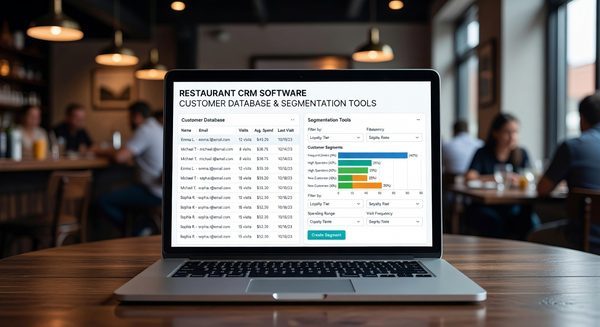
Beyond the earning model, Thanx provides the standard restaurant loyalty CRM functionality — segmentation, campaign automation, email and SMS delivery, offer management, reporting. The depth is competitive with other mid-market and enterprise-leaning platforms, though the platform’s particular shape is informed by the data it collects (rich transaction data, lighter engagement data).
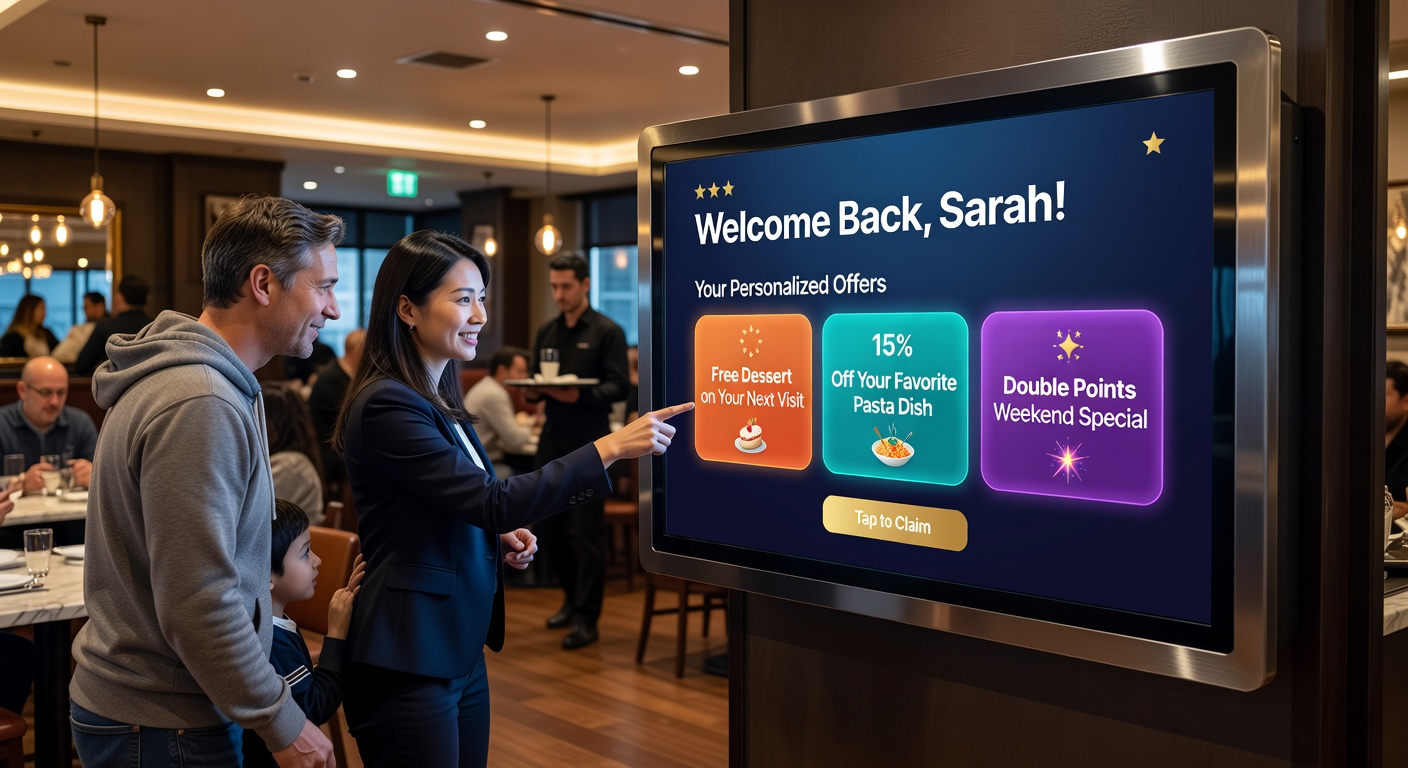
The platform’s offer engine supports targeted promotions based on visit patterns, spend, recency, and other behavioral signals, with delivery through email, SMS, push notifications (where the customer has the app), and digital channels. Automated lifecycle campaigns — onboarding sequences, win-back flows, milestone celebrations — are supported and have been a focus area for the platform.
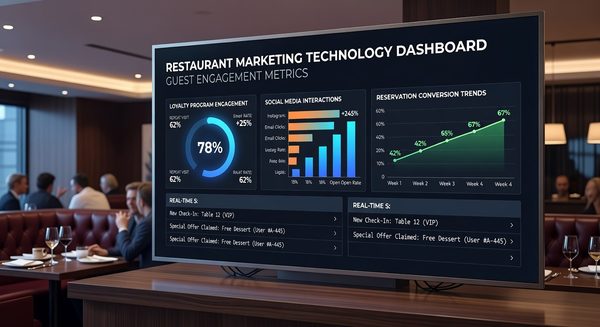
Reporting is solid for restaurant operators, with attention to the metrics that matter most for repeat-visit programs: incremental visit frequency, check size lift, retention rates, and program ROI. The unified-transaction data model produced by automatic earning supports these analyses well.
Target Market
Thanx tends to fit established mid-market chains best — operators with stable multi-unit footprints, meaningful in-store volume, and a desire to lift attribution and reduce friction without forcing customers into app-first behavior. The platform has done particularly well in casual dining, fast casual, and emerging-brand chains where the customer base is comfortable with credit card linking and the marketing operation is sophisticated enough to use the data Thanx produces.
It is less of a fit for very small operators (where simpler POS-native loyalty serves better), for brands whose strategy depends heavily on app engagement as a primary channel, or for operators serving customer bases reluctant to link cards. The model is also a less natural fit for cash-heavy concepts, since cash transactions cannot be attributed through card linking.
Comparison to App-First Platforms
The clearest contrast in the category is between Thanx’s card-linking model and the app-first model used by most competitors. Each has strengths.
App-first platforms (Punchh, Paytronix, Toast Loyalty in its app implementations) win on engagement depth, in-app marketing surface, and behavioral data richness. They lose on identification friction and the participation gaps that result.
Card-linked platforms (Thanx) win on participation rate, transaction attribution, and operational simplicity. They lose on engagement signals and app-driven marketing.
Some operators run hybrid models — Thanx alongside an app-based loyalty environment, or app-first platforms with card-linking capabilities added. The hybrid approach captures benefits from both but adds complexity and integration overhead. For most operators, choosing a single model and using it well outperforms a hybrid done halfway.
FAQ
Does Thanx require customers to have the app? No. Customers can earn through card linking alone. The app adds capabilities (balance checking, offer browsing, push notifications) but is not required for participation.
What card types does Thanx support? Major credit and debit networks are supported. Operators should confirm specific coverage with Thanx for their customer base.
How does Thanx handle digital and third-party delivery orders? Direct digital orders paid on a linked card earn automatically. Third-party delivery faces the same attribution challenges as elsewhere in the industry, though Thanx supports several workaround mechanisms.
Is Thanx a fit for a brand-new small chain? The platform is generally targeted at established mid-market brands. Newer or smaller operators often find better fit in POS-native loyalty or lighter platforms initially.
For operators whose strategic problem is participation rate rather than engagement depth, Thanx remains one of the most differentiated platforms in the restaurant loyalty category. The card-linking model is not the right choice for every brand, but the brands it suits tend to extract value from it that other architectures would not produce. The decision worth making carefully is whether friction reduction or engagement depth is the bigger lever in the operator’s specific situation, because the answer points clearly to one model or the other.
Further Reading from Authoritative Sources
- Interactive Advertising Bureau — IAB establishes the data and identity standards relevant to card-linked loyalty earning infrastructure — directly applicable to Thanx’s core architectural premise of connecting to card network transaction data for automatic loyalty attribution.
- National Retail Federation — NRF publishes industry research on loyalty platform effectiveness and transaction attribution that provides the benchmark context for evaluating Thanx’s card-linking model against app-first and POS-native identification approaches.