For enterprise and large mid-market restaurant chains, Olo has become a near-default layer in the digital ordering stack. Its prominence has implications for loyalty programs because the architecture Olo introduces — an ordering platform sitting between the customer-facing channel and the operator’s POS — also sits between the customer and the loyalty system. Understanding how that integration works, and where its limits are, is essential for any multi-unit operator making platform decisions.
This piece walks through Olo’s architecture from a loyalty perspective, the patterns that connect Olo orders to rewards programs, and the practical decisions operators face.
Olo’s Architecture, Briefly
Olo is fundamentally a digital ordering platform that handles the complex middle layer between order capture and POS injection. Customers place orders through brand-owned channels — the restaurant’s website, the brand’s mobile app, voice ordering systems, or various other entry points — and Olo normalizes and routes those orders into the restaurant’s POS at the correct location.
This middle-layer position matters because it means Olo touches every digital order without owning either the customer-facing experience or the in-store transaction system. The loyalty system, similarly, typically sits adjacent rather than embedded — most loyalty platforms are not part of Olo, and most ordering is not part of the loyalty platform.
For loyalty to work cleanly with Olo, the two systems must communicate through APIs and integration points that Olo and the loyalty vendor have built and maintain.
How Loyalty Platforms Connect to Olo
Several integration patterns are common in production, and they vary in how seamless the customer experience is and how much data flows in each direction.
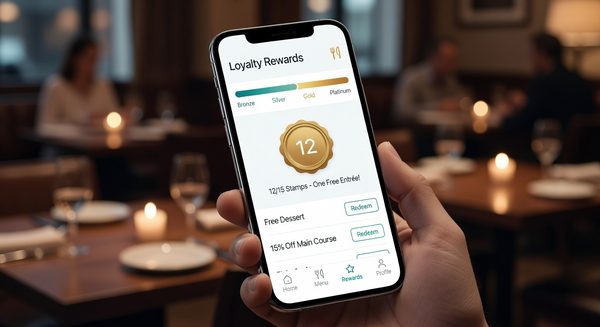
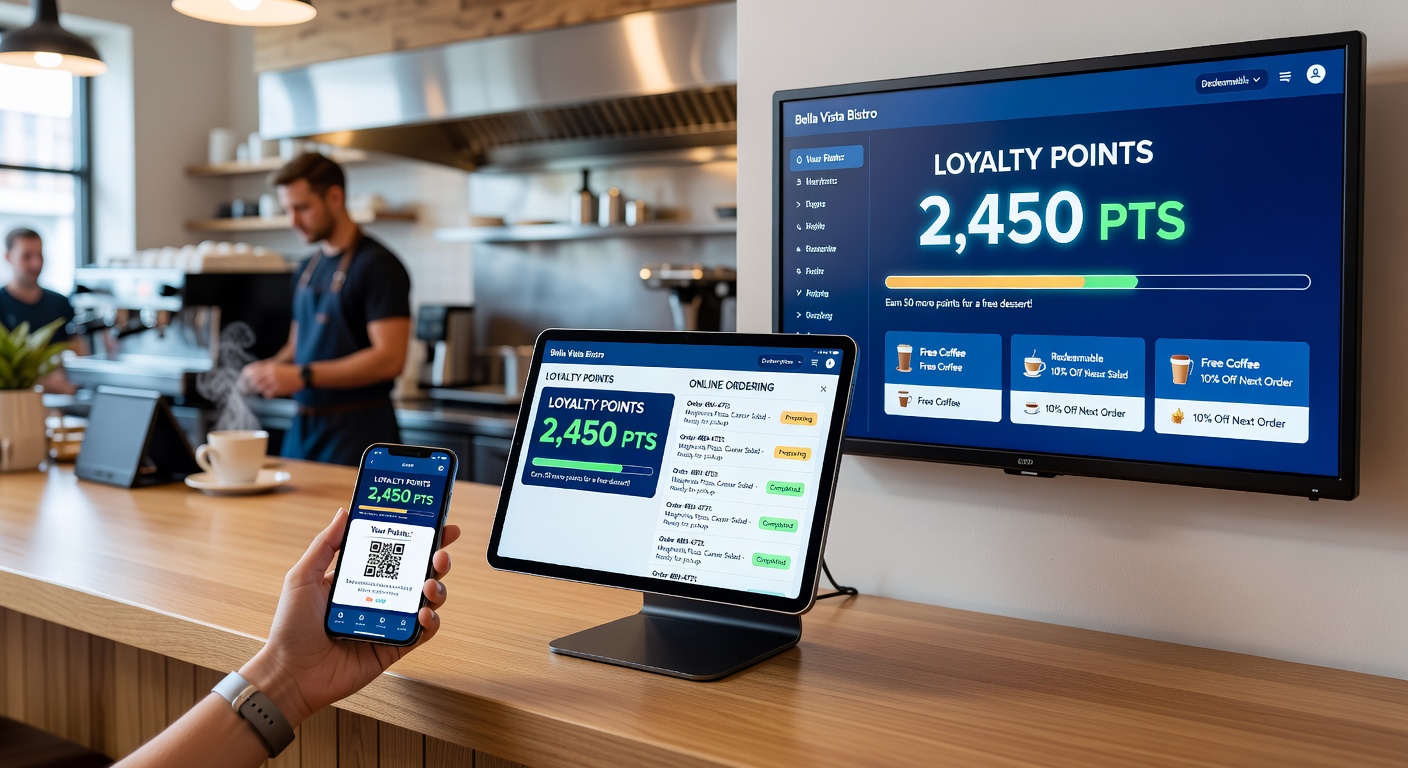
Order-level enrichment. The loyalty system identifies the customer (typically by phone number, email, or loyalty member ID) at the moment of ordering through Olo. Olo passes loyalty member context into the order, the POS receives the loyalty-tagged transaction, and the loyalty system credits points after the order is completed. This is the most common pattern and works reasonably well when both vendors maintain their integration.
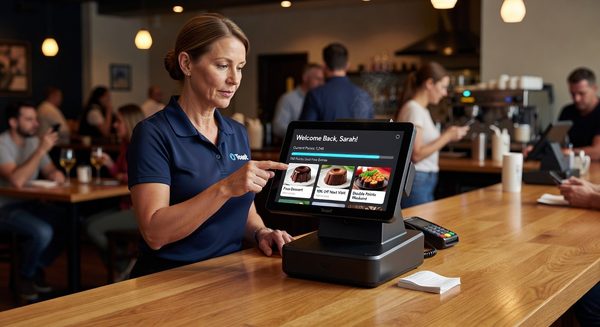
Offer redemption at checkout. A more sophisticated pattern allows the customer to redeem a loyalty offer (free item, discount, points-for-product) at the moment of placing an Olo order. The loyalty platform exposes available rewards via API, Olo surfaces them in the ordering flow, and the redemption is applied to the order and reflected in the customer’s loyalty balance simultaneously. This pattern requires deeper integration and is more common with the loyalty platforms that have invested in Olo connectors specifically.
Post-order points sync. The simplest pattern lets the customer place an Olo order without explicit loyalty interaction and then matches the transaction to a loyalty profile after the fact based on contact information. This works but creates a less integrated customer experience and is more prone to attribution gaps where the customer’s order details do not match their loyalty profile cleanly.
The Third-Party Delivery Attribution Challenge
One of the persistent gaps in restaurant loyalty, and one that Olo’s architecture both helps and complicates, is third-party delivery attribution.
When a customer orders through DoorDash, Uber Eats, or Grubhub, the order may flow into Olo’s network as part of a centralized aggregator integration. Olo’s Rails platform, in particular, was designed to centralize third-party order injection. From a loyalty perspective, the question is whether the customer’s identity travels with the order or stops at the aggregator.
In most third-party delivery cases, the aggregator does not share the customer’s contact information with the restaurant or with Olo. The order arrives in the POS attributed to the aggregator, not to a specific customer. The loyalty system cannot credit points because it does not know who the customer is. This is a structural limitation, not an integration problem, and Olo cannot solve it unilaterally.
Some brands work around this by offering aggregator customers a way to claim loyalty credit after the fact — receipt scanning, email-based attestation, or one-time identification flows that ask the customer to confirm their loyalty membership. These workarounds recover some of the lost attribution but typically capture a minority of orders.
Olo Engage and Guest Data Capabilities
Olo has expanded beyond pure ordering into guest data capabilities, particularly through Olo Engage and related product layers. These products provide tools for capturing and using customer data within the Olo environment, sitting alongside (rather than replacing) dedicated loyalty platforms.
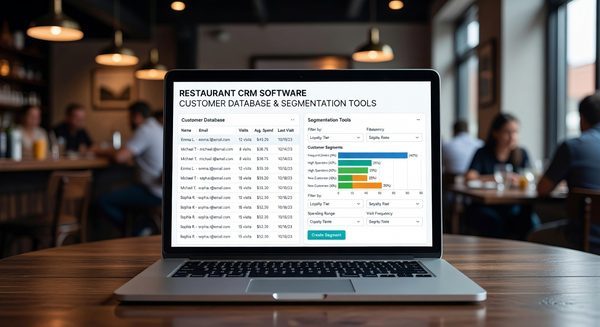
For operators, this raises the strategic question of where guest data and customer marketing should live. Olo’s data capabilities are useful for digital order analytics and basic customer marketing tied to ordering behavior. Dedicated loyalty platforms tend to offer deeper segmentation, broader campaign capability, and more sophisticated lifecycle marketing across channels.
The common architecture among operators with both Olo and a dedicated loyalty platform is to use Olo for ordering and digital-order data, while the loyalty platform serves as the system of record for guest profiles and the campaign engine for marketing. Data flows between the two via integration, with the loyalty platform aggregating signals from Olo, the POS, and other sources into a unified guest record.
Practical Integration Decisions for Multi-Unit Operators
Several decisions face every multi-unit operator running Olo with a separate loyalty system.
Where does the customer identity get captured first? If the brand’s app is the primary digital ordering surface, customer identity typically lives in the loyalty platform’s app environment and travels into Olo orders. If web ordering is dominant, identity capture often happens within the Olo-powered web ordering flow. The answer affects integration design and customer experience consistency.
How are offers surfaced at checkout? Offers managed in the loyalty platform need to surface in the Olo ordering flow at the right moment. Some loyalty platforms have invested heavily in this integration and present clean redemption experiences; others rely on more basic patterns. The operator’s experience with offer redemption in the digital channel is a meaningful test of the chosen stack.
What guest data flows back? After an Olo order, the loyalty platform needs to receive enough transaction detail to credit points correctly, update the guest profile, and inform future segmentation. Light integrations pass transaction totals; deeper ones pass item-level detail. Item-level data is meaningfully more valuable for segmentation, and operators should evaluate which level the integration actually provides.
Who maintains the integration? Olo and the loyalty vendor share responsibility for the integration’s ongoing health, but production issues — fields that stop syncing, edge cases that break, version updates that introduce bugs — happen, and the operator needs to know who responds. Service-level expectations should be discussed before signing.
When the Loyalty Vendor Has a Strong Olo Connector
The loyalty platforms with the deepest Olo integrations — typically the enterprise-focused vendors with large overlapping customer bases — provide noticeably better integrated experiences than vendors with thinner Olo support. For operators committed to Olo, this is a real factor in loyalty vendor evaluation. The integration depth determines what customer experiences are actually possible, not just what is theoretically supported.
Operators should ask for live demos of specific scenarios: loyalty enrollment within an Olo-powered ordering flow, offer redemption at Olo checkout, points crediting after an Olo order, and reporting that combines Olo transaction data with broader loyalty metrics. Demos against the operator’s actual use cases reveal what brochures hide.
FAQ
Can Olo serve as a loyalty platform on its own? Olo provides some guest data and basic loyalty-adjacent capabilities through Engage and related products. For most multi-unit operators with serious marketing programs, Olo is a complement to a dedicated loyalty platform, not a replacement.
Does loyalty earning work for third-party delivery orders through Olo? Only in limited cases. Most aggregators do not share customer identity, which prevents standard loyalty attribution. Workarounds like receipt scanning recover some volume.
Which loyalty platforms have the best Olo integrations? The enterprise-focused vendors — Punchh, Paytronix, Thanx, and several others — have invested in deeper Olo connectors. Operators should evaluate specific integration depth against their actual use cases.
How do small chains decide between Olo and Olo alternatives? Olo is designed for enterprise scale. Smaller multi-unit chains often run on simpler digital ordering platforms (Toast, Square, ChowNow, and similar) where loyalty integration is handled differently. The decision is typically driven by overall scale and channel complexity, not loyalty alone.
For operators at the scale where Olo makes sense, the loyalty integration is one of several important architectural decisions, and treating it carelessly creates customer experience gaps that compound over time. The brands running clean Olo-plus-loyalty stacks have generally made deliberate decisions about identity capture, offer surfacing, and data flow rather than assuming the vendors would figure it out for them.
Further Reading from Authoritative Sources
- National Retail Federation — NRF tracks restaurant technology adoption including digital ordering and loyalty platform integration trends relevant to the Olo architecture decisions described in this article.
- Interactive Advertising Bureau — IAB data standards are relevant to the identity stitching challenges operators face when connecting Olo order data to loyalty platform customer profiles across multiple digital channels.