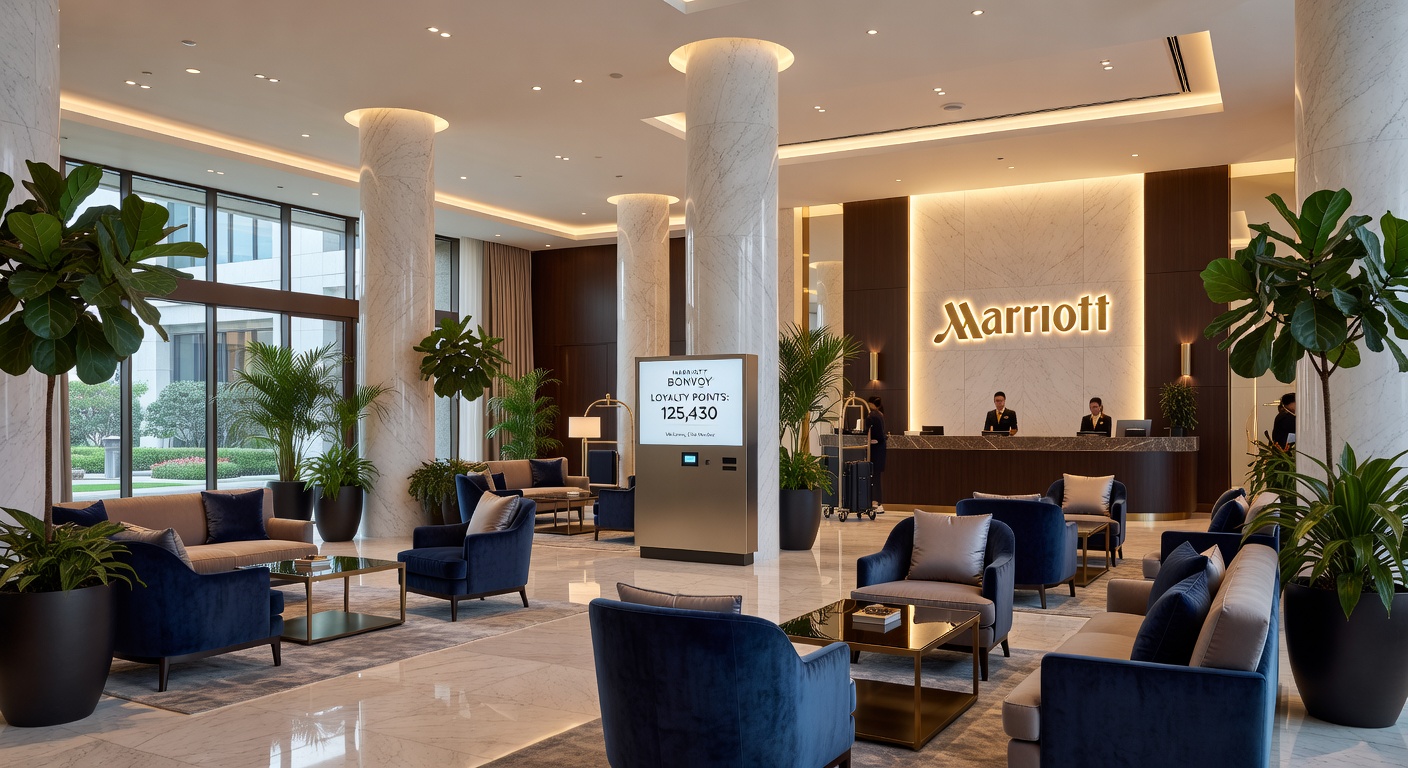
Marriott Bonvoy is, by most reasonable measures, the largest hotel loyalty program in the world. It spans more than thirty brands, tens of thousands of properties, and a footprint that makes it virtually unavoidable for any traveler who spends more than a handful of nights in a hotel each year. That scale is both its greatest strength and the source of most of the criticism it attracts.
For travelers deciding whether to make Bonvoy their primary hotel program — and for loyalty marketers studying what the world’s largest program does and doesn’t do well — it is worth looking at the structure carefully.
Tier Structure: Six Levels, Real Differences
Bonvoy’s elite tiers run from Member at the base through Silver, Gold, Platinum, Titanium, and finally Ambassador Elite. The meaningful benefit jumps happen at Gold (room upgrades when available, 2 p.m. late checkout, a 25 percent point bonus), Platinum (lounge access at many brands, complimentary breakfast at most, suite upgrades when available, a 50 percent point bonus), and Titanium (a higher upgrade priority, additional point bonus, and access to “Choice Benefits” for top status).
Ambassador Elite adds a personal Ambassador service and the “Your24” benefit that lets members effectively choose their check-in hour. Reaching it requires both significant nights and significant qualifying spend, which keeps the tier exclusive but also frustrates frequent travelers who do not spend at luxury price points.
The mid-tier reality is that Platinum is the level at which Bonvoy starts to feel meaningfully better than a non-status stay, and it is achievable for travelers with consistent business travel patterns.
Earning Mechanics
Base earning at Bonvoy is 10 points per US dollar at most brands, with reduced rates at extended-stay and select-service brands and slightly different rates at Ritz-Carlton and a small number of others. Elite bonuses stack on top, so a Platinum member earns 15 points per dollar at standard brands, and a Titanium member earns 17.5.
This earning rate is competitive within the hotel industry, though point values vary considerably depending on how you redeem. A Marriott point is not worth as much as a Hyatt point in most redemption scenarios, but Bonvoy makes up the gap with breadth of options.
The Starwood Merger and What It Changed
When Marriott acquired Starwood in 2016 and merged the loyalty programs in 2018, it absorbed one of the most respected hotel loyalty programs in the industry — Starwood Preferred Guest. SPG had a passionate following built on transparent award charts, consistent elite benefits, and an outsized presence in the luxury and lifestyle hotel space.
The merger brought breadth to Bonvoy but cost some of the precision SPG members had loved. Award charts were eventually replaced by dynamic pricing. Suite night awards changed in structure. The elite benefit experience became more uneven across the wider portfolio. Many former SPG loyalists adjusted; some moved to Hyatt or Hilton; the program kept growing regardless.
Redemption Options
Bonvoy points redeem for free nights, airline transfers, and a variety of experience and merchandise options. The free-night redemption is where most members will find the strongest value, particularly when leveraging the 5th-night-free benefit on standard-room award stays.
Airline transfers are available to a long list of partners at a 3:1 ratio with a 5,000-point bonus for every 60,000 points transferred. That bonus brings the effective rate to roughly 2.5 points per mile, which can be useful in occasional circumstances but is rarely the best use of Bonvoy points.
Experiential redemptions through Marriott’s “Bonvoy Moments” platform can offer interesting value for unique events, but supply is limited.
Credit Card Partnerships
Marriott has co-branded cards with both American Express and Chase, a structure that grew out of the legacy SPG-Amex relationship combined with Marriott’s prior Chase partnership. The result is a card ecosystem with multiple options across personal and business categories, generous welcome offers at various times, and ongoing benefits like a free night certificate on cardholder anniversaries.
For travelers building toward elite status, the card ecosystem matters as much as the stay activity itself. Several of the Bonvoy cards grant automatic Silver or Gold status and contribute elite night credits each year.
Where Bonvoy Excels
The strongest argument for Bonvoy is portfolio breadth. From limited-service Fairfield to Ritz-Carlton, from Moxy and Aloft on the lifestyle side to JW Marriott and St. Regis in the luxury tier, almost every traveler profile can find Marriott properties in most markets they visit. For someone who travels for business across many cities and also takes leisure trips that range from family budget stays to special-occasion luxury weekends, that consistency is genuinely valuable.
The free-night certificates issued by several of the credit cards are also a strong recurring benefit, particularly for members who use them strategically at higher-category properties.
Where Bonvoy Falls Short
The most common criticism is execution inconsistency at the property level. Elite benefits — breakfast, lounge access, upgrades — are delivered far more reliably at some brands and properties than others. The brand standards exist, but the experience varies.
Dynamic award pricing has been another source of frustration. While award nights can be found at attractive prices in off-peak conditions, peak-period pricing can require significantly more points than a traditional category chart would have suggested.
And the sheer size of the program means individual members rarely feel particularly individual. The Ambassador tier exists to address this, but for the broader Platinum and Titanium population, the experience can feel transactional.
Tips for Maximizing Value
A few practical strategies serve most Bonvoy members well. Pay attention to category sweet spots when redeeming — mid-category properties in off-peak periods are typically where points perform best. Use the 5th-night-free benefit on any award stay of five or more nights. Apply free-night certificates at the top end of their points value tier. Time elite stays to maximize the per-night benefit value, particularly when status is on the line.
Frequently Asked Questions
Is Marriott Bonvoy worth it for occasional travelers? Probably yes, at least as a secondary program. The chain breadth makes it likely that you’ll stay at a Marriott property eventually, and the entry-level benefits accrue with no cost.
How does Bonvoy compare to Hilton Honors and World of Hyatt? Bonvoy wins on portfolio breadth. Hilton is roughly comparable in size and tends to offer easier mid-tier elite achievement. Hyatt is smaller but generally delivers more consistent elite benefits and stronger per-point redemption value.
Are Marriott credit cards worth holding long-term? For travelers who stay at Marriott properties consistently, the anniversary free night certificate alone often justifies an annual fee. The decision depends on whether the certificate’s redemption value exceeds the fee, which it typically does at mid-category properties.
Is Ambassador Elite achievable for non-luxury travelers? Realistically, no. The spend requirement effectively requires either luxury rate stays or a very high volume of business travel at premium-room rates. For most travelers, Titanium is the practical top tier.
Verdict
Marriott Bonvoy is the default hotel loyalty program for travelers who value breadth above all else. It is rarely the best program at any single dimension — Hyatt outperforms it on points value, Hilton matches it on elite benefit accessibility, smaller programs deliver more consistent recognition — but it is uniquely well-positioned to be a competent primary program for almost any traveler profile. That positioning is exactly what Marriott has spent the last several decades building, and it is the reason Bonvoy remains the program most travelers eventually end up using, whether they intended to or not.