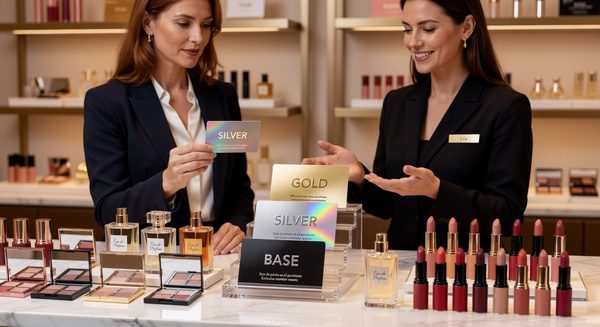
Department store loyalty has had a difficult decade. Foot traffic has shifted, the credit card programs that once anchored these programs have lost some of their pull, and a new generation of shoppers expects a different relationship with the retailers they choose. Against that backdrop, Nordstrom’s relaunch of its loyalty program as the Nordy Club is one of the more interesting case studies in modern retail. The program tried to do something other department stores have not — make loyalty work for the customer who does not carry the store credit card.
The Tier Architecture
The Nordy Club is organized around five tiers: Member, Insider, Influencer, Ambassador, and Icon. Members enroll at no cost and start earning points on every purchase. The higher tiers are reached by annual spend thresholds, with the top tiers reserved for shoppers spending several thousand dollars a year at Nordstrom (the Icon tier is reached at roughly $15,000 in annual spend and is reserved for cardholders). The card-linked path — Nordstrom credit cardholders — earns points at a faster rate, but a non-cardholder can still climb the tiers through spend alone.
This is the structural innovation that separates Nordy Club from older department store loyalty programs. Historically, the department store loyalty equation was “open the store credit card or get nothing meaningful.” The Nordy Club opens the program to the wider customer base while still rewarding the credit relationship. That is a more modern stance, and it acknowledges that younger shoppers — even high-income ones — are less likely to open a single-store credit card.
Earning Beyond the Transaction
One of the more thoughtful design touches in Nordy Club is the set of non-purchase earning activities. Members can earn points or progress through actions like writing reviews, attending in-store events, and engaging with the app. These mechanics serve two purposes. They give the program touchpoints between major purchases, which matters in a category where shoppers may go months between visits. And they generate data and engagement that is valuable to the retailer beyond the immediate point cost.
This kind of “engagement earning” is increasingly common in well-designed retail loyalty programs, but Nordstrom integrated it from the program’s relaunch rather than retrofitting it later. The result is a member experience that feels more continuous and less purely transactional.
What the Upper Tiers Get
At the Ambassador and Icon tiers, the program shifts toward experiential and service-based benefits rather than richer point earning. Members at the top tiers get access to personal stylist services, complimentary alterations and basic alterations turnaround commitments, priority access to in-store events and sales previews, and various concierge-style touches. The benefit bundle is calibrated to what a high-spend Nordstrom shopper would actually value — time savings, expert help, early access — rather than to a louder discount.
This is consistent with how high-end specialty loyalty has evolved. At the upper end of a tier program, the point-multiplier conversation runs out of headroom quickly. A shopper spending five figures a year at a retailer does not get materially more excited about earning 2x points instead of 1x. They do get excited about not having to wait for alterations during the holiday season. The Nordy Club’s upper tiers are designed around that insight.
Digital and App Integration
The program is built to live in the Nordstrom app. Member status, points, available rewards, personalized recommendations, and stylist messaging are all integrated in the same experience. For a department store, this is a meaningful shift. The historical pattern was a paper loyalty card that the cashier scanned at checkout, with the rest of the relationship happening through occasional email. The Nordy Club’s app integration brings the program closer to how modern specialty and DTC retailers operate.
The personalization layer in the app is also where Nordstrom’s investment in data and machine learning shows up most clearly. Recommendations, restocked items in size, and early access notifications are tied to the member’s history and stated preferences. The program functions as a vehicle for personalization as much as a reward mechanism.
What Works and What Feels Like Table Stakes
The Nordy Club’s most distinctive features are the non-purchase earning mechanics and the experiential upper-tier benefits. These are areas where Nordstrom has built a genuine differentiator versus other department store programs.
Some elements of the program — the points-per-dollar mechanic, the birthday reward, the basic enrollment incentive — feel more like category table stakes. A modern department store loyalty program is expected to offer these, and the Nordy Club delivers them at a competitive level without trying to redefine them.
The one area where the program is most often critiqued is the gap between tiers. Reaching the upper tiers requires a level of spend that excludes most shoppers, which means the most differentiated benefits are available to the smallest segment. This is a defensible business decision, but it does mean the average member’s experience is closer to a standard retail program than to the experiential reality of an Icon member.
Competing in a Crowded Retail Loyalty Landscape
The Nordy Club operates in a space where loyalty programs are increasingly common — from off-price competitors to luxury brands’ direct programs to credit card rewards aimed at department store spend. Nordstrom’s positioning is to anchor on service, expertise, and curation rather than the deepest discount. The loyalty program reflects that brand stance. Members are not being trained to wait for the next promotion. They are being given reasons to engage continuously with the brand experience.
For department store operators studying modern loyalty design, the Nordy Club offers a useful template. The lesson is not that every retailer should copy the tier structure — it is that a department store loyalty program in this era has to do more than wrap the store credit card in a rewards label.
FAQ
Do I need a Nordstrom credit card to benefit from the Nordy Club? No. The program is open to all enrolled members, and tier progression can be earned through spend regardless of the payment method. The credit card accelerates earning, but it is not required.
What’s the biggest difference between the Nordy Club and older department store loyalty programs? The integration of non-purchase earning activities, the experiential benefits at the upper tiers, and the app-first member experience. Older programs were primarily credit card rewards programs in a loyalty wrapper.
Are the upper-tier benefits actually used by most members who reach them? The benefits skew toward members who value service and time savings — typically higher-income shoppers with limited time. Usage rates on benefits like complimentary alterations and stylist services tend to be meaningful in this segment, though the data Nordstrom shares publicly is limited.
How does the Nordy Club compare to specialty retailer programs like Sephora’s Beauty Insider? Both lean into status tiers and experiential rewards. Beauty Insider is more aggressive on the experiential layer because Sephora’s product mix and store experience support it. The Nordy Club covers a broader category mix and emphasizes service and convenience.
Closing Thought
Department store loyalty has been pronounced dead more than once over the past decade. The Nordy Club is part of why that obituary keeps getting written too early. By moving the program away from a credit-card-centric model and toward a service-and-experience model integrated through the app, Nordstrom built something that fits how its customers actually shop now. It is not a perfect program, and it has not solved every challenge facing department store retail. But it is a credible answer to a question the category has been struggling with — what does loyalty look like when the credit card alone is no longer enough?
Further Reading from Authoritative Sources
- Nordstrom — Wikipedia provides documented background on Nordstrom’s brand positioning and loyalty program evolution that contextualizes the analysis of why the Nordy Club’s non-cardholder tier access is a meaningful departure from traditional department store loyalty design.
- National Retail Federation — NRF publishes industry research on retail loyalty program design that provides the competitive benchmark for evaluating the Nordy Club’s five-tier architecture and upper-tier experiential benefits against department store loyalty norms.