Toast’s rapid growth among independent and small multi-unit restaurants over the past several years has put its native loyalty module in front of a large operator audience that might otherwise never have shopped for a dedicated loyalty platform. For these operators, the question is less about whether to use Toast Loyalty and more about what they’re actually getting — and when the program’s natural ceiling starts to show.
This review evaluates Toast’s loyalty offering on its own terms, then frames the realistic comparison to dedicated loyalty platforms.
How Toast Loyalty Works
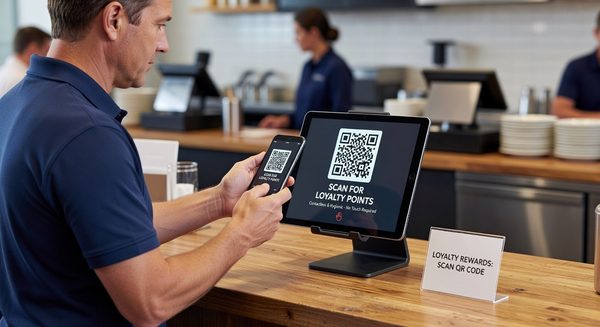
Toast Loyalty is built directly into the Toast POS environment. Customers enroll through phone number, email, or app sign-up, and the loyalty profile is associated with their transactions automatically once identified. The program supports points-per-dollar or points-per-visit earning, with redemption tiers configured by the operator, and includes built-in birthday rewards and basic promotional campaigns.
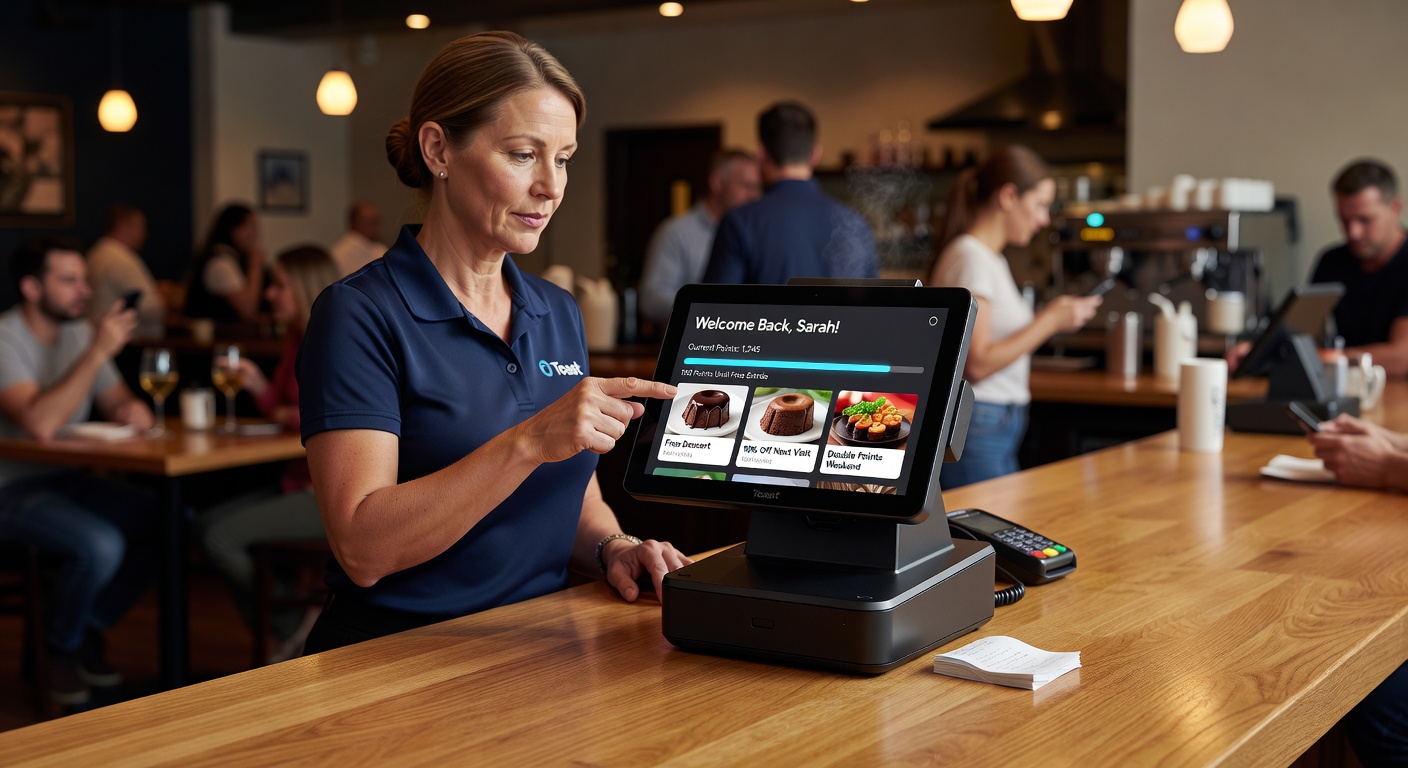
Customers can view their balance, see available rewards, and redeem through a guest-facing portal or app. Email integration is included for transactional messaging (welcome, balance updates, birthday) and for basic marketing sends. Reporting lives inside the standard Toast back office, with loyalty metrics presented alongside the rest of the operator’s transaction data.
Advantages of POS-Native Loyalty
The two biggest advantages of Toast’s approach are integration friction (zero) and reporting unification (complete).
Most loyalty implementations are difficult because the loyalty system and the POS system have to be reconciled. Transactions flow between them, customer identifications match across systems, and the operator has to manage two vendors with two sets of contracts, support teams, and integration risks. Toast Loyalty avoids all of this by living inside the POS — there is nothing to integrate, no data sync to maintain, and no separate vendor relationship to manage.
Reporting unification is the second advantage. Loyalty data sits next to all other transaction data in the Toast back office. An operator can see what loyalty members spent compared to non-members, which menu items drive loyalty redemptions, how loyalty performance varies by location, and how loyalty contributes to broader revenue — all without exporting to a spreadsheet or stitching together vendor dashboards. For operators who want to make data-driven decisions without building a data team, this unification is genuinely valuable.
A third quieter advantage is staff training. Loyalty enrollment and redemption happen on the same screens staff already use for orders. There is no second terminal, no second login, no separate training session. Enrollment rates in well-implemented Toast Loyalty programs reflect this — friction-free flows produce higher participation than equivalent dedicated platforms often achieve in equivalent contexts.
Limitations Compared to Dedicated Platforms
The limitations show up when an operator wants to do more than the basics. Four areas tend to surface first.
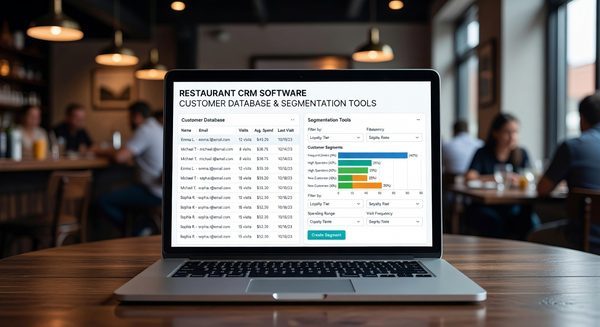
Segmentation depth. Toast Loyalty supports basic segmentation, but the depth available in dedicated platforms — multi-attribute audiences, behavior-based dynamic segments, predictive churn scoring, propensity modeling — is not there. Operators who want to run sophisticated, targeted campaigns will hit ceilings.
Offer type variety. The points-and-rewards mechanics cover most common needs, but dedicated platforms support a wider range of offer constructions: tiered status programs, gamification mechanics, experiential rewards, dynamic time-limited offers, member-only menu items, and so on. Toast covers the meat-and-potatoes; dedicated platforms cover the broader menu.
Delivery and digital ordering integration. Toast Loyalty works cleanly within the Toast ecosystem, including Toast Online Ordering. For operators running heavy third-party delivery volume through DoorDash, Uber Eats, or Grubhub, the attribution gap is the same one every restaurant deals with — but Toast Loyalty does not have the receipt-scanning fallback or third-party integrations that some dedicated platforms have built. The loyalty footprint on third-party orders is thinner.
Marketing automation. Email marketing in Toast Loyalty exists but is not designed to compete with purpose-built marketing automation. Lifecycle campaigns, multi-step journeys, branching logic based on behavior — these capabilities are limited or absent. Operators with serious marketing automation needs typically pair Toast Loyalty with an external email platform or migrate to a more sophisticated stack.
Best Fit
Toast Loyalty is the natural choice for operators who satisfy three conditions: they are already on Toast POS, they are at the single-location or small multi-unit stage, and they value simplicity over sophistication. For these operators, the program meets the actual marketing capacity available and avoids overhead that would be wasted on features they cannot operate.
It is also a reasonable choice for operators in transition — restaurants that are growing and want to run loyalty now, with the understanding that they may migrate to a dedicated platform later when scale and marketing capacity justify it. The data accumulated in Toast Loyalty during this period is the operator’s, and it transfers to the next platform when the time comes.
When to Upgrade
Several signals suggest an operator has outgrown Toast Loyalty.
The first is hitting the segmentation ceiling. When the marketing team is regularly trying to build audiences that the platform cannot support, the workaround friction starts costing more than the migration would.
The second is when the offer mix gets sophisticated. Tiered programs, gamification, dynamic offers, experiential rewards — these become difficult to execute well within Toast Loyalty’s mechanics.
The third is when location count crosses the threshold where marketing operations becomes a discipline. Multi-region brands running dozens of locations typically need infrastructure designed for that scale.
The fourth is when delivery and digital order attribution becomes critical. Operators with significant third-party delivery volume often outgrow Toast Loyalty’s reach in that channel.
The migration from Toast Loyalty to a dedicated platform is non-trivial — POS integration work, data migration, member communication, operational transition — and operators should plan for it as a real project rather than a swap. But it is well-traveled territory, and dedicated platforms have learned to handle Toast migrations cleanly.
FAQ
Can Toast Loyalty support an operator with 10+ locations? Technically yes, and some run it well. Practically, marketing sophistication tends to be the limiting factor before location count is. Multi-unit operators with active marketing programs often outgrow it.
Does Toast Loyalty cost extra on top of Toast POS? It is offered as part of Toast’s broader product suite with separate pricing. Operators should confirm current terms with Toast directly.
Is Toast Loyalty’s mobile app branded for the restaurant? The customer-facing loyalty experience includes branded elements but is not the equivalent of a fully custom mobile app. Operators who want a deeply branded standalone app will typically need a third-party platform.
Can data be exported if the operator moves to a different platform? Customer data and transaction history can be exported. As with any migration, operators should confirm export scope and format before signing a contract elsewhere.
For the operator profile Toast Loyalty was designed for, the program does its job well — friction-free enrollment, integrated reporting, and a reasonable feature set that covers the everyday mechanics of running a points program. Operators who match that profile should resist the temptation to over-shop and use what comes with the POS. Operators who have outgrown it should resist the temptation to underestimate the marketing capacity required to use a more capable platform once they move.
Further Reading from Authoritative Sources
- National Retail Federation — NRF publishes restaurant technology and loyalty program evaluation research that contextualizes the Toast Loyalty review — including the operator profile criteria for POS-native versus dedicated platform selection, the integration advantages of built-in loyalty, and the feature ceiling benchmarks that indicate when a growing operator needs to migrate to more capable infrastructure.
- Interactive Advertising Bureau — IAB’s marketing technology standards provide the benchmark context for the four capability limitations the article identifies in Toast Loyalty — particularly the segmentation depth, lifecycle campaign automation, and behavioral targeting requirements that dedicated platforms fulfill and that POS-native programs do not, defining when operator sophistication has outgrown a bundled loyalty solution.