“Restaurant CRM” is a term that means several different things depending on who is using it. To a fine dining operator, it usually means reservation-driven guest profiling — preferences, allergies, VIP notes. To a QSR marketer, it means a loyalty database with segmentation and offer delivery. To an enterprise multi-brand parent, it means a centralized customer data platform that unifies transactions across banners and channels. The buyer’s task is to figure out which definition matches the business problem and choose a tool that actually addresses it.
This guide walks through the evaluation framework operators should apply when shopping for CRM with a loyalty lens.
What CRM Means in the Restaurant Context
Outside restaurants, CRM is usually about sales pipelines and account management. In restaurants, the term has been borrowed for guest data management — collecting who customers are, what they buy, when they visit, and using that information to drive repeat business. The function overlaps heavily with loyalty, marketing automation, and customer data platforms, and the boundaries between these categories blur depending on the vendor.
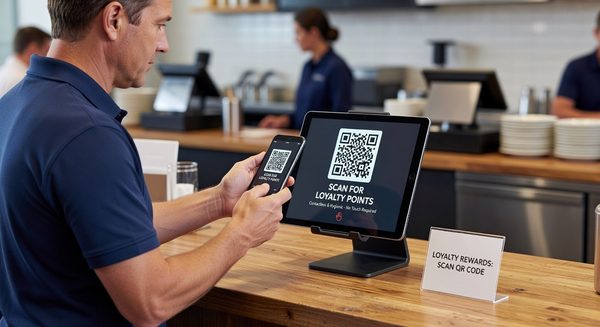
A useful working definition: restaurant CRM is the system that unifies guest identity across touchpoints, stores transaction and engagement history, segments customers based on behavior, and triggers communications or offers based on that segmentation. Loyalty programs are the primary mechanism for collecting the underlying data, and most modern restaurant CRM functionality lives inside loyalty platforms.
Key Capabilities to Evaluate
The features that matter most depend on the operator’s stage, scale, and ambition. Six capabilities tend to come up in every serious evaluation.
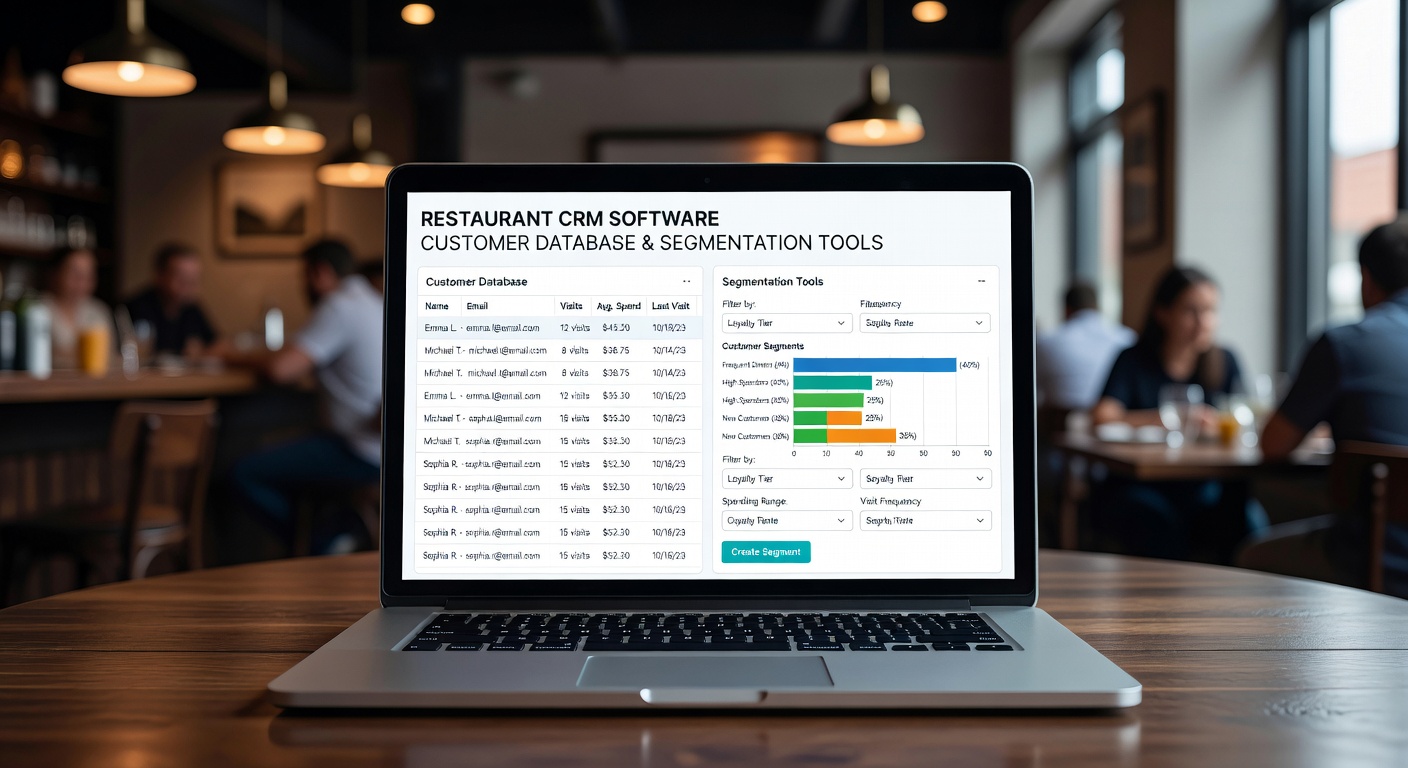
Guest profiling. What can the system store about an individual customer? At minimum: contact information, transaction history, channel preferences, opt-in status. Beyond that: dietary preferences, location associations, household relationships, lifetime value, predicted churn risk, segment membership. Stronger platforms maintain richer profiles and update them automatically as new data arrives.
Segmentation. Can the operator define audiences based on real behavior, or is segmentation limited to simple demographic filters? The depth of segmentation often determines whether the platform can drive marketing sophistication beyond what an email list permits. Look for the ability to combine attributes (visit frequency, recency, channel, item history, location, spend tier) and for the segmentation to update automatically as customer behavior changes.
Campaign automation. Can the platform trigger communications based on events — first visit, churn risk, birthday, points-balance milestone — without manual setup each time? Automation depth separates platforms that can run lifecycle marketing from those that can only send one-off blasts.
POS integration. How does the platform get transaction data? Direct POS integrations are stronger than batch file imports. The list of supported POS systems and the freshness of the data flow are practical constraints that determine what the platform can actually do.
Online and delivery integration. Does the platform see digital orders, third-party delivery orders, and gift card transactions? Gaps here become blind spots in the guest profile.
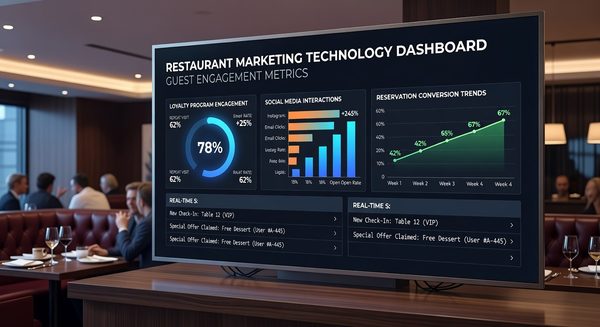
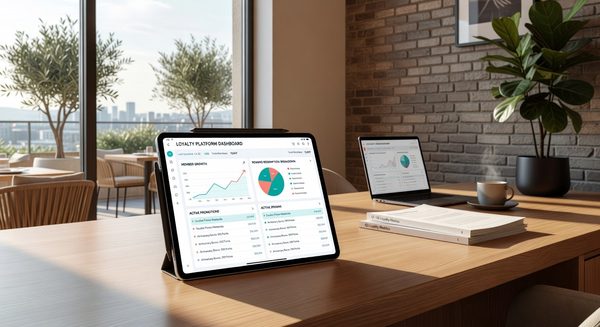
Reporting and analytics. Can the operator see program performance, segment performance, and campaign ROI without exporting data to a spreadsheet? Strong reporting reduces dependency on technical staff and accelerates the optimization cycle.
Vendor Categories
Three categories of vendor compete for restaurant CRM spend, and the right choice depends on which problem the operator is solving.
Purpose-built loyalty platforms (Paytronix, Punchh, Thanx, Como, and similar) lead with loyalty mechanics and add CRM functionality on top. They are usually the strongest fit for operators whose primary need is repeat-visit marketing tied to a points or status program. Deep restaurant integrations and feature sets designed for QSR, fast casual, and casual dining are the main advantage.
General-purpose CRM (HubSpot, Salesforce, Klaviyo, and similar) lead with broader marketing automation and add restaurant-specific integrations where they can. They make sense for operators who need email and SMS marketing depth that exceeds what loyalty platforms offer, or who have CRM needs beyond loyalty (private events, catering, corporate accounts). The tradeoff is weaker out-of-the-box restaurant fit and more configuration required.
POS-native loyalty and CRM (Toast, Square, Clover, and similar) bundle basic CRM into the POS platform. They make sense for single-location and small multi-unit operators who value simplicity and unified reporting over depth. The tradeoff is limited segmentation, weaker automation, and a tighter ceiling on what marketing sophistication is possible.
Evaluation Framework
A practical evaluation process moves through five steps.
First, define the use cases. What specific marketing or guest experience improvements does the operator want to achieve? Higher repeat-visit frequency, better birthday programs, churn reduction, segmented offers, gift card revenue growth — name the problems before evaluating tools.
Second, audit the data sources. What POS, online ordering, delivery, and other systems are in place? Which need to feed the CRM? Integration availability is often the deciding factor.
Third, narrow the vendor list based on scale and category fit. Single locations should rarely shortlist enterprise platforms; enterprise chains should rarely shortlist POS-native tools.
Fourth, run real demos with operator-specific scenarios. Generic demos demonstrate features that may or may not match the use cases. Ask each vendor to walk through the operator’s actual problems with the operator’s actual data flows.
Fifth, verify references. Talk to current customers at comparable scale and ask about implementation experience, ongoing support quality, and what they would do differently. Reference calls catch the issues marketing materials hide.
Data Ownership Questions
A critical and often-overlooked area of evaluation is data ownership. Operators should ask explicitly: who owns the customer data in the system? Can the operator export the full database, including transaction history and engagement records, at any time? What happens to the data if the contract ends?
Some platforms make export easy. Some make it possible but cumbersome. A few effectively trap the data. The answer matters enormously because the customer database is the most valuable digital asset most multi-unit restaurants own. An operator considering a long-term platform commitment should know exactly what they can take with them if they leave.
Common Mistakes
The most common evaluation mistake is shopping on features rather than fit. Platforms with the longest feature lists often have the most overhead and the steepest learning curves, and operators who buy on capability inventory rather than usage match end up under-using what they pay for.
The second common mistake is underestimating implementation effort. CRM rollouts require configuration, integration, training, and ongoing optimization. Operators who treat the project as a software install rather than a marketing capability build are routinely disappointed.
The third mistake is failing to commit marketing capacity. The best CRM platform in the world will not produce marketing results without someone running campaigns, monitoring segments, iterating on offers, and pulling reports. Operators who buy a CRM and assign it to “whoever has time” usually do not get value back.
FAQ
Is a dedicated loyalty platform really CRM? For most restaurant operators, yes. Modern loyalty platforms include guest profiling, segmentation, automation, and reporting — the core functions of CRM. Where the operator’s needs extend beyond loyalty (corporate accounts, catering pipelines), a general-purpose CRM may need to layer alongside.
What size operator needs CRM beyond POS-native loyalty? The transition point varies, but operators with three or more locations, meaningful digital ordering volume, and any marketing capacity at all usually start to outgrow POS-native CRM. Single locations can often run effective programs on the POS toolkit.
Can a restaurant run loyalty and CRM on separate systems? It can, and some do, but the result is usually fragmented guest data and inconsistent customer experience. Unified systems generally outperform split stacks.
How long does CRM implementation typically take? For mid-market multi-unit restaurants, plan on several months from contract signing to a fully operational program. Enterprise rollouts can take longer; single locations on POS-native tools can be live in days.
Choosing restaurant CRM software well is less about finding the platform with the most features and more about matching tools, data, and marketing capacity to the actual problems the operator is trying to solve. The operators who get the most return from these investments treat the platform as one part of a broader capability build, not as a shortcut around the work of running a real guest marketing program.
Further Reading from Authoritative Sources
- Interactive Advertising Bureau — IAB establishes the data and identity standards that directly apply to the article’s analysis of CRM data ownership questions, integration quality evaluation, and first-party data requirements for effective guest profiling.
- National Retail Federation — NRF publishes industry research on guest data management and loyalty platform adoption that provides the benchmark context for the article’s evaluation framework and vendor category recommendations across enterprise, mid-market, and single-location operator segments.