Among enterprise restaurant loyalty platforms, Punchh has built one of the most recognizable customer rosters in the industry — large QSR and fast casual chains running programs that touch millions of guests across thousands of locations. The platform’s reputation reflects a particular design philosophy: build deep functionality for marketers who can operate it, and integrate broadly enough to fit complex enterprise tech stacks without forcing the operator to compromise.
This review covers Punchh from an operator’s perspective, with attention to the realities of enterprise implementation rather than the marketing-page feature checklist.
Market Position: Built for Enterprise Scale
Punchh competes primarily for large multi-unit restaurant brands — chains with hundreds or thousands of locations, dedicated marketing organizations, and the in-house capacity to operate sophisticated campaign infrastructure. The platform’s pricing model, implementation complexity, and feature surface all reflect that buyer profile.
Smaller operators occasionally appear on the customer list, but the platform is usually overscoped for them. A three-location independent will not exercise enough of what Punchh offers to justify the investment relative to lighter alternatives. Where Punchh shines is the brand running national campaigns, segmenting across millions of guests, integrating with a half-dozen technology partners, and pushing data into a broader marketing stack downstream.
The platform’s prominence in major chain announcements over the past several years — both as the underlying loyalty technology and as part of broader digital transformation efforts — reflects how often it ends up on the shortlist when enterprise restaurant brands evaluate platforms.
Core Capabilities
Punchh runs a points-and-experiences engine that handles the standard mechanics — points per dollar, visit-based earning, tier programs, birthday and milestone rewards — and extends beyond them into experiential rewards, gamification mechanics, and dynamic offer types that adjust to customer behavior over time.
The offers engine supports targeted campaigns based on a broad set of attributes: visit frequency, recency, spend, item history, channel preference, location, device, demographic data where available, and combinations of these signals. Targeting can drive offers delivered through email, SMS, push notification, in-app messaging, or third-party channels where integrated.
The platform includes mobile app capabilities, with branded apps available either as managed builds or as deeper customizations layered on Punchh’s SDK. Larger brands typically run the latter, integrating loyalty into apps that also handle ordering, payment, and broader customer experience. The mobile app is often the centerpiece of the operator’s digital strategy, and Punchh’s role is to power the loyalty layer within it.
AI and Personalization
Punchh has invested heavily in machine-learning-driven personalization — predictive churn modeling, propensity scoring, automated offer recommendations, and dynamic segmentation that adjusts in near real time. The capabilities have grown more sophisticated over recent platform versions, and operators with the marketing capacity to use them generally report meaningful uplifts over hand-built campaigns.
The realistic caveat is that AI features deliver value in proportion to the operator’s willingness to act on them. Recommendations are recommendations, not autopilot, and marketing teams still need to design, test, and deploy. Operators expecting a black box that runs itself will find Punchh’s AI capabilities under-leveraged. Operators with analytical marketing staff find them genuinely useful.
Omnichannel and Integration Ecosystem
A consistent strength is integration breadth. Punchh maintains established connections to the major POS systems used by enterprise restaurants, the dominant online ordering platforms, the major third-party delivery aggregators, payment processors, and a wide range of marketing infrastructure (data warehouses, customer data platforms, attribution tools). For brands running complex stacks, the integration library is one of the main reasons Punchh ends up in production.
The omnichannel capability matters because enterprise guests rarely interact with a brand through a single channel. A given customer might dine in once, place a digital order another time, get delivery through a third-party platform a third time, and respond to an SMS offer a fourth. Punchh’s data model treats all of these as a single guest and supports campaigns that follow that guest across channels, where the integration is in place to deliver.
Analytics Depth
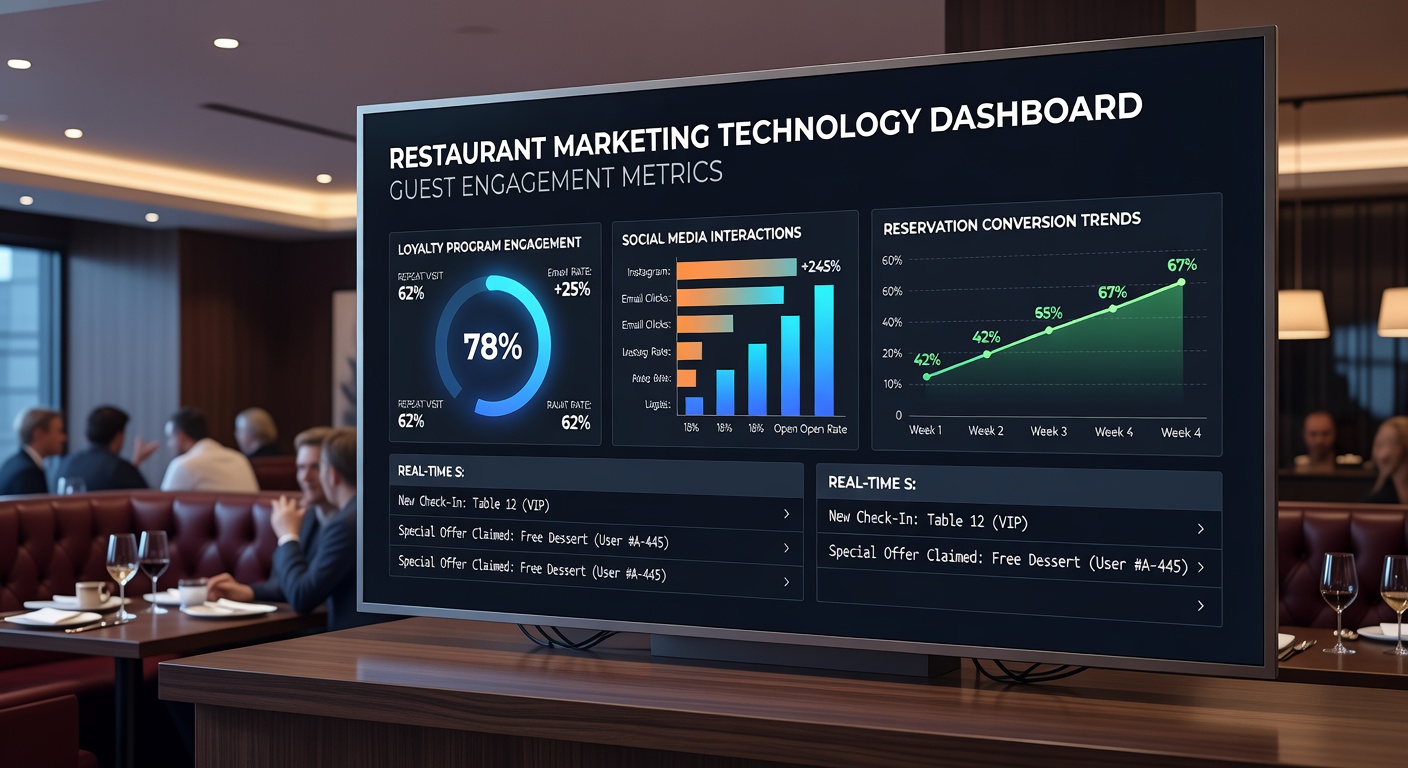
Analytics are a Punchh strength and a Punchh complexity. The reporting surface is broad, with standard program performance dashboards, segment-level analysis, campaign attribution, channel comparison, and the ability to extract data into external analytics environments. For sophisticated operators, the depth is welcome; for less analytical teams, the surface area can feel overwhelming.
Operators commonly report needing a dedicated analyst or marketing operations person to fully exercise the reporting capabilities. Brands that lack this role often run a subset of the available analytics and miss optimization opportunities that the platform would otherwise surface.
Implementation Complexity
Implementing Punchh is a project, not an install. Enterprise rollouts typically involve POS integration work across hundreds or thousands of locations, configuration of program rules and offers, mobile app design or integration, marketing template build-out, staff training programs, and coordinated launch campaigns. Plan on a multi-month timeline for full enterprise deployment.
Punchh provides implementation managers and customer success teams, and the level of vendor support is generally well regarded. The operator side of the equation matters at least as much: brands that staff the implementation with capable marketing operations, IT, and digital teams tend to launch cleaner programs than those that treat the project as a vendor-led exercise.
Competitive Position
The most common alternative on enterprise shortlists is Paytronix, which competes in much of the same market with overlapping capabilities. Punchh tends to be stronger for large QSR chains and brands prioritizing AI-driven personalization at scale. Paytronix tends to be stronger for casual dining, convenience stores, and operators with significant gift card integration needs. Both platforms can serve either case competently, and the decision often turns on integration fit, account team chemistry, and contractual terms more than feature-level differentiation.
FAQ
Is Punchh appropriate for a mid-market chain with 20-50 locations? It can be, but the platform is often overscoped for that scale. Operators in this range should evaluate carefully whether they will use enough of the depth to justify the investment versus a lighter alternative.
Does Punchh provide the mobile app or does the brand build one? Both options are available. Larger brands typically build custom apps using Punchh’s SDK and integrate loyalty as one component; smaller customers use the templated app builds.
How does Punchh handle third-party delivery attribution? The platform supports the standard mechanisms — integration with aggregators where available, receipt scanning as a fallback, and post-order loyalty enrollment prompts. The attribution gap that exists across the industry remains a partial problem.
What internal team is needed to run Punchh effectively? For enterprise scale, a marketing operations lead, a campaign manager or two, an analyst, and IT support during integration windows is a typical staffing baseline. Smaller customers can run with less, but capacity is the most common reason platforms underperform.
For large restaurant brands prepared to invest in serious loyalty infrastructure and the marketing capacity to operate it, Punchh remains one of the strongest options in the category. The platform rewards operators who treat it as a long-term capability build rather than a vendor purchase, and the brands that have stuck with it for years tend to be the ones running the most sophisticated loyalty programs in the industry.
Further Reading from Authoritative Sources
- National Retail Federation — NRF tracks restaurant technology investment and loyalty platform adoption across multi-unit chains, providing the industry context for evaluating enterprise-scale loyalty infrastructure like Punchh.
- Harvard Business Review — HBR research on algorithmic personalization and marketing automation supports the evaluation of Punchh’s AI features and the realistic expectations operators should hold for machine-learning-driven offer recommendations.