Few loyalty programs in modern retail have done what Sephora’s Beauty Insider has done. It has reshaped how a category thinks about rewards, lifted average basket sizes among the most engaged customers, and turned a transactional points scheme into something that feels closer to a community membership. For loyalty professionals studying what “good” looks like in specialty retail, Beauty Insider is one of the most-referenced benchmarks of the past decade — and it is worth looking at why.
A Program Built Around Status, Not Just Discounts
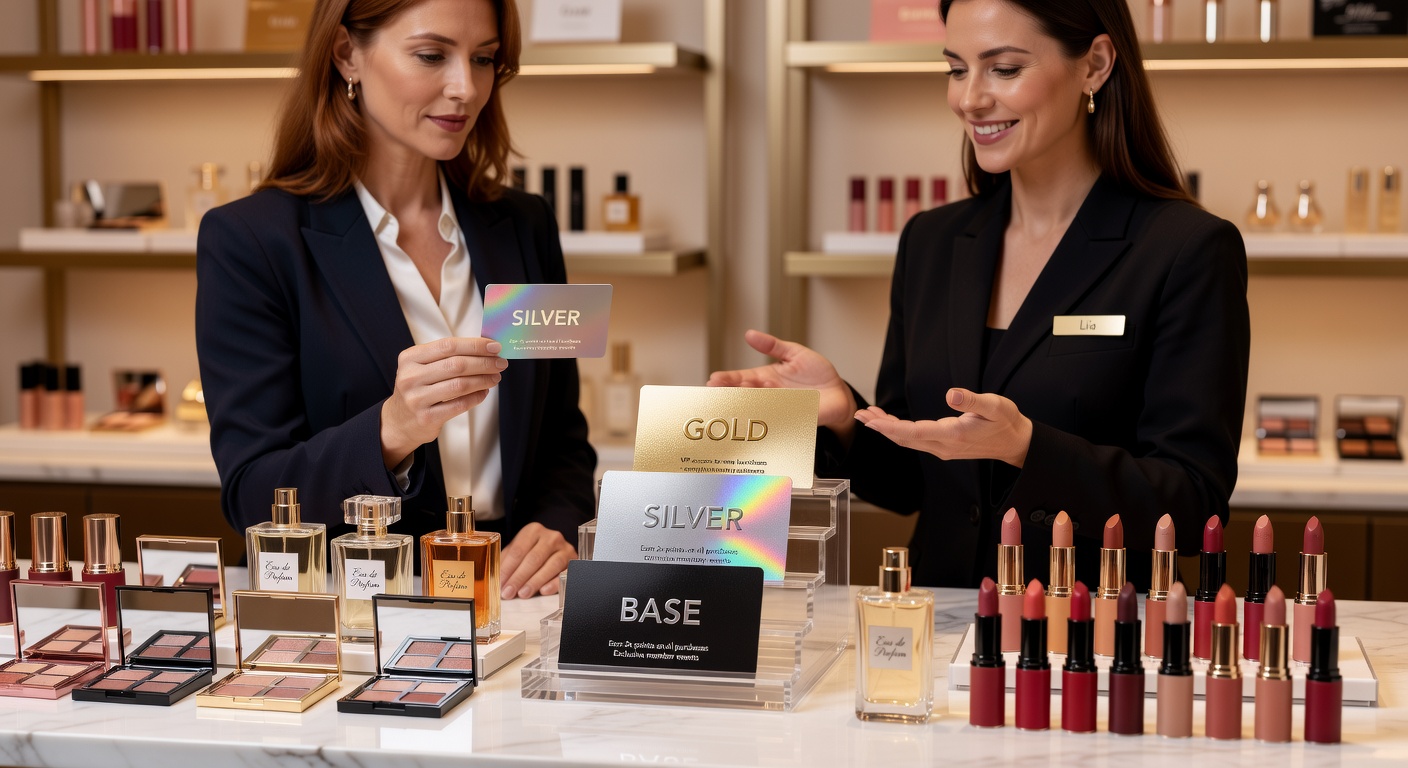
The structure of Beauty Insider rests on three tiers: Insider at the entry level, VIB for shoppers spending several hundred dollars a year, and Rouge for those crossing the program’s top spending threshold. The tier names alone do work that traditional retail programs underestimate. They are short, memorable, and they signal status. A shopper does not say “I have a gold card” — she says “I’m Rouge.” The program has effectively created an identity layer on top of a points balance.
That status anchor matters because it changes what the reward economy is about. In a typical retail rewards program, the question is “how big is my discount?” In Beauty Insider, the question is “what tier am I in this year?” The shift from transactional value to social and identity value is the single most important design choice in the program.
Flexible Redemption That Respects the Shopper
Most retail loyalty programs treat earned points as a single-purpose currency: spend them on a future purchase, or convert them to a fixed-value coupon. Beauty Insider takes a more nuanced approach. Points can be redeemed for product samples through the Rewards Bazaar, for higher-value full-size products at richer point levels, for experiences, or for charitable contributions. At certain windows the program runs cash-discount conversions as well.
This flexibility solves a problem most loyalty programs have but rarely address — the redemption ceiling. Shoppers in many programs accumulate points faster than they find meaningful things to redeem them for, which deflates the perceived value of the program. Sephora’s portfolio approach keeps redemption desirable across a wide range of point balances and shopper preferences. It also creates a steady stream of marketing moments around new rewards drops, which sustains engagement between major purchases.
Experiential Rewards as the Real Differentiator
The experiential layer is where Beauty Insider separates itself from competing retail programs. Rouge members get early access to product launches, invitations to in-store events, complimentary beauty classes, makeup application services, and direct access to brand founders during exclusive sessions. These benefits cost Sephora real money to deliver, but they generate the kind of brand affinity that no percentage-off coupon can buy.
The experiential design also reinforces Sephora’s premium positioning. A shopper attending an invite-only event with a prestige beauty brand does not associate that experience with a discount retailer. The program rewards loyalty in a way that elevates rather than cheapens the brand, which is a difficult balance most specialty retailers struggle to strike.
Why Discount-First Competitors Fall Behind
When comparable beauty and specialty retailers attempt to compete with Sephora on loyalty, the most common move is to offer a richer points-to-dollar conversion, deeper percentage-off promotions, or more aggressive birthday gifts. That approach almost always underperforms, because it competes on the dimension where Sephora is deliberately not trying to win.
Beauty Insider does not have the deepest discount in retail. It has the most desirable status, the most flexible redemption, and the most experiential layer. Competitors who copy the points mechanics without understanding the brand and status architecture often find their programs generate enrollment but not engagement. Members join, earn modestly, redeem occasionally, and never reach the emotional attachment that drives a Rouge shopper’s purchasing pattern.
What Other Retailers Can Adapt
Few specialty retailers have Sephora’s product mix, prestige brand relationships, or store experience to copy the program outright. But the underlying design principles travel well. The tier architecture as an identity layer can work in apparel, home goods, sporting goods, and other discretionary categories where status matters to the shopper. The portfolio redemption model — multiple reward types at multiple point thresholds — is broadly applicable. The experiential reward layer can be scaled to any retailer with the operational capacity to host events, deliver expert services, or provide early access to inventory.
The lesson is not “do what Sephora does” — it is “understand why what Sephora does works.” A loyalty program designed around status, identity, and experience will out-perform a program designed around the next discount, even if the discount looks bigger on paper.
FAQ
What makes Beauty Insider different from other retail loyalty programs? The combination of meaningful tier status, flexible redemption across multiple reward types, and an experiential benefits layer at the upper tiers. Most programs offer one or two of these elements; Beauty Insider integrates all three.
Do Rouge members actually spend more, or is the program just selecting for high spenders? Both effects appear to be at work. The program selects for high spenders by design, but the experiential benefits and early access also drive higher repeat visit frequency and category share-of-wallet among members who reach the top tier.
Can a smaller retailer build a Beauty Insider–style program? The principles scale down, but the experiential layer is harder for retailers without the brand partnerships or store footprint to deliver in-person events. Smaller retailers can adapt the tier identity and flexible redemption elements without trying to match the experiential scale.
Why doesn’t Sephora simply offer deeper discounts to top spenders? Because deep discounts would erode the prestige brand positioning that drives Sephora’s premium price tolerance in the first place. Experience-based rewards preserve the brand while still rewarding the customer.
Closing Thought
Beauty Insider has been studied, dissected, and partially copied by retailers across categories for years. The program endures as a reference point because it solved a problem most retail loyalty programs never tried to solve — how to make membership feel meaningful when the underlying purchase is itself a pleasure. For specialty retailers thinking about the next generation of their own loyalty program, the question worth asking is not “how do we match Sephora?” but “what do our shoppers actually want to feel when they belong to our program?”
Further Reading from Authoritative Sources
- National Retail Federation — NRF publishes retail loyalty research and industry benchmarks that contextualize Beauty Insider’s tier structure and experiential reward design relative to specialty retail peers.
- Harvard Business Review — HBR research on social identity and status-driven consumer behavior explains why Beauty Insider’s tier architecture produces stronger emotional loyalty than transactional discount programs.