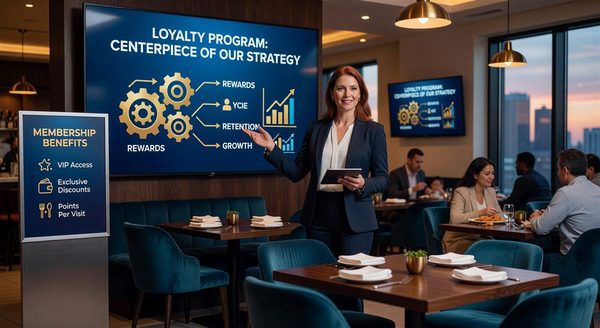
Upscale casual dining sits in an awkward spot for traditional loyalty program design. The visit frequency is lower than mainstream casual dining, the check averages are higher, and the customer’s emotional relationship with the brand is more occasion-driven than habit-driven. The earn-and-burn mechanics that work at a $20 check casual dining brand do not translate cleanly to a $60 check at an upscale concept, and the brands that tried to copy mainstream loyalty templates in this segment generally found that members enrolled but rarely engaged in ways that justified the program cost.
By 2016, the more sophisticated upscale casual dining operators had largely moved past the copy-the-mainstream-template phase and were experimenting with structures better suited to their actual customer pattern. This piece looks at the trends shaping upscale casual dining loyalty in 2016.
Recognition over reward economics
The first trend was a shift away from reward economics as the primary value proposition. At an upscale check average, a typical earn rate produces a reward so slowly that the member rarely sees a meaningful payoff. Brands that tried to compensate by inflating earn rates ended up with reward liability that did not match revenue.
The alternative most upscale casual dining brands moved toward was recognition-based loyalty — programs structured around table-side acknowledgment, preferred seating, anniversary recognition, and access to chef events or private dining experiences. These benefits cost less than aggressive reward economics and produced stronger emotional engagement among the occasional-visit customer base.
Tiered status as a fit for occasion dining
The second trend was the adoption of tiered status structures at brands that previously ran flat programs. Tiered status worked better in this segment for two reasons. First, it created a goal gradient effect that encouraged members to consolidate their upscale dining occasions at one brand to reach the next tier. Second, the status benefits at the higher tiers — priority reservations, complimentary tasting menu courses, chef interactions — could be delivered without significant marginal cost.
The brands that executed tiered status well tended to keep the tier qualification thresholds achievable for genuinely engaged customers without being so low that the top tier lost its meaning.
Experience benefits as the core reward
The third trend was a clearer focus on experience benefits as the core reward, replacing or supplementing dollar-value redemptions. Wine pairing dinners, chef table events, behind-the-scenes kitchen access, and partnership benefits with adjacent luxury experiences (hotels, spa, travel) all became more common as upscale casual dining loyalty rewards.
These benefits aligned better with the occasion-dining motivation than dollar discounts did. A customer who books a $200 dinner for an anniversary is not primarily motivated by a $20 discount, but they may be meaningfully motivated by a complimentary chef course or a paired wine pour that elevates the occasion.
Data capture remained the underlying goal
Underneath all of these design choices, the primary structural value of upscale casual dining loyalty programs in 2016 remained the same as in mainstream casual dining: identified guest data linked to actual visit behavior. The brands that treated the loyalty program as a data acquisition mechanism — and used the resulting data to drive better email targeting, reservation outreach, and event invitations — extracted more value from their programs than brands that treated loyalty as a standalone reward function.
For more on this framing, see our piece on loyalty programs as the anchor of restaurant marketing.
The 2016 takeaway
For upscale casual dining operators, the 2016 loyalty playbook had clarified considerably. Recognition over reward economics. Tiered status over flat earn-and-burn. Experience benefits over dollar discounts. And data capture as the consistent strategic foundation underneath the visible program design. The brands that aligned around these principles tended to outperform brands still trying to apply mainstream casual dining loyalty templates to a fundamentally different customer pattern.
FAQ
Why do mainstream casual dining loyalty templates not work well in upscale casual dining? Visit frequency is too low and check averages too high for traditional earn-and-burn mechanics to produce meaningful member-visible value at a sustainable program cost.
What replaced reward economics as the core value in upscale casual dining loyalty? Recognition, tiered status, and experience benefits — all of which align better with the occasion-driven motivation typical of upscale casual dining customers.
Should upscale casual dining brands skip loyalty programs entirely? No. The underlying data capture value remains as important in upscale casual dining as in mainstream casual dining; the visible program design just needs to fit the customer pattern.
Further Reading from Authoritative Sources
- Harvard Business Review — HBR’s research on experiential marketing and goal-gradient effects in loyalty programs provides the analytical foundation for the article’s core argument that recognition, tiered status, and experience benefits outperform reward economics in upscale casual dining — where occasion-driven customer motivation makes dollar-discount rewards misaligned with actual visit psychology.
- Association of National Advertisers — ANA publishes loyalty marketing research that validates the article’s argument that identified guest data linked to visit behavior is the consistent strategic foundation of upscale casual dining loyalty — the data asset that makes the program investment justified even when reward economics cannot work at low visit frequencies.