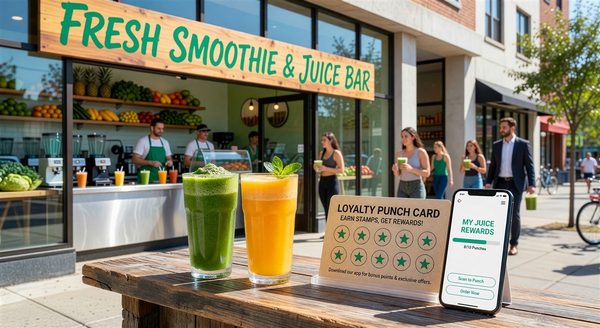
The conventional way to position a restaurant loyalty program is as one channel among many — a reward program that sits alongside email, social, paid media, and field marketing. That framing understates how much of the rest of the marketing stack depends on the loyalty program for its raw material. By 2016, the brands producing the strongest casual dining marketing results were almost universally the ones treating loyalty not as a channel but as the foundational data layer that everything else builds on.
This piece walks through why loyalty programs function as the anchor of a broader marketing strategy, what data they generate, and why loyalty tends to be the highest-ROI marketing investment for casual dining.
What the loyalty program actually produces
The reward economics of a loyalty program — the free entrees, the discounts, the bonus points — are the visible output. The far more valuable output is the data the program generates with every transaction:
- Identified, opt-in guest records linked to actual visit history
- Visit frequency and recency for each member
- Item-level purchase history at the member level
- Daypart and day-of-week patterns
- Geographic patterns across locations
- Channel preference between in-restaurant, online, and mobile
Without a loyalty program, the brand has anonymous transaction data and a separate marketing database with no reliable link between them. With a loyalty program, the brand has a unified view of who its guests are, what they buy, and when they visit. That unification is what makes downstream marketing work.
How the data feeds other channels
Each non-loyalty marketing channel performs measurably better when fed by loyalty data:
- Email. Segmented campaigns built on loyalty behavior data outperform demographic-targeted campaigns by a wide margin on both open rates and revenue per send.
- Push notifications. Mobile push targeting based on member visit history and item affinity produces dramatically higher response than untargeted push.
- Paid social. Lookalike audiences built from high-value loyalty members outperform interest-based targeting for new customer acquisition.
- Direct mail. Postal targeting filtered to high-value member households produces ROI that mass mail cannot approach.
- Field and local marketing. Location-level loyalty data tells regional teams which guests to focus on and which competing brands they appear to also visit.
In each case, the loyalty program is not just running parallel to the other channel — it is supplying the targeting that makes the other channel work. Cut the loyalty data feed and the other channels degrade.
Why loyalty is typically the highest-ROI investment
The ROI math on a well-run casual dining loyalty program tends to dominate other marketing investments for a few structural reasons:
- The reward cost is variable and only triggers on a visit, which means downside is bounded.
- The data asset compounds in value as the member base grows.
- The targeting precision available against loyalty members means non-loyalty marketing budgets can be deployed more efficiently.
- Member retention is measurably higher than non-member retention, which reduces the long-term cost of replacing churned guests.
Marketing investments without these characteristics — brand campaigns, mass discount promotions, generic acquisition spend — produce returns that are harder to attribute and typically lower in magnitude.
What this means for marketing planning
Treating loyalty as the anchor of marketing strategy has practical planning implications. The loyalty program should be funded as core infrastructure, not as a discretionary line item that gets cut when budgets tighten. The marketing organization should include loyalty data in every other channel’s planning conversation, not silo it inside a single team. And the brand should resist the temptation to launch tactical campaigns that bypass the loyalty layer in pursuit of short-term volume.
For a related view on how operators structure the analytical foundation that makes this work, see our loyalty analytics dashboard piece.
FAQ
Why is a loyalty program more valuable than other marketing investments? Loyalty produces both direct revenue lift and the unified guest data that makes every other marketing channel perform better. Most other investments produce only direct return without the data byproduct.
Can a casual dining brand do effective targeted marketing without a loyalty program? It can do some, but the absence of a unified guest data layer caps how precise targeting can be. The brands producing the strongest targeted marketing results almost universally have an active loyalty program supplying the underlying data.
Where should loyalty sit in the marketing organization? Loyalty should be treated as core marketing infrastructure with a clear owner, but its data should be available to every other marketing function rather than siloed inside a single team.
Further Reading from Authoritative Sources
- Association of National Advertisers — ANA publishes marketing effectiveness research that validates the article’s core argument that loyalty data anchors other marketing channels — including the email segmentation lift, paid social lookalike performance, and direct mail ROI advantages that flow from a unified loyalty member database.
- Interactive Advertising Bureau — IAB’s first-party data standards and digital advertising research directly support the article’s argument that the loyalty program’s primary value is the opt-in, identified guest data it generates — the infrastructure that makes other marketing channels perform measurably better.