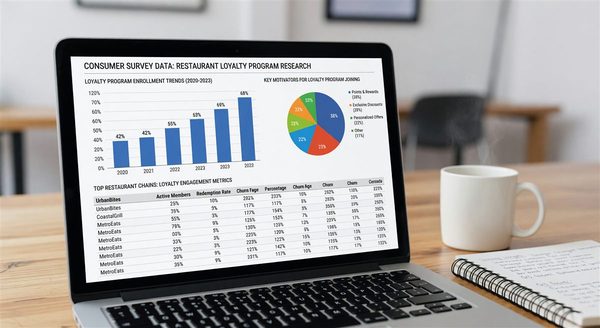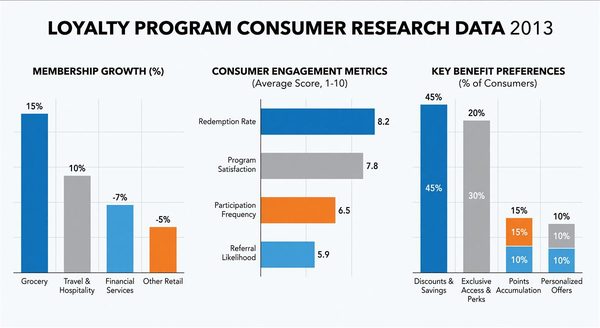
By mid-2014, consumer research on restaurant loyalty programs had matured from one-off vendor white papers into a recognizable body of recurring work. Several syndicated studies were now running on annual cycles, the questions were stabilizing across waves, and operators had enough comparable data to start reading multi-year trends rather than just single-snapshot averages. This overview walks through the methodology choices and topic areas that defined credible 2014 loyalty consumer research.
Methodology approach
The 2014 wave of restaurant loyalty consumer research tended to share a common methodological frame. Sample sizes ranged from roughly 1,000 to 3,000 U.S. adults, recruited from national consumer panels and screened for restaurant visitation in the prior month or quarter. Field windows were short — usually two to three weeks — to keep behavior measurements consistent. Most studies used online self-administered surveys, with mobile-optimized instruments becoming standard as panel participation shifted off desktop.
Two methodology choices separated stronger studies from weaker ones. The first was whether the respondent base was weighted to match U.S. census demographics or simply reported as raw panel composition. The second was whether brand-specific questions were rotated and randomized to reduce order bias. Studies that addressed both were more defensible when their findings ended up in operator board decks.
Sample representation
The most useful 2014 studies broke their samples down across several dimensions:
- Age and life stage. Loyalty behavior differs sharply between younger members, families with children, and older empty-nesters.
- Region. Casual dining habits vary by U.S. region in ways that affect program participation.
- Income. Frequency of full-service dining correlates with household income, which affects member value calculations.
- Visit frequency. Heavy, mid-tier, and light users behave so differently that aggregate numbers can mislead.
When a study failed to provide these cuts, operators were left with averages that obscured the segments they most needed to plan against.
Key topic areas
The 2014 consumer research wave consistently covered six topic areas:
- Awareness and enrollment. How many programs respondents knew about, how many they had joined, and what drove sign-up decisions.
- Active versus dormant membership. What share of enrolled members were actually using each program.
- Redemption behavior. Frequency, ease, and barriers to using earned rewards.
- Visit frequency lift. Self-reported change in visit frequency after joining a program.
- Program preferences. Earn structure, reward types, communication preferences.
- Mobile and digital engagement. App download rates, mobile payment usage, push notification reception.
The sixth area — mobile — was where 2014 differed most from earlier years. By the middle of the year, mobile-related questions accounted for a meaningful share of survey real estate, reflecting both Starbucks’ continued momentum and the growing app investment across casual dining brands.
How 2014 findings shaped operator thinking
The aggregate picture from 2014 research reinforced several conclusions that had begun to take shape in 2013. Enrollment was no longer a constraint. Redemption discipline mattered more than enrollment volume. Mobile was becoming the primary engagement channel for active members. Segmentation by visit frequency was more useful than segmentation by demographics. And the gap between top-tier programs and middle-of-the-pack programs was widening, with the leaders pulling further ahead on every meaningful behavior metric.
For a deeper look at the visit frequency findings specifically, see our 2014 piece on restaurant rewards program visit lift.
FAQ
What sample size is considered credible for restaurant loyalty consumer research? Studies with at least 1,000 census-weighted respondents are generally considered the floor for publishable, brand-comparable findings.
Why does mobile take up so much survey real estate in 2014 loyalty research? Mobile adoption became the single fastest-changing variable in restaurant loyalty behavior, and operators needed annual benchmarks to plan investment in apps and mobile payment.
Do self-reported visit lift numbers match transaction data? Self-reported lift tends to overstate true incremental behavior. Cross-checking against POS-linked panel data, where available, gives a more conservative and reliable number.
Further Reading from Authoritative Sources
- Harvard Business Review — HBR’s research on measurement methodology and consumer survey design provides the analytical context for the article’s distinction between credible 2014 loyalty research (census-weighted, randomized, multi-segment) and studies that produced misleading aggregate averages.
- Association of National Advertisers — ANA establishes research methodology standards that directly support the article’s framework for evaluating 2014 restaurant loyalty consumer research quality — including census weighting, question rotation, and the six topic areas that defined the wave of credible syndicated loyalty studies.