Dave & Buster’s sits in a category of one. It is a full-service restaurant, a bar, and an arcade under one roof — and its loyalty program, D&B Rewards, is structured to reward that full-visit pattern rather than carving off one side of the business. After the chain overhauled its program with a level-and-tier progression system, the result is something genuinely more engaging than the standard spend-and-redeem dining rewards most chains offer. Whether it delivers dollar-for-dollar value is a different question.
How D&B Rewards Works
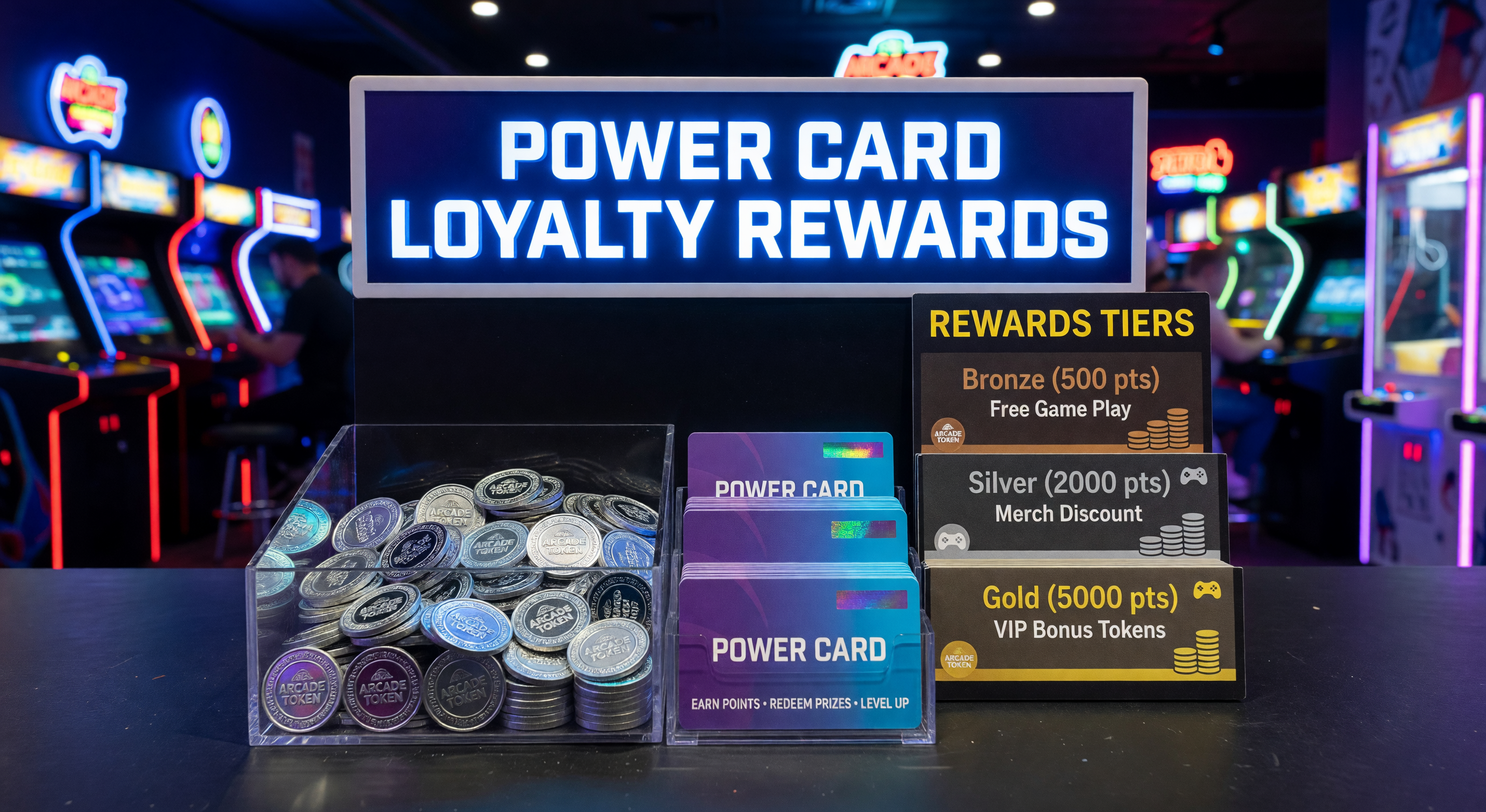
The program is free to join, requires no annual fee, and is accessible through the D&B Rewards mobile app. To participate, guests need a registered Power Card — the chain’s reloadable stored-value card used for arcade play. Cards can be managed entirely in the app, including reloading, balance checks, and activating games via a digital card (no physical card required).
The core mechanic is level progression through game chips played. Members advance through nine levels grouped into three tiers:
- Player Tier — Levels 1–3 (0 to 1,399 chips played)
- Icon Tier — Levels 4–6 (1,400 to 4,999 chips played)
- Legend Tier — Levels 7–9 (5,000+ chips played)
Reaching each level unlocks a reward. The progression is:
| Level | Threshold | Reward |
|---|---|---|
| 2 | 300 chips played | 48 Game Chips |
| 3 | 800 chips played | Free appetizer |
| 4 | 1,400 chips played | Free burger or handheld |
| 5 | 2,100 chips played | 100 Game Chips |
| 6 | 3,000 chips played | Free entree |
| 7 | 5,000 chips played | 300 Game Chips |
| 8 | 10,000 chips played | Dinner for four |
| 9 | 20,000 chips played | Personalized prize pack |
The level-reward mix is well-calibrated: chip bonuses at the lower levels encourage return visits, food rewards create dining occasions, and the upper-tier rewards (dinner for four, personalized prize pack) function as high-value aspirational milestones for the chain’s most committed customers.
Earning Beyond Gameplay
Game chips played is the primary earn engine, but members also accumulate through two secondary paths.
Food and beverage spend: Members earn 1 bonus game chip for every $1 spent on food and beverages, rounded down below $0.50 and rounded up at $0.50 and above. The daily cap is 50 chips per transaction group (multiple transactions within four hours count toward the same cap). Alcohol purchases qualify when accompanied by at least $5.29 in food.
Tier bonus on Power Card recharges: Icon members earn 10% bonus chips on all Power Card purchases and recharges. Legend members earn 15%. These are automatic bonuses applied at the time of purchase — not offers to activate or claim.
The secondary earn paths are additive but secondary. For a guest who comes in to eat and barely plays, the 50-chip daily cap from food spend alone is not enough to drive meaningful level progression without accompanying gameplay.
The Sign-Up Incentive
New members who purchase 100 game chips through the D&B Rewards app receive 100 free chips — effectively a buy-one-get-one on the first chip purchase. This is a strong acquisition offer. Whether it converts first-time visitors into habitual loyalty members depends on whether that doubled first session generates a positive enough experience to bring them back.
Tier Status and Resets
The D&B Rewards program runs on a defined annual cycle: February 1 through January 31. All chips played toward tier qualification reset on January 31. Members who earned Icon or Legend status that cycle retain their benefits through the end of the program year, but must re-qualify in the following cycle to maintain status.
Members who join after August 1 receive grandfathered status — their tier is protected for at least 12 months before expiration applies. This is a reasonable accommodation for late joiners who otherwise would hit the reset wall just months after earning it.
The annual reset creates real pressure on mid-tier members. A guest who hits Level 6 (Icon, 3,000 chips) in October starts over at Level 1 on February 1. For guests who visit a few times a year, that reset likely means perpetual Player status regardless of total spend over time.
Reward Expiration
Food rewards expire 60 days after they are issued. Chip offers, once redeemed and applied to a Power Card, expire in 45 days. These windows are tight relative to programs like Starbucks Rewards or Panera Bread Unlimited, which tend to operate with 6-month horizons. The 45-day chip offer expiration in particular is likely to result in forfeiture for guests who visit infrequently.
What the Program Deliberately Obscures
The chip-based reward structure makes it genuinely difficult to calculate a cents-per-dollar earn rate. Game chips are sold in variable bundles at prices that shift with promotions, Wednesday specials, and season passes. The value of 48 bonus chips (the Level 2 reward) depends on which bundle you’d otherwise buy — and the chain’s pricing structure makes that moving target hard to pin down.
This is intentional. The entertainment industry has known for decades that obscure currency (chips, tokens, tickets) drives higher perceived value than equivalent cash-back would. D&B Rewards is a well-executed version of this mechanic, not a poorly explained one.
For guests comfortable evaluating loyalty programs on feel rather than spreadsheets, this is fine. For guests who want to know whether the program returns 2% or 5% of spend, the answer is: it depends, and the program is not designed to tell you.
Compared to Peer Programs
The closest peer structure is an arcade-adjacent entertainment loyalty program — bowling alleys, movie theaters — but D&B Rewards adds a full dining layer those programs lack. Against straight dining programs like Dine Rewards or the old TGI Friday’s program, the eat-and-play integration is a genuine differentiator.
The level progression model also positions D&B Rewards closer to video game achievement systems than traditional hospitality loyalty. Completing challenges (for example, “play 20 games of Skeeball”) earns badges and additional rewards. This design choice suits the brand’s audience — which skews younger and is more motivated by streaks and achievements than by points balances.
Bottom Line
D&B Rewards earns its score because it is correctly designed for the brand it serves. The tier structure rewards the full visit, the level progression creates forward momentum, and the upper-tier food rewards (free entrees, dinner for four) are legitimately valuable. The program’s weaknesses — the annual reset, tight expiration windows, and chip-pricing opacity — are real drawbacks but not program-killers.
Sign up if you visit Dave & Buster’s more than twice a year. The sign-up bonus alone makes it worth it. Manage expectations on precision: this program rewards engagement, not accountants.
Frequently Asked Questions
Is there a fee to join D&B Rewards? No. Membership is free. The Power Card itself requires a minimum purchase to load (typically $10), but there is no separate enrollment fee.
How many tiers does D&B Rewards have? Three tiers — Player, Icon, and Legend — each with three levels, for nine total levels in the program.
Do tier status and rewards expire? Tier status resets annually on January 31. Food rewards expire 60 days after issue; chip offers expire 45 days after being applied to a Power Card.
Can I earn chips without playing games? You earn 1 bonus game chip per $1 of food and beverage spend, up to 50 chips daily. These chips count toward level progression.
Does D&B Rewards have a birthday benefit? The current program rules do not list an explicit birthday reward in the standard program structure. Check the app for any promotional birthday offers, which may be available on a seasonal or regional basis.
Further Reading from Authoritative Sources
- Harvard Business Review — HBR’s behavioral economics and consumer psychology research provides the analytical foundation for the article’s observation that D&B Rewards’ chip-based currency obscurity is an intentional design feature that increases perceived reward value — and that level-progression mechanics engage achievement-motivated audiences more effectively than conventional points accumulation.
- National Retail Federation — NRF publishes restaurant and retail loyalty program benchmarks that contextualize D&B Rewards’ tier thresholds, reward structure, and expiration windows against industry norms — relevant to the article’s comparison of D&B Rewards’ 45-to-60-day expiration windows against the 6-month horizons that leading restaurant programs like Starbucks and Panera maintain.