Restaurant loyalty programs reached an inflection point in 2013. After several years of cautious experimentation by casual dining brands and an aggressive push by Starbucks in the QSR space, the format was no longer novel. Consumers had opinions about it. Operators had data. The trade press had a steady drumbeat of program launches, refreshes, and quiet sunsets to write about. What had been missing was systematic consumer-side research that cut across brands and asked the same questions of representative national samples.
This roundup pulls together the public consumer research findings that shaped restaurant loyalty thinking in 2013.
Enrollment was no longer the bottleneck
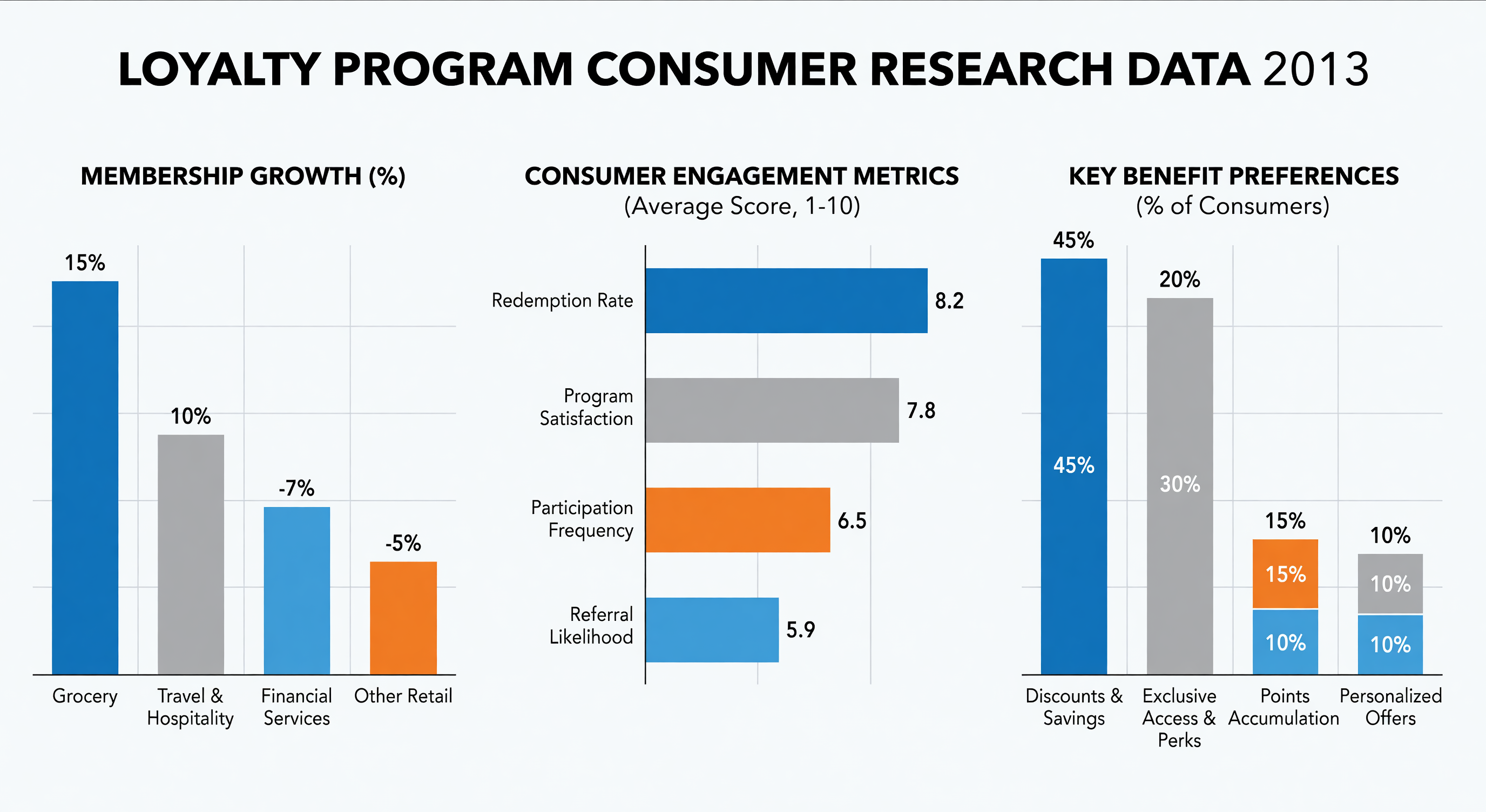
By the start of 2013, more than half of U.S. adults reported belonging to at least one restaurant loyalty program, and the average enrolled consumer carried two to three program memberships. Enrollment had stopped being a meaningful constraint on program success. The constraint had shifted to engagement — the share of enrolled members who actually visited, earned, and redeemed in a given quarter.
Consumers reported that they often signed up because a cashier asked or because a free item was offered at enrollment, then never returned to use the card. The “dormant member” problem became a recognized industry challenge, with some programs reporting that fewer than 30 percent of enrolled members were active in any given quarter.
Redemption behavior told a clearer story than enrollment
If enrollment numbers were noisy, redemption numbers were diagnostic. Programs that successfully drove redemption — getting the earned reward back through the door and onto a check — were the same programs that produced measurable same-store sales contribution. The 2013 research consistently identified three operational practices that separated high-redemption programs from low-redemption programs:
- Active reminder communication. Members who received an email or push notification when they earned a reward redeemed at roughly twice the rate of members left to discover the reward on their own.
- Generous expiration windows. Programs that allowed 90 days or more between earning and expiration outperformed programs with 30-day windows.
- Staff training at the point of sale. Programs where servers proactively asked about loyalty membership at greet or pre-check produced both higher attach rates on new sign-ups and higher redemption on existing members.
Value perception varied by program type
A consistent finding across 2013 consumer research was that members perceived very different kinds of value from different program structures. Earn-and-burn point programs were perceived as transactional and were valued primarily for reward economics. Tiered programs with status benefits were perceived as relational and were valued for recognition. Surprise-and-delight programs without a transparent earn structure were perceived as gifts and produced strong emotional engagement but weak behavior change.
No single structure was universally best. The fit between program type and brand positioning mattered more than the absolute reward economics. For more on how operators think about these tradeoffs, see our loyalty program roadmap overview.
Mobile started to matter
2013 was the year mobile stopped being a curiosity in restaurant loyalty and started being a real channel. Starbucks’ mobile order and pay momentum demonstrated that members would adopt a mobile-first loyalty experience if the brand committed to it. By the end of the year, most major casual dining brands had at least a basic mobile app that integrated loyalty card functionality.
The consumer research from the second half of 2013 showed that members who used a brand’s mobile app visited meaningfully more often than members who relied on a physical card. Some of that was selection effect — heavy users were more likely to download the app — but the gap was large enough that operators began treating mobile adoption as a leading indicator of member value.
The 2013 takeaway for operators
Get enrollment volume out of the headline metrics. Move active member percentage, redemption rate, and visit lift to the top of the dashboard. Invest in the communication and operational practices that drive redemption. Treat mobile adoption as a strategic priority. And recognize that program structure should follow brand positioning rather than chasing the highest theoretical reward value. The brands that followed this playbook through 2013 were the ones that built durable loyalty businesses.
FAQ
How many restaurant loyalty programs did the average U.S. consumer belong to in 2013? Roughly two to three programs on average, with active membership concentrated in one or two of those.
What was the typical active member percentage in a 2013 casual dining loyalty program? Industry conversation in 2013 commonly cited active member rates of 30 to 50 percent of total enrollment, with healthy programs trending toward the higher end.
Did mobile apps actually change loyalty behavior in 2013? Yes. Members who adopted a brand’s mobile app visited more often than card-only members, though some of that gap reflected selection rather than the app driving incremental visits.
Further Reading from Authoritative Sources
- National Retail Federation — NRF publishes industry research on loyalty program participation that provides context for the 2013 enrollment and active engagement benchmarks — including the more-than-half adult enrollment rate — discussed in this research roundup.
- Harvard Business Review — HBR’s consumer behavior and loyalty research underpins the 2013 article’s analysis of why reminder communications doubled redemption rates and why program structure fit matters more than absolute reward economics.